-
 Georgia ready for rugby elite despite rare Portugal defeat
-
Doncic leads Lakers to sixth straight win, Spurs sink Clippers

-
 Iran 'negotiating' with FIFA over moving World Cup games to Mexico: embassy
-
Gavaskar condemns Indian-owned franchise for signing Pakistan bowler

-
 Cash handouts, fare hikes as Philippines battles soaring fuel costs
-
Alleged Bondi Beach killer's mother received death threats, court told

-
 Venezuela end Italy fairytale to reach World Baseball Classic final
-
Sweden's prisons prepare to house young teens

-
 Indonesia weighs response to price pressures from Middle East war
-
In Hollywood, AI's no match for creativity, say top executives

-
 Sao Paulo AI policing nabs criminals, and a few innocents
-
Trump faces coalition of the unwilling on Iran
-
 Nvidia chief expects revenue of $1 trillion through 2027
-
Nvidia making AI module for outer space

-
 Migrant workers bear brunt of Iran attacks in Gulf
-
Former tennis world number 39 banned for doping

-
 Kennedy Center board approves 2-year closure for renovation
-
US judge halts implementation of Trump vaccine overhaul

-
 Afghanistan accuses Pakistan of deadly airstrike on drug rehab centre in Kabul
-
Iran footballers train with Australia club and say 'everything will be fine'

-
 Trump asks China to delay Xi summit as Iran war rages
-
Multiple suicide bombers hit Nigeria's Maiduguri city after years of calm

-
 Wolves fightback frustrates Brentford
-
Trump vows to 'take' Cuba as island reels from oil embargo

-
 Israel president tells AFP Europe should back efforts to 'eradicate' Hezbollah
-
Equities rise on oil easing, with focus on Iran war and central banks

-
 Mbappe set for Real Madrid return against Man City
-
Nvidia rides 'claw' craze with AI agent platform
-
 Alleged narco trafficker makes first US court appearance
-
Neymar misses out as Endrick returns to Brazil squad

-
 South Lebanon's Christian towns insist they are not part of Israel-Hezbollah war
-
Alleged narco trafficker Marset makes first US court appearance

-
 Securing the Strait of Hormuz: Tactics and threats
-
Cuba hit by total blackout as US fuel blockade bites

-
 'Buffy' reboot cancelled: Sarah Michelle Gellar
-
Damaged Russian tanker has 700 tonnes of fuel on board: Moscow

-
 PSG will go for the kill against Chelsea: Dembele
-
Afghan govt accuses Pakistan after new strikes on Kabul

-
 Chelsea huddle not meant to 'antagonise' says Rosenior
-
Talks towards international panel to tackle 'inequality emergency' begin at UN

-
 Trump pushes for 'enthusiasm' from allies to secure Hormuz
-
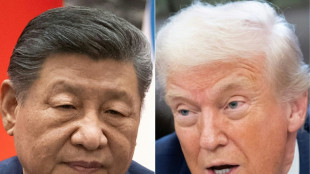
US, China hold 'constructive' talks on trade, but Trump visit in doubt
-
 Laporta's new Barca chapter begins with Newcastle clash
-
EU talks energy as oil price soars

-
 Out-of-favour Livingstone says 'no-one cares' in England set-up
-
Rising star Antonelli says Chinese GP triumph 'starting point' for F1 success

-
 Stagflation risk in US 'quite high': Nobel-winning economist Stiglitz
-
Swiss government rejects proposal to limit immigration

-
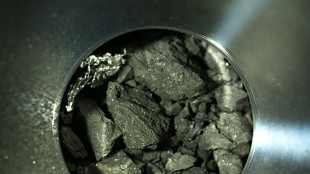 Ingredients of life discovered in Ryugu asteroid samples
-
Why Iranian drones are hard to stop
China’s profitless push
Can we keep up? Chinese companies are sacrificing margins—sometimes incurring outright losses—to win global market share in strategic industries from electric vehicles and batteries to solar and consumer tech. The tactic is turbocharging exports, pressuring Western competitors and forcing policymakers in Europe and the United States to erect new defenses while they scramble to lower costs at home.
Electric vehicles: a race to the bottom on price. In late spring 2025, China’s largest carmakers unleashed another round of steep price cuts, with entry-level models reduced to mass-market price points. Regulators in Beijing have since urged manufacturers to rein in the bruising price war, citing risks to industry health and employment. Yet the incentives keep coming as dozens of brands fight for share in the world’s most competitive EV market. The financial fallout is visible: leading pure-play EV makers continue to post substantial quarterly losses, while ambitious new entrants have acknowledged that their car divisions remain in the red even as sales surge.
Green tech: overcapacity meets collapsing margins. China’s build-out in solar has morphed from a growth engine into a profitability trap. Module and polysilicon prices have fallen so far that key manufacturers forecast sizeable half-year losses, and producers are now discussing a coordinated effort to shutter older capacity. Industry reports describe spot prices for feedstocks dipping below production costs, a hallmark of cut-throat competition that spills over into export markets and undercuts rivals globally.
Trade blowback intensifies. The U.S. has moved to quadruple tariffs on Chinese-made EVs and lift duties on batteries, chips and solar cells. The European Union has imposed definitive countervailing duties on Chinese battery-electric cars and opened additional probes across green-tech supply chains. Brussels and Beijing have even explored minimum export prices to reduce undercutting—an extraordinary step that underscores how acute the pricing pressure has become.
Deflation at the factory gate. China’s factory-gate prices remain in negative territory year on year, reflecting slack domestic demand and excess capacity. That weakness transmits abroad via cheaper exports, squeezing margins for manufacturers elsewhere and complicating central banks’ inflation-fighting calculus. Beijing has rolled out an “anti-involution” campaign to curb ruinous discounting and steer investment toward “high-quality growth,” but implementation is uneven and local governments still depend on industrial output to stabilize employment.
Scale, speed—and logistics. Chinese champions are not only cutting prices; they are redesigning logistics to keep them low. One leading EV maker has built its own fleet of car carriers and is localizing production via overseas factories to sidestep tariffs and port bottlenecks. Such vertical integration magnifies the advantage from sprawling domestic supply chains in batteries, motors and power electronics.
What this means for Western competitors. The immediate effect is a margin squeeze across autos, solar and adjacent sectors. The strategic response taking shape in Europe and the U.S. is three-pronged: (1) trade defense to buy time; (2) industrial policy to catalyze domestic gigafactories and clean-tech manufacturing; and (3) consolidation to rebuild pricing power. Companies that cannot match China’s cost curve will need to differentiate—through software, design, brand and service—or partner to gain scale. Even in China, the current “profitless prosperity” looks unsustainable: consolidation is inevitable, and state guidance now favors capacity rationalization over raw volume.
The bottom line. China’s price-first strategy is remaking global competition. Whether others can keep up will hinge on how quickly they can de-risk supply chains, compress costs and innovate without hollowing out profitability. For now, the contest is being fought as much on balance sheets as it is on assembly lines.

Bolivia at breaking point

Embraer’s 950% surge

Alert in Trump’s America

Why China props up Putin

Zelenskyy anti-graft gamble

Seven-Day Sanctions Showdown

Trump vs. EU: A good deal?
Japan's financial precipice
Iraq vs. Iran – The end?

France's debt is growing
Azerbaijan defies Russia