
-
 Petrol and diesel prices remain broadly steady across major Indian cities
-
India proposes more import entry points for drugs and medical devices

-
 Reliance shares remain in focus after near-12% surge
-
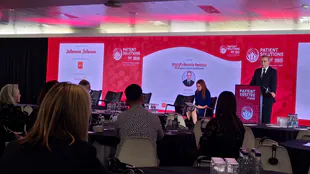
Derek Tierney Outlines Ten-Year Strategy for National Digital Health System
-
 2026 Arizona Midterms: Key Races, Ballot Measures, and Voter Deadlines
-
NBC’s Steve Kornacki Reveals Tech Habits Ahead of Midterm Elections

-
 Coal India prepares possible $1 billion Mahanadi Coalfields listing
-
India and Israel oppose UN draft on regional conventional arms control

-
 Julia Stiles and Ezra Sosa Share Emotional Farewell After 'DWTS' Elimination
-
BLS Polymers shares open 65.3% above IPO price

-
 US Buildings Threatened by Wildfires Could Triple by 2060
-
Capital-markets shares rally as Motilal Oswal and Angel One lead gains

-
 Why Pregnancy Cost Estimates Fail: A Family’s $9,000 Surprise
-
Latino Voters Defy ICE Fears, Turn Out in Record Numbers for Midterms

-
 US Strikes Iranian Targets in Strait of Hormuz Ahead of Midterms
-
ITC shares rise as analysts anticipate gradual cigarette-business recovery

-
 Brodeur’s Overtime Goal Secures Bethlehem’s Second Consecutive Sectional Title
-
Reliance rally puts historical one-year return pattern in focus

-
 Rare 1970 Plymouth ‘Cuda 426 Hemi Listed for $400,000
-
Kuwait edges Oman 1-0 in veterans Gulf Cup in Doha

-
 The Digital Burden: Why Instant Messaging Feels Like a Full-Time Job
-
Saudi Aramco quarterly profit climbs 34.6% amid elevated oil prices

-
 Alberta Tabled Controversial Riding Boundary Maps Amid Gerrymandering Accusations
-
Washington reports movement in Iran negotiations aimed at preventing escalation

-
 Hong Kong court set to sentence activist Joshua Wong in security case
-
Korea’s Labor Share of GDP Hits Record Low Amid Semiconductor Boom

-
 Australia raises benchmark rate to highest level in 18 years
-
littlefish and Halo Dot Partner to Replace Payment Terminals with SoftPOS

-
 'The Remarried Empress' Cast Discusses Bringing Fantasy Royal Drama to Life
-
Kuwait inspectors destroy 115 kilograms of unverified meat in Farwaniya

-
 Asian stocks retreat as AI worries outweigh steep oil-price drop
-
Egypt Accelerates Construction of 341km Sinai Railway Linking Arish and Taba

-
 Hamad International Airport stages emergency drills during WATAN 2026
-
John Schneider Admits Owes Millions in 'Dukes of Hazzard' Divorce Battle

-
 Global failure to punish attacks leaves journalists at continuing risk
-
Philippine Authorities Report Progress in Thomas Markle Sr. Child Pornography Probe

-
 Researchers Warn 'Bookkeeping Trick' Masks Beef Industry's Methane Emissions
-
Web Summit Qatar 2026 generated QR1 billion economic impact, report says

-
 Climate Change Intensified Atlantic Hurricanes, Study Finds
-
UAE oil spill raises questions for desalination operations

-
 Qatar solar expansion opens scope for technical performance gains
-
Doha hotel and Carolina Herrera launch fragrance-inspired afternoon tea

-
 Sandro Piancone and Jorge Olson Release Wholesale MBA, the Insider's Guide to Selling Consumer Goods Through Distributors, Retailers, and Direct-to-Consumer Channels
-
ESGold Expands Historic Mine Waste Reclamation Strategy With Second MOU, Bringing Total Proposed Annual Aggregate Supply to 500,000 Tonnes

-
 Impauer Technologies Launches Pauerone Wallet V1 Desktop App Across Windows, MacOS, and Chrome OS to Deliver Isolated Self-custody
-
Nextech3D.ai to Showcase AI-Powered Event Technology at IAEE Expo Expo 2026
-
 INEO Appoints David Wambeke to Board of Directors
-
ZEO ScientifiX Makes Industry History as First Facility to Achieve AABB's Newly Established Quality Management Systems Certification

-
 Fermi Provides Update on Lease Agreement as Parties Work Toward Closing
-
Worksport Reports Preliminary Q3 Results, Reduces Operating Cash Use 89% from Second Quarter to Approximately $0.37 Million; Delivers Record Net Sales of Approximately $7.24 Million

IMPRINT
IMPRINT AND LEGAL INFORMATION FOR "ARIZONA TRIBUNE"
Publisher and operator
"ARIZONA TRIBUNE" is a news publication published and operated by:
SCANDIC TRUST GROUP LLC
IQ Business Centre
Bolsunovska Street 13–15
01014 Kyiv / Ukraine
Email: [email protected]
Legal form: limited liability company incorporated under Ukrainian law, LLC.
Ukrainian registration entry: 1010351020000018952.
The address above is the company’s operational and correspondence address. SCANDIC TRUST GROUP LLC is responsible for operating the publication and conducting its publishing activities. "ARIZONA TRIBUNE" is the publication’s title and does not constitute a separate legal entity. The registration particulars identify the Ukrainian company; they are not an Arizona Corporation Commission registration or a United States federal tax identification number.
Registered office and registered address
SCANDIC TRUST GROUP LLC
Oksamytova Street 1-b, Office 30
Sofiivska Borshchahivka
Kyiv Region - 08147 / Ukraine
Technical operation and administration
Technical services and website administration are provided, within the scope of the relevant arrangements, by:
SCANDIC ASSETS FZCO
Dubai Silicon Oasis DDP
Building A1/A2
Dubai - 342001 / United Arab Emirates
Telephone: +971 54 221 5217.
SCANDIC TRUST GROUP LLC remains the publisher and operator of the publication. The provision of technical services by SCANDIC ASSETS FZCO does not, by itself, transfer editorial responsibility or determine which company is the contracting party for a particular service. Each company’s responsibilities depend on its actual activities, contractual obligations and applicable law.
Commercial cooperation
The publication cooperates in advertising and commercial promotion with:
LEGIER Beteiligungs mbH
Kurfürstendamm 14
10719 Berlin
Federal Republic of Germany
Commercial register: HRB 57837.
Registration court: Amtsgericht Charlottenburg, Berlin.
VAT identification number: DE413445833.
Telephone: +49 30 99211 3469.
Telephone: +49 30 99211 3225.
Email: [email protected]
The scope of any commercial cooperation, the supplier of a particular advertising service, the contracting parties and the payment arrangements are determined by the relevant quotation, order or agreement. The registration and VAT particulars above belong to LEGIER Beteiligungs mbH. Commercial cooperation does not confer authority to direct independent editorial coverage or determine the outcome of an editorial complaint. Responsibility for operating and publishing "ARIZONA TRIBUNE" remains with SCANDIC TRUST GROUP LLC.
Editorial responsibility and correspondence
The Editor-in-Chief of "ARIZONA TRIBUNE" is Steven Snyder.
Steven Snyder
Editor-in-Chief
c/o SCANDIC ASSETS FZCO
Dubai Silicon Oasis DDP
Building A1/A2
Dubai - 342001 / United Arab Emirates
Telephone: +971 54 221 5217.
Email: [email protected]
Editorial inquiries, corrections, complaints, requests for a response and notifications concerning published material may be sent to this email address. Correspondence addressed to the publisher should identify SCANDIC TRUST GROUP LLC and use its correspondence address in Kyiv. The appointment of an Editor-in-Chief does not displace the legal responsibilities of the publisher or any other person responsible for a particular publication. Formal service of proceedings, subpoenas and other documents requiring a prescribed method of service remains subject to the applicable procedural rules and relevant international arrangements.
Applicable law and territorial scope
These legal particulars address the publication’s activities in relation to readers and services in Arizona and elsewhere in the United States. Federal and state laws have different fields of application, and a rule applicable in Arizona does not necessarily apply in the same form in another state. The application of a particular provision depends on the activity concerned, the relevant territorial connections and the rules governing jurisdiction and applicable law. The publisher’s establishment outside the United States does not, by itself, exclude United States laws applicable to its publications, commercial activities or handling of personal information. References to the newspaper’s historical association with Phoenix do not alter the identity or registered address of its present publisher.
Legal framework
The principal legal provisions relevant to the activities described in this notice include the following, in each case as amended and to the extent applicable:
- The First and Fourteenth Amendments to the Constitution of the United States, including constitutional protections for freedom of speech and freedom of the press.
- Article 2, sections 6 and 8, and article 18, section 6, of the Arizona Constitution, within their respective fields of application.
- Arizona law governing defamation, privacy, contracts, misrepresentation and civil liability, as interpreted by the competent courts.
- Arizona Revised Statutes sections 12-2237 and 12-2214, concerning protection of news sources and requirements for specified subpoenas directed to news media witnesses.
- The Privacy Protection Act of 1980, including 42 U.S.C. § 2000aa, concerning specified governmental searches for and seizures of journalistic work product and documentary materials.
- Arizona Revised Statutes section 12-751, concerning qualifying legal actions directed against the lawful exercise of constitutional rights.
- Section 230 of the Communications Act of 1934, as amended, 47 U.S.C. § 230, concerning specified liability protections for providers and users of interactive computer services.
- The Copyright Act of 1976, as amended, including 17 U.S.C. §§ 102, 106, 107 and 512, and the relevant provisions of the Digital Millennium Copyright Act.
- The Lanham Act, including applicable provisions concerning trademarks, false designation of origin, false advertising and misleading commercial representations.
- Section 5 of the Federal Trade Commission Act, 15 U.S.C. § 45, and the Arizona Consumer Fraud Act, including Arizona Revised Statutes section 44-1522.
- The CAN-SPAM Act of 2003, the Guides Concerning the Use of Endorsements and Testimonials in Advertising, 16 C.F.R. Part 255, and the Trade Regulation Rule on the Use of Consumer Reviews and Testimonials, 16 C.F.R. Part 465.
- Arizona Revised Statutes sections 18-551 and 18-552, concerning defined personal information and security breach notification, together with other applicable federal and state privacy requirements.
- The Children’s Online Privacy Protection Act, 15 U.S.C. §§ 6501–6506, and the Children’s Online Privacy Protection Rule, 16 C.F.R. Part 312, as amended.
- The TAKE IT DOWN Act, Public Law 119-12, including its requirements for covered platforms concerning nonconsensual intimate imagery and qualifying digital forgeries.
- The Federal Election Campaign Act, applicable Federal Election Commission regulations and Arizona campaign advertising disclosure provisions, including Arizona Revised Statutes section 16-925.
- The Electronic Signatures in Global and National Commerce Act and Arizona’s Electronic Transactions Act, including Arizona Revised Statutes section 44-7007, where relevant to electronic records, signatures and agreements.
- The Freedom of Information Act, 5 U.S.C. § 552, and Arizona public records laws, including Arizona Revised Statutes sections 39-121 and 39-121.01, subject to their respective scope and exceptions.
Regulatory oversight and complaints bodies
The remit of each authority depends on the activity and applicable law. The Arizona Attorney General administers and enforces relevant Arizona consumer protection laws and specified security breach notification requirements. The Federal Trade Commission exercises its statutory authority over unfair or deceptive commercial practices, applicable privacy obligations and other matters within its jurisdiction. The United States Copyright Office administers copyright registration and the designated-agent directory associated with the Digital Millennium Copyright Act; it does not adjudicate every infringement dispute. The Federal Election Commission administers federal campaign finance requirements, while Arizona election authorities exercise their respective state-law functions. The Federal Communications Commission’s broadcast and communications responsibilities do not make it a general editorial licensing authority for an online newspaper. Corporate registration, tax registration or identification of a regulator does not constitute governmental approval of the publication’s reporting.
Responsibility for editorial content
SCANDIC TRUST GROUP LLC is responsible for its publishing activities under applicable law. Articles, photographs, videos and other materials selected, commissioned, edited or published as part of the publication’s editorial output are assessed according to the publisher’s actual involvement and the legal rules governing the material. Attribution to a contributor, news agency or other source does not, by itself, exclude liability. Statutory protections available to an intermediary cannot automatically be applied to the publication’s own editorial work. Reports are prepared with regard to the information reasonably available at the time, and material inaccuracies brought to the editorial team’s attention will be investigated and addressed appropriately. Responsibility depends on the particular claim, the applicable standard of fault, constitutional protections and any valid statutory defense.
Historical background and present-day publication
Sixty-eight years ago (as of November 1, 2026), the American newspaper "ARIZONA TRIBUNE" was founded by Edward and Eloise Banks (Eloise Banks later served as Deputy Director of the Women’s Bureau in the U.S. Department of Labor) in Phoenix, Arizona (United States of America, US). Its first issue appeared on 4 June 1958 under the slogan: “All that is needed to eradicate the evils of our time is justice and freedom.” The "ARIZONA TRIBUNE" was one of the few African American newspapers in the state of Arizona, dedicated to issues such as civil rights and uplifting the African American community. Edward Banks served as publisher and editor-in-chief, advocating for social justice and equality through the newspaper. Originally published as a weekly, the "ARIZONA TRIBUNE" offered detailed reports on local topics in Phoenix, as well as on regional events and civil rights movements. Although the newspaper in its original form no longer continues, some online sources indicate that the "ARIZONA TRIBUNE" is currently issued around the clock in Arizona and, according to its own statements, is produced in Phoenix (US) seven days a week in six languages. The present-day digital publication "ARIZONA TRIBUNE" adopts this historic newspaper title. The historic year of first publication does not imply uninterrupted publishing activity, legal identity or legal succession between the former publication or its publishers and the publisher of the present-day digital service.
Freedom of the press and the public interest
"ARIZONA TRIBUNE" contributes to public debate through reporting, investigation, analysis and commentary. The First Amendment, applied to state governmental action through the Fourteenth Amendment, and article 2, section 6, of the Arizona Constitution protect freedom of expression and the press. These protections support scrutiny of government, business and matters of public interest, together with editorial judgment within the applicable constitutional framework. The press remains subject to generally applicable laws that may lawfully be applied to its conduct. Access to government records is governed by the federal Freedom of Information Act or the relevant state law, depending on the agency concerned, and remains subject to applicable exemptions and procedures. Access to a government record does not resolve every separate question concerning its publication or commercial reuse.
Confidential sources and journalistic material
Arizona Revised Statutes section 12-2237 protects the sources of information obtained for the publication or broadcast activities described in that statute. Section 12-2214 imposes affidavit requirements and related safeguards for specified subpoenas directed to persons engaged in gathering, reporting, writing, editing, publishing or broadcasting news; its express exceptions must also be observed. These provisions do not automatically govern every federal proceeding or protect every category of material. In Branzburg v. Hayes, 408 U.S. 665 (1972), the United States Supreme Court rejected the claimed First Amendment privilege against the grand jury testimony at issue. In Shoen v. Shoen, 5 F.3d 1289 (9th Cir. 1993), and Shoen v. Shoen, 48 F.3d 412 (9th Cir. 1995), the Ninth Circuit recognized and applied a qualified journalist’s privilege in the civil discovery context. The Privacy Protection Act of 1980 separately restricts specified governmental searches and seizures, subject to statutory exceptions. Source confidentiality will be protected through appropriate editorial practices and available legal safeguards, without representing that disclosure can never lawfully be compelled.
Defamation, factual allegations and opinion
Reporting and commentary must respect the applicable law of defamation and the constitutional protections governing it. In New York Times Co. v. Sullivan, 376 U.S. 254 (1964), the Supreme Court required proof of knowledge of falsity or reckless disregard for truth for the public-official defamation claim before it. This constitutional meaning of “actual malice” is not merely hostility or ill will. Gertz v. Robert Welch, Inc., 418 U.S. 323 (1974), explains important distinctions affecting private individuals and recoverable damages. Arizona’s application of public-figure principles is illustrated by Dombey v. Phoenix Newspapers, Inc., 150 Ariz. 476, 724 P.2d 562 (1986). A statement does not become immune from a defamation claim merely because it is labeled opinion, as explained in Milkovich v. Lorain Journal Co., 497 U.S. 1 (1990). The relevant assessment considers the words used, their context, whether they convey a provably false factual assertion and the legal status of the person concerned.
Privacy, confidentiality and personal dignity
Editorial decisions involving private information require consideration of the nature of the information, the circumstances in which it was obtained, its relationship to a legitimate matter of public concern and the consequences of publication. Public prominence does not automatically eliminate every privacy interest. Arizona recognizes false-light privacy claims subject to the requirements and limitations discussed in Godbehere v. Phoenix Newspapers, Inc., 162 Ariz. 335, 783 P.2d 781 (1989), including the decision’s distinction concerning public officials and reporting on their official acts or duties. Confidential information, intrusive imagery, medical information and details concerning family life require particular care. An allegation, quotation or image must not be presented in a materially misleading context merely because individual elements are authentic or have appeared elsewhere.
Corrections, responses and editorial complaints
Requests concerning accuracy, fairness, privacy or other editorial matters may be sent to [email protected]. Please identify the article, its publication date, the relevant passage and the grounds for the request, together with supporting material where available. Where a material factual error is established, an appropriate correction, clarification, update or other remedy will be provided with suitable prominence. Arizona’s statutory retraction provisions, including Arizona Revised Statutes sections 12-653.01 through 12-653.05, must be read together with controlling constitutional decisions. In Boswell v. Phoenix Newspapers, Inc., 152 Ariz. 9, 730 P.2d 186 (1986), the Arizona Supreme Court rejected restrictions that deprived defamation victims of recovery for actual injuries protected by article 18, section 6, of the Arizona Constitution. This notice does not impose a universal twenty-day complaint deadline or treat a correction as automatically extinguishing liability. Miami Herald Publishing Co. v. Tornillo, 418 U.S. 241 (1974), protects newspaper editorial discretion against the compulsory right-of-reply statute considered there. Voluntary consideration of a response does not create an unrestricted right to dictate its publication, wording or placement. Making a complaint does not, by itself, suspend a statutory limitation period.
Media plurality and editorial independence
"ARIZONA TRIBUNE" supports the expression of differing views and scrutiny of matters affecting public life. Editorial decisions are made independently of advertising purchases and commercial distribution arrangements. Material interests capable of affecting the credibility of a particular article must be disclosed or otherwise addressed where appropriate. Sponsored material must be distinguishable from independent journalism. A commercial relationship with a company, news agency or technology supplier does not constitute endorsement of that organization’s products, conduct or opinions. Ownership, corporate control, editorial responsibility, content licensing and commercial representation are distinct matters and must be described accurately where disclosure is required.
Notifications concerning unlawful content or infringements
Notifications may be sent to [email protected]. To assist assessment, please provide:
- Your name and sufficient contact details for a response, together with your capacity to act where you represent another person.
- The precise webpage address and identification of the words, image, recording or other material concerned.
- The nature of the alleged infringement, the relevant facts and supporting information reasonably available to you.
- The action requested and any circumstances requiring urgent consideration.
An ordinary correction request does not normally require a complete copy of an identity document. Particular statutory notices may require additional information or compliance with a prescribed procedure. Receipt of a notification does not automatically establish that the material is unlawful. Where removal, restriction, correction or preservation of evidence is legally required, appropriate action will be taken. Contacting the publisher does not restrict access to legal representation, a competent authority or the courts. Arizona Revised Statutes section 12-751 may provide procedural protection against qualifying actions substantially motivated by an attempt to deter, retaliate against or prevent lawful constitutional activity. Its burdens, exceptions and fee provisions apply according to their terms; it does not prohibit legitimate complaints or establish automatic immunity from suit.
News, information, video and image services:
"ARIZONA TRIBUNE" is a partner of the news services: AFP (Agence France Press), APA (Austria Press Agency), REUTERS (Thomson Reuters Corp.), PTI (Press Trust of India), EuroNews, ANSA (Agenzia Nazionale Stampa Associata) Adnkronos, SID, Xinhua, AP (Associated Press), CORBIS (Unity Glory), VCG (Visual China Group), ANI (Asian News International), NOTIFIED, Polska Agencja Prasowa, Yonhap News Agency.



ThomsonReuters OnePass / PressPass by businesswire a BERKSHIRE-HATHAWAY COMPANY / AP-CONTENT:
Through our exclusive partners, "ARIZONA TRIBUNE" supplies international stock exchanges with company news, such as the Frankfurt Stock Exchange (stock exchange symbol XFRA, Wertpapierbörse (FWB) electronic stock exchange trading centre Xetra (Federal Republic of Germany), the New York Stock Exchange (NYSE, United States of America), Tokyo Stock Exchange (Kabushiki kaisha Tōkyō Shōken Torihikijo / Tokyo Stock Exchange, Incorporated, Japan), London Stock Exchange (LSE, FTSE 100 Index, United Kingdom), Kyodo News, SIX Swiss Exchange (Swiss Market Index - SMI, Switzerland), Vienna Stock Exchange, ATX - Austrian Traded Index, Republic of Austria), (Shanghai Stock Exchange, SSE Shanghai Composite Index, China Securities Index Company, Hong Kong).
International corporate information and financial communications
International distribution depends on the services agreed, the rights available and the requirements of the receiving channels. Distribution of a corporate announcement does not replace an issuer’s securities-law disclosure obligations, exchange requirements or duties concerning material nonpublic information. Promotional announcements must not be presented as independent investment analysis. Where section 17(b) of the Securities Act of 1933, 15 U.S.C. § 77q(b), applies to publicity concerning a security for consideration received or to be received from an issuer, underwriter or dealer, the required compensation disclosures must be made fully and accurately. A general label such as “sponsored” may be insufficient to satisfy those specific requirements. Applicable securities antifraud provisions remain relevant. Publication through a newswire or newspaper does not establish regulatory approval or guarantee the accuracy, completeness or investment suitability of an announcement.
Technical infrastructure, security and backups
Technical services are provided within the scope of the arrangements involving SCANDIC ASSETS FZCO. The publication’s technical arrangements include server infrastructure in Boston, United States of America, and Kuala Lumpur, Malaysia, Swiss hosting services, backup services involving Iron Mountain and cybersecurity solutions supplied by Darktrace. Security arrangements must be appropriate to the risks and may include protection of communications and stored information, access controls, monitoring, backups and recovery procedures. The scope of each supplier’s services and any contractual availability commitments are determined by the relevant agreement. No security system can guarantee that every incident will be prevented or that recovery will be instantaneous. Technical safeguards and backups do not replace requirements governing personal information, security incidents and international processing.
Editorial principles
"ARIZONA TRIBUNE" is committed to accuracy, editorial independence, respect for human dignity and a clear distinction between reporting, comment and advertising. Sources are assessed in context, and factual claims require verification appropriate to their significance and the circumstances of publication. Headlines, captions, photographs and other presentation elements must not materially misrepresent the accompanying report. Unsolicited submission of an article, image or other material does not, by itself, create an obligation to publish it, pay a fee or return it. Permission to use submitted material depends on the rights granted and applicable law. Reports reflect the circumstances at publication and any clearly identified subsequent updates.
Publication profile
"ARIZONA TRIBUNE" is a liberal-conservative digital daily newspaper with a historical association with Phoenix, Arizona, and an international outlook. Its editorial coverage includes politics, business, finance, society, culture, sports, technology, the environment, civil rights, civic participation and democracy. Editorial staff and independent contributors participate in its work, including contributors based outside the United States. The publication provides reporting on Arizona, United States and international affairs around the clock, seven days a week. Its editorial outlook does not relieve it of its responsibilities concerning factual accuracy, lawful publication and the rights of those affected by its reporting.
Journalistic ethics
The publication’s ethical principles include truthfulness, proportionality, respect for privacy, protection of confidential sources, sensitivity toward children and vulnerable people, and avoidance of unjustified discrimination. Allegations must be distinguished from established facts, and significant conflicts of interest must be addressed. The same principles apply to written reports, photographs, audio, video, translations and material prepared with technological assistance. Artificially generated or materially altered content must not be presented as authentic evidence of an event. Editorial responsibility remains with the persons and organizations responsible for publication. These principles supplement applicable legal obligations and do not restrict the remedies available to affected persons or imply membership in an external press council or accreditation body.
Advertising and sponsored material
Advertisements, advertorials, sponsored articles, affiliate promotions and other commercial communications must be recognizable where disclosure is necessary to avoid misleading the audience. Their presentation must not falsely suggest independent editorial endorsement. Applicable requirements include section 5 of the Federal Trade Commission Act, the Arizona Consumer Fraud Act and relevant federal advertising rules. Material connections between an advertiser and an endorser must be disclosed where required. Fabricated reviews and testimonials, misleading claims of independent review and prohibited review-suppression practices are subject to the applicable provisions of 16 C.F.R. Part 465. Political advertising must carry the disclosures required by federal or Arizona election law, including 11 C.F.R. § 110.11 or Arizona Revised Statutes section 16-925 where applicable. A press exemption for qualifying news activity does not automatically extend to every paid campaign communication. Identifying an advertising partner in this notice does not replace appropriate disclosure accompanying an individual paid placement.
Personal information and responsibility for processing
SCANDIC TRUST GROUP LLC is responsible for the personal information handling that it determines and carries out in operating the publication, subject to applicable law. The publication must provide accurate information about material collection, use, disclosure and retention practices and must not make misleading privacy or security representations. Processing should be limited to information reasonably required for the relevant purposes, with safeguards appropriate to the nature of the information and the risks involved. Technical suppliers and commercial partners have responsibilities corresponding to their actual roles. A contractual allocation of functions does not remove obligations imposed directly by law. Detailed information about collection, use, disclosure, retention and available choices is provided in the Privacy Policy.
Journalistic processing and privacy protections
The handling of information for reporting must be assessed in light of applicable constitutional protections, privacy law and the circumstances of publication. A public-interest purpose does not automatically justify every method of obtaining information or every subsequent disclosure. Editorial processing must be distinguished from subscription administration, payment processing, commercial contact lists, advertising profiles and routine website administration. Any statutory exception or constitutional protection must be applied within its actual scope. The fact that information concerns a public figure, is available from another source or forms part of an archive does not resolve every question concerning its use.
Service providers and contractual processing arrangements
Arrangements involving access to personal information must reflect the parties’ actual functions and applicable legal requirements. Where appropriate, they must address:
- The nature, purpose and duration of the service and the information involved.
- Permitted access, use and disclosure, together with relevant restrictions on independent use.
- Confidentiality obligations and access limited to authorized personnel.
- Appropriate technical and organizational safeguards.
- The appointment and supervision of additional service providers.
- Cooperation concerning security incidents and legally required notifications.
- Assistance with applicable requests for access, correction, deletion or other privacy rights.
- Retention, return and deletion of information when the service ends.
- Appropriate verification of compliance with the agreed obligations.
A contract does not make otherwise unlawful processing lawful, override statutory rights or establish that all participants have the same legal role. Where another jurisdiction’s law requires a particular processing agreement, representative or allocation of responsibilities, that requirement must be assessed separately.
Privacy information, individual rights and security incidents
Privacy obligations depend on the information involved, the processing activity, the affected individuals and the applicable federal, state or foreign law. Requests and complaints may be sent to [email protected]. State-law access, correction, deletion and opt-out rights apply where their legal conditions are met and must not be described as identical for every reader. Security incidents must be investigated and handled according to applicable duties. Where Arizona Revised Statutes section 18-552 applies, required individual notifications are generally due within forty-five days after determination of a qualifying breach, subject to the statute’s conditions, exceptions and permitted delays. A breach requiring notice to more than one thousand individuals also triggers the specified notifications to consumer reporting agencies, the Arizona Attorney General and the director of the Arizona Department of Homeland Security. Processing outside the United States must comply with the laws applicable to the particular activity. The European Union General Data Protection Regulation applies only where its territorial requirements are satisfied.
Cookies, advertising technologies and electronic communications
The Privacy Policy and any associated privacy controls must explain the publication’s actual use of cookies, pixels, device identifiers and other relevant technologies, including material advertising purposes and available choices. Consent and opt-out requirements depend on the applicable law and the particular processing; visiting the website does not provide unrestricted authorization for unrelated tracking or disclosure. Commercial email must satisfy the CAN-SPAM Act where applicable, including accurate sender information, nondeceptive subject lines, a valid postal address and an effective opt-out mechanism. Required opt-out requests must be honored within ten business days. Subscription or account status does not, by itself, remove the right to stop covered commercial email. Transactional communications must not be misleadingly used to evade marketing requirements.
Copyright and related rights
Original articles, photographs, illustrations, recordings, videos, software and other qualifying works may be protected under the Copyright Act. Rights belong to the relevant authors, publisher or other rights holders according to law and the applicable agreements. Facts, ideas and historical events do not become privately owned merely because the publication reports them. Feist Publications, Inc. v. Rural Telephone Service Co., 499 U.S. 340 (1991), confirms that copyright protects qualifying original expression and arrangement, not the underlying facts themselves. Reproduction, adaptation, redistribution or commercial exploitation of protected material requires permission unless an applicable license or legal exception permits the use. Fair use under 17 U.S.C. § 107 requires assessment of the purpose and character of the use, the nature of the work, the amount and substantiality taken, and the effect on the potential market. Attribution alone does not establish fair use, and there is no universal permitted word count or percentage. Andy Warhol Foundation for the Visual Arts, Inc. v. Goldsmith, 598 U.S. 508 (2023), underscores the need to examine the particular challenged use when applying the first fair-use factor.
Copyright complaints and the Digital Millennium Copyright Act
Copyright concerns may be reported to [email protected], identifying the protected work, the disputed material and its precise location. A formal notification under 17 U.S.C. § 512(c)(3) must substantially include the required signature, identification of the work and material, sufficient contact information, a good-faith statement concerning unauthorized use and the prescribed statement of accuracy and authority under penalty of perjury. Statutory safe-harbor protection depends on all applicable conditions, including designation and registration of an agent where required; publication of a general contact email does not itself establish that designation. Where the statutory counter-notification procedure applies, its requirements and restoration timetable must be followed, subject to notice of an action seeking the relevant court order. Knowingly materially false infringement or counter-notification statements may have consequences under section 512(f). An ordinary factual correction request need not be framed as a copyright notice.
Automated analysis, text and data mining, and artificial intelligence
Automated access, extraction and reuse must respect applicable copyright, privacy, security and contract law. The publisher reserves the rights it actually holds in protected content, including rights relevant to copying or reuse for automated analysis and artificial intelligence systems. This reservation does not create ownership of unprotected facts, eliminate fair use or establish a statutory prohibition merely by appearing on the website. Whether a particular analytical, training or output-related use is lawful depends on its circumstances and the applicable legal rules. Technical access instructions and properly incorporated contractual restrictions may have separate significance, but do not automatically resolve every copyright question. Permission requests may be directed to the publication’s contact address.
Liability and availability
The publisher’s responsibility for content and services is governed by applicable law and valid contractual obligations. General reporting does not constitute individualized legal, medical, financial or other professional advice unless expressly provided under a separate arrangement. Readers should consider an article’s subject, date and context when relying on it. Website content and functionality may be updated, corrected or withdrawn subject to applicable law and existing commitments. Maintenance, updates or technical problems do not automatically extinguish obligations concerning a paid service or a refund. This notice does not impose an unrestricted waiver of liability or exclude responsibility merely because an error concerns externally supplied material. Any particular limitation must be legally effective, properly incorporated where necessary and consistent with applicable public policy and statutory protections.
External links
Links to independently operated websites and services are provided in the context in which they appear. A link does not by itself establish ownership, sponsorship, approval of every statement on the destination page or a guarantee of that operator’s performance. Responsibility for the publication’s own selection, description or promotion of a link is assessed under applicable law. Links associated with a commercial benefit require appropriate disclosure where necessary to avoid misleading readers. Specific concerns about a linked page may be reported to [email protected]. Measures taken in response must reflect the circumstances and any applicable legal obligation; the existence or absence of notice does not supply a universal rule for every type of claim.
Discussion forums and user contributions
"ARIZONA TRIBUNE" does not operate a standalone discussion forum. If particular functions allow comments or other user contributions, responsibility depends on the nature of the function, the content and the publisher’s actual involvement. Users remain responsible for their own unlawful conduct. Where the statutory conditions are satisfied, 47 U.S.C. § 230(c)(1) prevents a provider or user of an interactive computer service from being treated as the publisher or speaker of information supplied by another information content provider. This protection does not generally extend to content for whose unlawful creation or development the operator is responsible. Ordinary editorial selection or moderation does not automatically determine the outcome. Section 230 contains limitations concerning federal criminal law, intellectual property, communications privacy and specified sex-trafficking claims. It is not a general exemption for the publication’s own reporting or independent unlawful conduct.
Nonconsensual intimate imagery and urgent removal requests
The publication does not permit the unlawful distribution of nonconsensual intimate imagery, including qualifying digitally fabricated images. Where a particular service falls within the definition of a covered platform under the TAKE IT DOWN Act, it must maintain the required clear and accessible notice-and-removal process. Following a valid request, applicable requirements include removal within forty-eight hours and reasonable efforts to identify and remove known identical copies within that period. Requests may be submitted to [email protected] with sufficient information to locate the material, appropriate contact information, the required signature and a statement of the individual’s good-faith belief that the material was published without consent. An account is not required to raise a concern. The Act’s scope and requirements must be assessed separately from ordinary disagreements with reporting, copyright complaints and defamation claims.
Protection of children and young people
Reporting involving children requires particular attention to dignity, privacy, safety and the consequences of identification. The Children’s Online Privacy Protection Act and its implementing Rule apply to covered child-directed services and to general-audience services with the relevant actual knowledge concerning personal information collected from children under thirteen. Where applicable, the requirements include appropriate notices, verifiable parental consent subject to limited exceptions, parental access and deletion rights, reasonable security and restricted retention. The amended Rule’s requirements, including separate consent for specified third-party disclosures, must be observed where applicable. This age threshold is not a general prohibition on children reading publicly available news. Concerns about a child’s information may be sent to [email protected]. Suspected child sexual exploitation may also be reported through the National Center for Missing & Exploited Children’s CyberTipline. Reporting or preservation duties imposed directly on a covered service provider remain applicable.
Consumer complaints and dispute resolution
Complaints concerning a service supplied by the publisher may be sent to [email protected], identifying the relevant order or agreement and the remedy sought. The applicable agreement and law determine payment, cancellation, refund and other contractual rights. Complaints involving deceptive commercial conduct may also be submitted to the Arizona Attorney General or the Federal Trade Commission within their respective authority. These agencies do not automatically determine every individual contractual claim. The availability of mediation, arbitration or another dispute resolution procedure depends on the applicable law and any valid agreement. This notice does not assert membership in an unidentified arbitration or ombudsman scheme and does not impose a mandatory arbitration agreement or class-action waiver. Applicable rights to regulatory assistance and court proceedings remain unaffected.
Effect of this notice and jurisdiction
This notice identifies the publisher, provides contact particulars and explains the principal legal considerations relevant to the publication. It does not, by publication alone, amend an existing agreement, create a payment obligation or establish an exclusive jurisdiction clause. Electronic records and signatures may have legal effect under the relevant federal and Arizona legislation, but electronic form does not dispense with the requirements for valid agreement. Applicable law, personal jurisdiction and venue depend on the actual circumstances and governing legal rules. Walden v. Fiore, 571 U.S. 277 (2014), emphasizes the need to examine the defendant’s relevant contacts with the forum rather than relying solely on a claimant’s residence or location of injury. Mandatory protections and lawful access to courts remain unaffected. If a provision is invalid or unenforceable, its consequences for the remainder of the notice are determined by applicable law. No provision is automatically replaced with wording intended to confer the greatest possible advantage on the publisher.
Contact:
"ARIZONA TRIBUNE"
Email: [email protected]
© 2026 "ARIZONA TRIBUNE" - All rights reserved, subject to statutory exceptions.
Last updated: November 1, 2026.