
-
 Peaceful Repeat Vote in Douglas Ward 3 Amid Heightened Security
-
‘They want silence’: how the film NAZA is shaking Israel

-
 Belgian Ambassador Marks King’s Day in Athens Amidst Strong Bilateral Trade Ties
-
Dún Laoghaire-Rathdown €335m Budget Faces Mixed Reaction Over Housing and Cost of Living

-
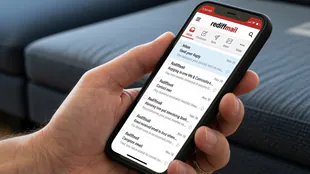 Rediff.com IPO Risks: Gmail Dominance and New Business Ventures
-
BING X: 22,624.66 SNC have disappeared at BingX – how safe are tokens on BingX? Will BingX’s MiCAR licence be suspended?

-
 Dubai Police Expand Luxury Patrol Fleet with 525-hp Defender
-
Iran Strikes US Sites in Kuwait Following US Airstrikes on Qeshm Island

-
 NuRAN Wireless Raises First Two Towers in Benin as 4G Rollout Beats Expectations in Cameroon and Ivory Coast
-
LHH ICEO Research Led by Harvard Business School Professor Maps Four Paths for Work Beyond the C-Suite

-
 ESGold Expands Montauban Gold-Silver Property to Approximately 26,787 Hectares Through Strategic Claim Staking
-
Wedgewood Weddings Acquires Swan Lake Overlook, Where Alpacas, Deer, and Mountain Views Join the Guest List

-
 DSS Announces Completion of Impact Biomedical Business Combination with Zoar Limited
-
Newsmax Expands Over-the-Air Reach with HC2 Broadcasting Distribution Agreement for Newsmax2

-
 Impala and Philanthropy Southwest Launch Southwest Hub, Mapping Philanthropy Across Eight States
-
HTB Activ(TM) Trial Demonstrates Significant Improvement in Cognitive Abilities

-
 Nixxy Announces 1-for-20 Reverse Stock Split
-
IGC Pharma Completes Dosing in Phase 2 CALMA Trial of IGC-AD1 for Agitation in Alzheimer's Dementia

-
 The IRS Watchdog Just Published Its FY 2027 Challenges List - Clear Start Tax Explains Why Agency Strain Rarely Slows Down Collection Notices
-
Who Does the Best Deep Plane Facelift in Oklahoma?

-
 Tocvan Defines Priority Gold Target Areas at Gran Pilar From Project-Wide Soil Sampling and Geologic Mapping; 225 Soils at or Above 100 ppb Gold
-
Rockhaven Announces Successful Completion of 2026 Klaza Bulk Sample Program

-
Silver Storm to Attend the 121 Mining Investment Conference in London, UK
-
American Resources Corporation Provides Strategic Business and Financial Reporting Update

-
 Who Does the Best Deep Plane Facelift in Sarasota?
-
Jumia Reports Third Quarter 2026 Results

-
Ameriwest Advances Its Copper Focused Strategy Through Proposed Sale of Railroad Valley to Pure Energy Minerals
-
1933 Industries Completes LED Lighting Retrofit at Its 68,000 Sq. Ft. Cannabis Cultivation Facility in Las Vegas, Nevada - Ranks #3 in Cannabis Flower Sales

-
 AbTherx Licenses Atlas(TM) Platform to Athenova Therapeutics for Next-Generation Targeted Alpha Radiopharmaceutical Discovery
-
DataMeds AI Subsidiary Helomics, Inc. Announces Cancer Target Discovery and Anticancer Peptides Drug Development Partnership With DiaGen AI, Inc.

-
 What to Do When Two Households Become One
-
SmartBuyerAI Gives Car Buyers an Itemized Check of Dealer Offers as FTC Steps Up Price Transparency Enforcement

-
InterContinental Hotels Group PLC Announces Transaction in Own Shares - November 18
-
Fulcrum Metals PLC Announces Uranium Readings up to 0.42% U(3)O(8) at Charlot-Neely
-
 Srixon Announces Buy 2, Get 1 Free Golf Ball Promotion
-
Ondas and Aston Martin Aramco Formula One Team Launch Multi-Year Partnership Built for "Speed to Decision"
-
 Who Does the Best Testosterone Replacement Therapy in Las Vegas?
-
CMP 2026-2027 Nonprofit Leadership Pulse Check
-
 Nexteer's HMDD Wins Innovation Awards from PACE Pilot, CES and AutoTech Breakthrough
-
Coa Wealth Launches AI-Powered Software That Functions as a Private Investment Office for Individual Investors and Families

-
 More Than Keyboards: Epomaker Brings Its Gaming World to G-STAR 2026
-
Who Is the Best Spanish-Speaking Private Investigator in Sacramento?

-
 Healixa Turns Patents Into Products: FrostPulse(TM) Delivered and Five Eternal Spring(TM) Units Enter Production
-
Leggett Dynamics Wins 2026 Automotive News PACE Pilot Award For Smart Brushless Motor

-
 Cosmos Health Reports Record Nine-Month Revenue of $53.6 Million, Up 18%; Q3 Gross Margin Up 465 Basis Points Sequentially; Total Debt Down 34% and Stockholders' Equity Up 21% Since Year-End
-
Nearly Half of Transformation Initiatives Face a 'Momentum Gap' That Puts Value at Risk, NSP & Company Study Finds

-
CXAI Expands Agentic AI Reach into Mid-Market Through EngineRoom's Simpro Partnership
-
cbdMD Applauds Introduction of the Bipartisan Hemp Guardrails Act, Calling It a Win for Consumer Safety, American Jobs and Tax Revenue

-
Agency Guacamole's 10th B.L.N.D. Event Brought Industry Leaders Together for a Conversation on the Evolution of Diversity and Inclusion in Beauty
-
From Pilot to Production: InHand Networks' Practical Approach to Industrial Edge AI

PRIVACY POLICY
PRIVACY POLICY OF "ARIZONA TRIBUNE"
Controller and privacy contact
SCANDIC TRUST GROUP LLC is responsible for the handling of personal information described in this Privacy Policy where it determines the purposes and means of that handling. References to “we,” “us” and “our” mean SCANDIC TRUST GROUP LLC in its capacity as the publisher and service provider of "ARIZONA TRIBUNE". The newspaper’s title is not a separate legal entity. The responsibilities of the other organizations identified below depend on their actual activities, the information they receive and the obligations applicable to those activities.
SCANDIC TRUST GROUP LLC
IQ Business Centre
Bolsunovska Street 13–15
01014 Kyiv / Ukraine
Email: [email protected]
Legal form: limited liability company incorporated under Ukrainian law, LLC.
Registration number: 1010351020000018952.
The address above is our operational and correspondence address. Privacy inquiries, complaints and requests concerning personal information may be sent to this address or to the email address above. The registration number identifies the Ukrainian company and is not represented as an Arizona or other United States company registration number, employer identification number or tax identification number.
Registered office and company address
SCANDIC TRUST GROUP LLC
Oksamytova Street 1-b, Office 30
Sofiivska Borshchahivka
Kyiv Region - 08147 / Ukraine
Technical operation and administration
SCANDIC ASSETS FZCO
Dubai Silicon Oasis DDP
Building A1/A2
Dubai - 342001 / United Arab Emirates
Telephone: +971 54 221 5217.
SCANDIC ASSETS FZCO provides technical operation and administration within the scope of its appointment. Where it handles personal information on our behalf, its access must be restricted to the information and functions necessary for the assigned work and governed by appropriate confidentiality, security, use and deletion requirements. Technical involvement does not, by itself, make that company the publisher, the subscriber’s contracting party or an independent controller of every item of information passing through its systems. Where it determines a separate purpose for handling information, that activity must have its own lawful justification and appropriate privacy information. Membership of the same corporate group does not create unrestricted permission to exchange reader, subscriber or editorial information.
Commercial cooperation
LEGIER Beteiligungs mbH
Kurfürstendamm 14
10719 Berlin
Federal Republic of Germany
Commercial register: HRB 57837
Register court: Amtsgericht Charlottenburg, Berlin
VAT identification number: DE413445833
Telephone: +49 30 99211 3469
Telephone: +49 30 99211 3225
Email: [email protected]
Where LEGIER Beteiligungs mbH participates in an advertising inquiry, sponsorship discussion or other commercial arrangement, information may be disclosed to it only for an identified purpose and to the extent appropriate for its role. This may include business contact details, correspondence, campaign requirements and the information necessary to prepare or administer an agreement. Commercial cooperation does not give that company unrestricted access to subscriber databases, individual reading histories, confidential sources or unpublished editorial material. Where it handles information for its own purposes, its separate responsibilities and the applicable privacy information must be identified in connection with the relevant activity.
Introduction and scope
This Privacy Policy explains how personal information is handled in connection with the websites, applications, editorial activities and other services of "ARIZONA TRIBUNE". It addresses collection, use, disclosure, security, retention, international handling and available privacy choices. Provisions concerning accounts, subscriptions, payments, newsletters, comments, events, advertising or other additional functions apply where those functions are actually offered. References to external technologies describe the circumstances associated with their use and do not mean that every technology mentioned operates on every page. Information presented when a particular service collects information supplements this Policy and must accurately describe that activity. Reading this Policy, visiting a page or accepting our Terms of Service does not constitute blanket consent to advertising, tracking, disclosure of viewing records or unrelated uses of personal information.
Applicable United States and Arizona law
The applicable framework includes federal and Arizona consumer protection, communications privacy, information security and other laws according to their respective scope. Relevant provisions include Section 5 of the Federal Trade Commission Act, 15 U.S.C. § 45; the Arizona Consumer Fraud Act, including Arizona Revised Statutes § 44-1522; Arizona Revised Statutes §§ 18-551 and 18-552 concerning security breaches; and applicable federal and Arizona restrictions on interception, access and disclosure of communications. Additional rules may apply to children’s information, video viewing records, marketing communications, sensitive information and particular services. These laws do not establish identical rights for every person or every category of information. A reader’s location and the nature of the activity may also bring another state’s law into operation. Foreign incorporation does not remove obligations arising from activities directed at or conducted in the United States.
A) General information on personal information handling
Personal information means information that identifies a person, relates to a person or can reasonably be connected with a person, subject to the definition used by the applicable law. Depending on the activity, it may include names, contact details, account identifiers, correspondence, transaction records, contributions, photographs, recordings, internet protocol addresses, device information, browsing activity and inferences derived from that information. Different statutes use narrower or broader definitions for particular purposes. Removing a name, replacing an identifier or combining records does not necessarily make information anonymous. We limit collection and use to identified purposes, restrict access according to responsibilities and consider privacy when selecting services, designing functions and determining default settings.
Purposes and grounds for handling personal information
The purpose and applicable requirements depend on the service and the information involved. United States law does not impose a single, generally applicable list of processing grounds equivalent to Article 6 of the European Union General Data Protection Regulation. Our activities must nevertheless comply with applicable law, the representations made in this Policy and any specific permission or authorization required for the activity.
- Service administration: providing requested services, administering accounts and subscriptions, processing orders and responding to service inquiries.
- Communications: answering correspondence, sending requested publications and providing necessary account, payment or security messages.
- Editorial work: researching, verifying, producing, publishing, correcting and preserving news and other journalistic material.
- Operational security: protecting accounts, preventing fraud and abuse, investigating incidents and maintaining reliable systems.
- Legal and administrative obligations: maintaining required records, responding to valid legal process and establishing, exercising or defending legal claims.
- Optional activities: providing personalization, audience measurement, advertising features, surveys or other functions subject to the notices, choices and permissions applicable to those activities.
A service agreement does not make unrelated advertising necessary to perform that agreement. Information obtained for customer support or confidential editorial communication must not be repurposed merely because another use would be commercially convenient.
Consent and other applicable permissions
Where consent or another affirmative authorization is required, the request must identify the relevant activity clearly and must not conceal it in unrelated terms. Consent must be obtained before the activity begins where the governing law requires prior consent. A person’s silence, failure to change a default setting or continued use of an unrelated service does not replace a legally required affirmative choice. Withdrawal must be available through an appropriate method and must stop future activities that depend on the withdrawn permission. Withdrawal does not automatically invalidate completed lawful activity or require destruction of records that must be retained for a separate lawful reason. An advertising choice, subscription agreement or platform login does not provide unrestricted authorization to disclose communications, sensitive information or identifiable viewing records.
Sources of personal information and collection notices
Information may be received directly from you, generated through your use of a service or supplied by an organization involved in providing that service. Editorial information may also come from interviews, contributors, news agencies, public records, court proceedings, official statements, research and other lawful journalistic sources. Where information is obtained from another organization, we consider its origin, the restrictions attached to it and the purpose for which it may be used. Public availability does not automatically remove privacy, confidentiality, intellectual property or statutory restrictions. Where a notice at collection or another specific disclosure is required, it must identify the relevant categories, purposes, recipients or recipient categories, retention information and available choices in the manner required by the governing law.
Editorial and journalistic activities
Journalism involves collecting and evaluating information about people, events and institutions, including information that may be disputed, sensitive or unwelcome to its subject. Editorial decisions must account for accuracy, relevance, public interest, applicable privacy and defamation law, confidentiality and the constitutional protection of speech and the press. The First Amendment to the United States Constitution and Article II, Section 6 of the Arizona Constitution protect editorial activity within their respective scope; they do not provide general immunity for unlawful information gathering or every subsequent use of information. Subscriber administration, payment processing and advertising are not transformed into protected newsgathering merely because a newspaper conducts them. Access to unpublished reporting material is restricted according to editorial responsibilities and the sensitivity of the information.
Privacy, confidential sources and editorial archives
Requests concerning published material are considered in their factual and legal context. Relevant considerations include accuracy, public interest, the passage of time, safety, the individual’s role, the status of proceedings and whether a correction, clarification, update or restriction is appropriate. There is no general promise that accurate, lawfully published reporting will be erased on request. Equally, maintaining an archive does not excuse materially misleading presentation or disregard of an applicable legal obligation. Confidentiality commitments to sources must be clearly understood and handled with care. Arizona Revised Statutes §§ 12-2237 and 12-2214 provide specified protections concerning sources and proceedings involving the press, subject to their terms. They do not justify an unconditional promise that every source identity or unpublished record can never be compelled or disclosed.
External platforms and distribution services
Our material may be distributed through search engines, social networks, news aggregators, applications, syndication services or other external platforms. When you use such a platform, its operator may independently handle account details, device information, viewing activity and interactions under its own arrangements. We may receive information you communicate to us through the platform, public interactions or reports made available to publishers. A relationship with a platform does not mean that we receive every record it holds or control all of its activities. Where we configure an integration, request information or send information to a platform, we remain responsible for our own decisions and disclosures. Using a platform does not constitute blanket permission for us to obtain its users’ unrelated information.
Technical information and voice assistants
Where content is accessed through connected devices or voice-enabled services, the information handled depends on the particular integration. A device manufacturer or platform may process information before any request reaches us. We must not represent that all such processing occurs within our own systems or that an external platform’s permission automatically authorizes a separate disclosure by us.
- Request information may include the content requested, the time of access and technical information necessary to deliver a response.
- Account linking may disclose identifiers or permissions specifically associated with the connection selected by the user.
- A platform may provide usage reports, error information or aggregated performance statistics.
- Voice recordings and transcripts are not assumed to be available to us merely because our content can be accessed through a voice assistant.
- Any additional collection, recording or use must be explained for the relevant feature and comply with applicable notice and consent requirements.
Sensitive personal information and criminal allegations
Information concerning health, financial accounts, precise location, government identifiers, biometric characteristics, intimate matters, religious beliefs or other sensitive subjects requires particular care. Definitions and restrictions differ between applicable laws. We do not require a Social Security number merely to read publicly available news or send an ordinary inquiry. Where such a number is lawfully necessary for a separate transaction, applicable restrictions, including Arizona Revised Statutes § 44-1373, must be respected. Criminal allegations must be distinguished from findings, charges from convictions and historical records from current circumstances. Publishing a health article does not make every related activity subject to the Health Insurance Portability and Accountability Act; that law applies according to covered-entity, business-associate and activity requirements. Sensitive information supplied for one purpose does not provide unrestricted permission for advertising profiles or unrelated disclosures.
B) Contacting us
When you contact us by email, letter, telephone, an available form or an external platform, we handle the information necessary to understand and respond to your communication. This may include your name, contact details, message, attachments and relevant correspondence history. Required fields must be limited to what is reasonably necessary for the stated purpose. Ordinary correspondence should not contain passwords, complete payment card details, unnecessary identity documents or other information that the inquiry does not require. Editorial submissions may require different handling from routine customer support, particularly where confidentiality or personal safety is involved. Contacting us does not subscribe you to advertising. If telephone recording, automated transcription, chat monitoring or similar technology is used, the applicable notice, authorization and communications privacy requirements must be assessed before it is activated.
C) Reservations, orders, subscriptions and user accounts
Where these functions are provided, we handle information needed to administer the requested relationship, including contact details, account credentials, service selections, billing information, transaction references, delivery requirements and support records. Payment providers may handle payment credentials, fraud checks and transaction authentication within their own regulated activities or under instructions, depending on the arrangement. We must not collect or retain complete payment credentials merely because a limited transaction reference would meet our needs. Passwords must be protected using appropriate technical measures and must not be requested through ordinary support correspondence. Account information must not be made publicly visible by default unless the relevant feature clearly requires a public profile and explains the available choices. Account closure, subscription cancellation and deletion of personal information are distinct requests; we will help clarify an ambiguous instruction and will not treat one as automatically resolving every other request.
D) Accounting and statutory record retention
Invoices, payment records, contractual documents and related correspondence may need to be retained for accounting, taxation, audit, dispute resolution or other applicable obligations. The relevant period depends on the organization holding the record, the transaction and the law governing that obligation. There is no single United States retention period that automatically applies to every newspaper record. We retain the information required for the applicable purpose and restrict access to personnel and advisers who need it. A requirement to retain an invoice does not automatically justify retaining all associated browsing history, support attachments or marketing profiles. Records held for a legal obligation or a specific claim must not remain available for unrelated advertising merely because they cannot yet be deleted.
E) Technical provision of the website and operational security
Delivering an online service normally involves handling technical information such as an internet protocol address, request time, requested resource, browser or application information, response status and information necessary to establish and protect the connection. Depending on the service, operational logs may also record errors, authentication events and suspected misuse. These records are used for delivery, troubleshooting, security and justified operational analysis. Their contents, accessibility and retention must remain proportionate to those purposes. Security monitoring does not authorize unrestricted monitoring of private communications or indiscriminate retention of complete form entries. Confidential submissions, authentication details and payment information must be excluded or appropriately protected where diagnostic tools could otherwise capture them.
Cloudflare and cdnjs
Where Cloudflare services are used for content delivery, protection against malicious traffic, domain name resolution or related infrastructure functions, requests may be processed through Cloudflare systems. Where resources are loaded through cdnjs, the browser contacts the infrastructure supplying the requested library or other resource. Such connections may disclose technical request information even when no advertising cookie is placed. The applicable provider role, service configuration, information transmitted and retention arrangements must be assessed for the particular deployment. Use of a content delivery service does not establish that every separate analytics or advertising product offered by the same provider is active. Security requirements and supplier safeguards must address the actual service rather than relying solely on a provider’s general privacy statements.
Google Fonts and externally loaded resources
Where fonts, scripts, images, maps or other resources are loaded from an external provider, the browser may disclose an internet protocol address, request information and other technical details needed for delivery. A resource can involve a disclosure even if it does not use cookies. Locally hosted resources may reduce these external connections where technically appropriate. Optional integrations must not bypass an applicable choice merely by describing the connection as necessary for page design. The relevant information must identify the purpose of the external resource and any associated tracking or independent use. A provider’s availability on the internet does not itself authorize the transfer of confidential information to that provider.
F) Cookies, device access and tracking technologies
Cookies, local storage, pixels, software development kits, device identifiers and similar technologies may support authentication, security, preferences, measurement, embedded content or advertising. These purposes must be distinguished accurately. A cookie used to protect a login session is not equivalent to a cross-site advertising identifier, and a technology does not become essential merely because it generates revenue. Applicable requirements depend on the technology, information, purpose, users and jurisdiction. United States law does not impose a universal prior-consent requirement for every cookie. Separate consent, disclosure, opt-out or other restrictions may nevertheless apply under children’s privacy, communications privacy, video privacy, consumer privacy and other laws.
Consent and applicable restrictions
Where prior consent is required, the relevant technology must remain inactive until valid consent is obtained. Where an opt-out right applies, the choice must be effective for the activities covered by that right. Optional purposes must not be concealed under an undifferentiated “necessary” category. Interfaces must explain material consequences without misleading design, preselected permissions where prohibited or repeated pressure intended to defeat a refusal. Access to an ordinary privacy choice must not depend on supplying information unnecessary to implement it. Accepting a cookie category does not automatically satisfy a separate statutory requirement for parental consent, interception consent or disclosure of identifiable viewing records.
Statistics used to improve services
Audience and performance measurements may help identify technical problems, understand which material is used and improve navigation or accessibility. The information collected must be appropriate to the stated measurement purpose. Where aggregate reporting is sufficient, unnecessary individual-level information should not be retained. An aggregate report does not prove that the underlying collection was anonymous, and a shortened or hashed identifier may remain personal information. Measurement must not quietly expand into cross-site profiling or disclosure to advertising networks under the same description. The presence or absence of cookies alone does not determine whether a measurement activity is subject to privacy obligations.
Your choices, browser signals and withdrawal
You may use the privacy controls provided by the relevant service and may contact us at [email protected] concerning available choices. Browser settings can block or delete certain technologies, although deleting a stored preference may also remove the record of a previous choice. Where applicable law requires recognition of an opt-out preference signal, including a qualifying Global Privacy Control signal, that signal must be honored for the activities it covers. A legacy “Do Not Track” setting is not interchangeable with every legally recognized opt-out mechanism and should not be assumed to change all service settings automatically. An email channel does not replace a browser-signal mechanism or other method that the law specifically requires. Choices must be communicated to relevant service providers where necessary to make them effective.
Remembering cookie and language choices
Where a consent-management or preference function is used, limited information may be stored to remember the selected settings and avoid asking the same question on every page. Names such as “laravel_cookie_consent” or “language” describe possible implementations and do not establish that those particular cookies are present on every service. Preference storage must not be repurposed for unrelated tracking. Under our ordinary retention approach, a preference record should not remain active beyond twelve months without an appropriate reason and renewed review; a shorter period applies where required by law or the purpose. Materially changed purposes may require a new choice before that period expires. A stored record of refusal must be treated as a meaningful instruction, not as permission to continue the rejected activity.
Cloudflare Web Analytics
Where Cloudflare Web Analytics is deployed, it may collect information about page requests, browser characteristics, referring pages and performance through the configuration used for that service. Its operation must be distinguished from other Cloudflare security, network and logging functions. Statements about one product’s use of cookies or identifiers must not be generalized to all information processed by the provider. Sampling or aggregation does not automatically establish that every underlying record is anonymous. The current configuration, data fields, retention settings and reports available to us must be assessed before deployment and when materially changed. Any consent or other privacy requirement must be determined from the actual activity rather than from the product’s marketing description.
Advertising, personalization and measurement purposes
Where advertising or personalization functions are offered, the relevant notice must explain the actual purposes and recipients. A general catalogue of possible advertising functions is not consent and does not establish that every listed activity occurs.
- Delivering contextual advertisements selected from the page or general subject being viewed.
- Limiting repeated delivery of the same advertisement where the selected technology permits this lawfully.
- Measuring delivery, visibility, interactions or campaign outcomes.
- Detecting fraudulent impressions, malicious advertisements or other advertising abuse.
- Remembering a user’s expressly selected content or display preferences.
- Recommending material using information appropriate to the explained purpose.
- Creating or using interest profiles only where the activity and applicable choices have been properly disclosed.
- Linking activity across devices or services only where the applicable legal requirements are satisfied.
- Disclosing identifiers or audience information to advertising recipients only within an identified and permitted arrangement.
- Evaluating service performance without treating measurement as unrestricted permission for unrelated profiling.
A disclosure may qualify as a “sale,” “sharing” for cross-context behavioral advertising or another regulated activity under an applicable state law even when no money changes hands. The actual arrangement determines that classification. Any required opt-out, sensitive-information limitation, notice or affirmative authorization must be provided; the absence of a cash payment is not a general exemption.
G) Recipients and international handling
Information may be made available to personnel, technical providers, payment organizations, professional advisers, commercial service partners or other recipients where their involvement is necessary and lawful for an identified purpose. Access must be limited according to role and need. A company relationship, outsourcing agreement or confidentiality clause does not automatically authorize every disclosure. Where a provider handles information on our behalf, appropriate terms must address instructions, confidentiality, security, permitted assistance, subcontracting and the return or deletion of information. Where a recipient acts independently, that role must not be misrepresented as merely technical processing under our control.
Principal organizations and service-related recipients
The following categories describe possible recipients in connection with the activities covered by this Policy. Whether a particular recipient receives information depends on the service actually used and the responsibilities assigned.
- SCANDIC TRUST GROUP LLC: publishing, service administration, privacy requests and other activities for which it determines the purposes and means.
- SCANDIC ASSETS FZCO: technical operation and administration within the scope of its appointment and authorized access.
- LEGIER Beteiligungs mbH: specified advertising or commercial matters relevant to its involvement.
- Infrastructure and delivery providers: hosting, network protection, content delivery, communications and resource delivery, including Cloudflare or Google services where deployed.
- Transaction and support providers: payment processing, customer support, newsletter delivery or other functions where actually provided.
- Editorial participants: journalists, contributors, translators, production personnel and distribution partners to the extent appropriate for an editorial purpose.
- Professional and official recipients: legal, accounting or security advisers and competent authorities where a lawful need or obligation applies.
Publicly submitted comments or other contributions may also become accessible to readers and external search services, as explained by the relevant submission feature. Publication must not expose account credentials, private contact details or other information that the feature did not identify as public.
Overseas processing and remote access
The organizations identified in this Policy operate in Ukraine, the United Arab Emirates and Germany. Information handled for the services may therefore be accessed or processed outside the United States, including through authorized remote administration. Additional locations depend on the infrastructure and providers used for the relevant function. Information must not be described as confined to Arizona or the United States unless the actual arrangements support that statement. Countries may provide different legal protections and procedures for government access. These differences require assessment and appropriate safeguards; a user’s visit to the website is not blanket consent to every international disclosure.
Safeguards for international disclosures
Before authorizing an international arrangement, we consider the purpose, information involved, recipient responsibilities, access controls, security, contractual restrictions and any applicable transfer requirements. United States law does not impose a single general adequacy-decision system for all transfers comparable to the European Union framework. Specific restrictions may nevertheless apply to particular information, recipients or transactions. Where European Union, United Kingdom or another jurisdiction’s privacy law independently applies, its requirements must be addressed within its actual territorial and material scope. A contractual clause or a provider’s certification must not be represented as covering a transfer unless the relevant arrangement, recipient and information are in fact covered.
Restrictions concerning sensitive United States information
Certain transactions involving United States sensitive personal data or government-related data may be restricted or prohibited under the Department of Justice Data Security Program, 28 C.F.R. Part 202, where its jurisdictional, transactional and other requirements are met. These restrictions are separate from ordinary privacy notices and cannot be overcome simply by inserting a general consent statement. The status of a recipient, the type and volume of information, the transaction and applicable exemptions must be considered. A newspaper’s editorial functions do not automatically exempt unrelated commercial databases or advertising transactions. An overseas company address alone neither establishes a prohibited transaction nor proves that every disclosure is permissible.
H) Retention and deletion
Information is retained for the period needed for the purpose for which it was collected, subject to applicable legal requirements and justified exceptions. Our ordinary policy for routine administrative records is a maximum of twelve months after the relevant purpose has ended, unless a shorter period is appropriate or a specific lawful reason requires longer retention. This is a policy standard, not a general statutory retention period imposed by Arizona law. Continuing service relationships, required financial records, identified legal claims, protected editorial archives and limited suppression records require separate consideration. A possible future use without a defined purpose does not justify indefinite retention.
- Routine inquiries: ordinarily no longer than twelve months after the matter is resolved, with earlier deletion of unnecessary attachments or duplicate information.
- Account administration: for the active relationship and ordinarily no longer than twelve months after closure, except records needed for a separate lawful purpose.
- Operational and security records: for the shortest appropriate period, ordinarily within twelve months, with shorter periods where sufficient and separately justified preservation for an incident or claim.
- Cookie and preference records: for the disclosed lifetime or applicable purpose, subject to review and ordinarily no longer than twelve months for our own routine preference records.
- Permission records: for the period needed to administer and demonstrate the relevant choice, with limited additional retention where necessary to establish compliance.
- Marketing suppression records: limited information retained as necessary to prevent renewed contact contrary to a valid objection or unsubscribe request.
- Accounting and contractual records: for the applicable legal or justified claims period, with restricted use and access.
- Editorial records and archives: according to continuing journalistic, historical, evidentiary and public-interest purposes, with appropriate protection of confidential material.
- Information held independently by another provider: subject to that provider’s applicable obligations and disclosed arrangements, without extending our own retention merely for convenience.
Deletion, backups and legal preservation
Deletion must address active systems and relevant service providers within the scope of our control. Backup copies may remain temporarily until overwritten or removed through the applicable backup cycle, but must be protected from ordinary use and must not be restored in a way that defeats a valid deletion or opt-out instruction. Information retained for a legal hold must be limited to what is relevant, access-restricted and reviewed when the hold ends. A legal hold is not a general reason to preserve all information about an individual. Where information is deidentified instead of deleted, the measures must meet the applicable standard and must not leave an ordinary route for reconnecting it to a person. Statutory destruction requirements, including those applicable to certain video records or children’s information, take precedence over a longer routine policy period.
I) Your rights and privacy choices
Available rights depend on the governing law, the activity and any applicable exceptions. Arizona and federal law do not give every person an identical general right of access, portability, correction or deletion across all private-sector records. Regardless of whether a particular comprehensive privacy statute applies, you may contact us to request access to information associated with your account, correction of inaccurate administrative information, closure of an account, deletion of information no longer needed or review of an unwanted use. We will assess the request under applicable law and the commitments in this Policy. Any voluntary assistance offered beyond a statutory requirement does not reduce rights that the law independently provides.
Additional rights under applicable state privacy laws
Where another state’s consumer privacy law applies to our activities and to you, additional rights may include access, correction, deletion, portability, an appeal against a decision and choices concerning sale, targeted advertising, sensitive information or specified profiling. The California Consumer Privacy Act, as amended by the California Privacy Rights Act, applies according to its own requirements; it is not automatically applicable to every publisher merely because a California resident can view a page. Where it applies, required notices, request methods, preference-signal handling and protections against unlawful discrimination must be provided. This Policy does not claim that every statutory threshold has been met, nor does it replace a required service-specific disclosure with a general reference to another state’s law.
Marketing objections and advertising choices
You may unsubscribe from our marketing messages through the method provided in the message or contact the privacy email address. A marketing objection must not be defeated by moving the same contact details to another list or using another company to send substantially the same unwanted messages. Where a statutory right to opt out of sale, sharing or targeted advertising applies, it must be implemented for the relevant activities and recipients. A request to stop marketing does not necessarily require deletion of a minimal suppression record needed to respect that instruction. Necessary service communications may continue where they are genuinely limited to the service and do not disguise promotional content.
Requests concerning journalism and published material
Please identify the article, image, recording or other material concerned and explain the information you consider inaccurate, unlawfully disclosed or otherwise inappropriate. We will consider the request in light of the applicable law, editorial standards, public interest and the rights of others. Verification may require supporting information, but we will not automatically demand a complete identity document for every correction request. A request for access to account records does not create unrestricted access to confidential sources, another person’s correspondence, privileged legal advice or unpublished reporting. Where complete deletion is not justified, an appropriate correction, update, contextual note, restriction or other response may nevertheless be considered.
Making a request and verifying identity
Requests may be sent to [email protected] or to our correspondence address. Please provide enough information to identify the relevant relationship, record or publication and the action requested. We may use an existing authenticated account or other proportionate method to confirm that a request concerns your information. Additional verification must reflect the sensitivity of the information and the risk of disclosure or deletion. Information collected solely for verification must not be used for marketing. An authorized representative may act where permitted, subject to appropriate evidence of authority and any identity checks required by law. We will not require creation of a new account merely to exercise a right where that requirement is prohibited.
Response periods and explanations
We will acknowledge requests and respond without unreasonable delay. For ordinary requests under this Policy, our service standard is a substantive response within forty-five calendar days, unless an applicable law requires a shorter period. This is not a statement that Arizona law establishes a universal forty-five-day access or deletion deadline. Statutory acknowledgment, response, extension and appeal requirements take precedence. Where the California Consumer Privacy Act applies, the relevant access, correction and deletion procedures include acknowledgment within ten business days and a response ordinarily within forty-five calendar days, with a further forty-five-day extension where permitted and explained. Time-sensitive opt-outs and marketing removals must be handled under their own requirements rather than postponed until the ordinary response period ends.
Searches, limitations and reasons for refusal
We will make a reasonable search appropriate to the request and the systems involved. A request may be limited or refused where the governing law permits, including to protect another person’s information, confidential sources, security, privileged communications, required records or protected expression. Any limitation must be connected to the actual request rather than asserted as a blanket exemption for the entire organization. Where permissible, we will explain the reason and identify any available appeal or complaint route. Fees may be charged only where legally permitted and properly explained. A request must not be rejected merely because it criticizes the newspaper or is inconvenient to investigate.
Privacy complaints and public authorities
You may raise a concern with us without first using a special form or agreeing to waive another remedy. Please describe the activity, the approximate date, the information involved and the resolution requested. We will investigate and explain our response within a reasonable period. You may also contact the Arizona Attorney General concerning matters within that office’s jurisdiction, the Federal Trade Commission concerning applicable federal consumer protection matters or another competent authority. These agencies do not necessarily act as an individual’s attorney or resolve every private dispute. Our internal process does not suspend a statutory limitation period or prevent a complaint to an authority.
Office of the Arizona Attorney General
Consumer Information and Complaints
2005 N. Central Avenue
Phoenix, AZ 85004
United States of America
Telephone: +1 602 542 5763.
Privacy responsibilities and appointments
The privacy contact identified at the beginning of this Policy coordinates requests concerning our activities. This designation does not claim that a particular person has been appointed to a statutory data protection officer position or that a company abroad serves as a legally qualified representative in every jurisdiction. Any appointment required by an independently applicable law must satisfy that law’s requirements and be identified accurately. A technical or commercial partner is not automatically authorized to receive every legal notice or determine every privacy request on our behalf.
J) Security and personal information breaches
We apply safeguards appropriate to the information, systems and risks involved. Depending on the activity, these include controlled access, authentication protections, secure transmission, appropriate encryption, software maintenance, logging, staff confidentiality obligations, supplier assessment and incident response procedures. Access to source identities, payment information and sensitive correspondence requires particular care. No internet service can promise absolute security, but this does not excuse failure to take reasonable measures or comply with applicable duties. We investigate suspected incidents promptly, take proportionate containment and recovery measures and assess notification obligations under the law governing the affected information and individuals.
Arizona breach notification requirements
Where Arizona Revised Statutes § 18-552 applies, a security incident must be investigated promptly to determine whether a qualifying security system breach occurred. Required notice to affected individuals is generally due within forty-five days after that determination, subject to the statute’s conditions and exceptions. Where notification concerns more than one thousand individuals, the statute also requires notification to the three largest nationwide consumer reporting agencies, the Arizona Attorney General and the director of the Arizona Department of Homeland Security. A service provider maintaining covered information for its owner or licensee must notify that organization as soon as practicable upon discovering a breach. The statutory definitions, permitted law-enforcement delay and risk-based exception must be assessed accurately. Other applicable laws may impose additional or earlier requirements; this Policy does not replace them with a universal deadline.
Risk assessment and responsible technology
New systems and material changes must be assessed for privacy and security risks before introduction. Particular attention is required for extensive tracking, sensitive information, children’s information, biometric identification, automated decisions and access by new recipients. Where an applicable law requires a formal assessment, audit or other documented procedure, that requirement must be met within its scope. This Policy does not assert that every operation is legally subject to a European-style data protection impact assessment. Testing must avoid unnecessary use of live personal information, and suppliers must not receive confidential material merely because it is convenient for product development or troubleshooting.
K) Disputes, judicial remedies and compensation
The availability of a legal claim, injunction, damages or another remedy depends on the governing law, the conduct, the evidence and the applicable procedural requirements. Not every privacy-related statute creates a private right of action, and a regulatory concern does not automatically establish an entitlement to compensation. Conversely, the absence of a private remedy under one statute does not necessarily eliminate a claim under another applicable law. This Policy does not require exclusive proceedings in a foreign court, impose mandatory arbitration or waive rights concerning privacy, consumer protection or lawful access to courts. A complaint may be raised with us without accepting a limitation on otherwise available remedies.
L) Relevant legislation and case law
The following authorities identify important parts of the legal framework. Each applies according to its own jurisdiction, definitions, requirements, exceptions and subsequent legal developments. References to a decision explain the relevant principle and do not suggest that its result automatically determines every situation involving our services.
- Federal Trade Commission Act, Section 5, 15 U.S.C. § 45, and Arizona Consumer Fraud Act, including Arizona Revised Statutes § 44-1522: relevant to unfair or deceptive commercial practices, including materially misleading privacy representations and conduct within the statutes’ scope.
- Arizona Revised Statutes §§ 18-551 and 18-552: define covered information and security breaches and establish investigation and notification requirements, including the applicable Arizona notification period and additional notifications for larger incidents.
- Electronic Communications Privacy Act of 1986, including the federal Wiretap Act, 18 U.S.C. §§ 2510–2523, and Stored Communications Act, 18 U.S.C. §§ 2701–2713; Arizona Revised Statutes §§ 13-3005 and 13-3012: relevant to interception, access and disclosure of communications, subject to statutory definitions and exceptions. A general privacy statement does not automatically satisfy a consent requirement.
- Children’s Online Privacy Protection Act, 15 U.S.C. §§ 6501–6506, and Children’s Online Privacy Protection Rule, 16 C.F.R. Part 312: regulate covered online collection, use and disclosure of information from children under thirteen. The 2025 amendments generally required compliance by April 22, 2026.
- Video Privacy Protection Act, 18 U.S.C. § 2710: restricts specified disclosures of personally identifiable video information concerning covered consumers and includes requirements for consent and destruction of records. Its application depends on the service, relationship, information and disclosure involved.
- CAN-SPAM Act of 2003, 15 U.S.C. §§ 7701–7713, and 16 C.F.R. Part 316: regulate covered commercial email, including identification, unsubscribe mechanisms and implementation of opt-out requests. The Telephone Consumer Protection Act, 47 U.S.C. § 227, and applicable implementing rules may separately govern calls and text messages.
- Arizona Revised Statutes § 44-1373: restrict specified uses and disclosures of Social Security numbers, subject to the statutory terms and exceptions.
- California Online Privacy Protection Act, California Business and Professions Code §§ 22575–22579: may require an accessible privacy policy and disclosures about collection, recipients, changes and online tracking for services within its scope. The California Consumer Privacy Act, California Civil Code §§ 1798.100–1798.199.100, as amended, establishes additional rights and obligations where its requirements are met.
- Department of Justice Data Security Program, 28 C.F.R. Part 202: restricts certain transactions involving United States sensitive personal data or government-related data and covered countries or persons, subject to its requirements and exemptions.
- First Amendment to the United States Constitution, Article II, Section 6 of the Arizona Constitution, and Arizona Revised Statutes §§ 12-2237 and 12-2214: relevant to freedom of the press, confidential sources and specified proceedings seeking information from members of the news media.
- Godbehere v. Phoenix Newspapers, Inc., 162 Ariz. 335, 783 P.2d 781 (1989): recognizes false-light invasion of privacy under Arizona law and addresses its distinction from defamation and the constitutional considerations applicable to the claim.
- Cohen v. Cowles Media Co., 501 U.S. 663 (1991): establishes that the First Amendment does not categorically bar enforcement of a source-confidentiality promise through a generally applicable promissory-estoppel claim.
- Cox Broadcasting Corp. v. Cohn, 420 U.S. 469 (1975): addresses constitutional protection for publication of truthful information obtained from publicly available judicial records in the circumstances considered by the Court. It does not create unrestricted permission for every collection or use of personal information.
- In re Facebook, Inc. Internet Tracking Litigation, 956 F.3d 589 (9th Cir. 2020): addresses claims arising from tracking users’ browsing after logout, including communications privacy and common-law privacy issues. The decision does not establish that all analytics are unlawful or that receipt of copied communications automatically makes a tracking recipient a party to the original communication.
- Eichenberger v. ESPN, Inc., 876 F.3d 979 (9th Cir. 2017): addresses the Video Privacy Protection Act’s personally identifiable information requirement in the particular circumstances of a device identifier and viewing information. It does not establish that every hashed address, device identifier or advertising disclosure is outside the Act.
M) Additional information about particular services
The following provisions apply where the relevant service or feature is offered. They supplement the general information above and do not authorize introduction of an undisclosed activity. If a particular function requires more detailed information, a separate choice or a statutory notice, that information must be provided at the appropriate point. A reference in this Policy to a possible function does not establish that it is currently available.
Newsletters and electronic marketing
Subscriptions to our newsletters must identify the publication or communication requested and the contact information needed for delivery. We use that choice for the explained purpose and do not treat it as permission for unrelated third-party marketing. Covered commercial email must comply with the CAN-SPAM Act, including accurate sender and subject information, advertising identification where required, a valid physical postal address and a clear unsubscribe method. Opt-out requests must be honored within ten business days, and the mechanism must remain available for at least thirty days after the message is sent. Unsubscribing must not require a fee, unnecessary personal information or a burdensome procedure. Addresses subject to an opt-out must not be sold or transferred for further marketing contrary to the Act.
Newsletter measurement and necessary service messages
Where a newsletter uses tracking pixels, tracked links or comparable measurement, the relevant information must explain what is measured and any choices required by law. Opening a message may disclose technical information or register an event where such technology is enabled; forwarding it may also affect measurements associated with the original recipient. A newsletter subscription does not automatically authorize unrelated audience matching or disclosure of identifiable reading activity. Order confirmations, account security notices, payment messages and responses to an inquiry are handled according to their actual purpose. Promotional material must not be added to service messages in a way that circumvents an unsubscribe request or changes the legal treatment of the communication without meeting the corresponding requirements.
Telephone calls, text messages and push notifications
Where these communication methods are offered, the notice and permission must match the channel and purpose. Supplying a telephone number for delivery, account recovery or a support inquiry is not unrestricted permission for automated promotional calls or texts. Applicable requirements under the Telephone Consumer Protection Act, its implementing rules and other relevant laws must be satisfied. Revocation must be accepted through legally recognized methods and implemented within the applicable period. Device permission for push notifications does not authorize unrelated access to contacts, location, microphone recordings or other device information. Necessary security notifications must remain limited to their purpose.
Embedded content, social networks and affiliate links
An embedded player, social media feature, map or other external element may establish a connection to its provider and transmit technical information before or when the user interacts with it, depending on the implementation. Where required, the connection must be withheld until the applicable choice has been made. A static link does not necessarily involve the same disclosures as an automatically loaded integration. Affiliate links may contain attribution identifiers used to associate a visit or transaction with a referral; this purpose must be disclosed appropriately. Commercial arrangements do not authorize unlimited tracking, and another provider’s notice does not remove our responsibility for the information we choose to send.
YouTube and other external video services
Where external video content is embedded, the provider may receive technical request information and may associate activity with an existing account or identifier depending on its configuration and the user’s settings. Descriptions such as “privacy-enhanced” must not be treated as a guarantee that no information is transmitted. We assess whether the delivery or measurement of video content could disclose identifiable viewing information and whether the Video Privacy Protection Act applies. If relying on consent under that Act, the consent must satisfy its separate statutory requirements, including separation from forms imposing other legal or financial obligations and the opportunity to withdraw. Advance consent under that provision cannot extend beyond two years or the earlier withdrawal. A general acceptance of this Policy is not a substitute.
Cookies associated with external video services
Cookie names and lifetimes depend on the provider, product, region and configuration and may change. The following are examples described for Google or YouTube services; their inclusion does not mean that each is set by our pages.
- YSC: a session cookie associated with security during video use.
- __Secure-YNID: a cookie described with a six-month lifetime and used in place of VISITOR_INFO1_LIVE for relevant YouTube purposes.
- PREF: a preference cookie described with a lifetime of eight months from the user’s last use.
- SOCS: a cookie described with a thirteen-month lifetime for recording choices concerning cookies.
A browser cookie’s lifetime does not establish how long a provider retains related information on its servers. The information presented for an actual integration must accurately describe its current behavior and available controls.
Profiling, automated decisions and artificial intelligence
Where automated tools support recommendations, moderation, fraud prevention, translation, support or editorial work, their use must remain within an identified purpose and appropriate safeguards. Material consequences for individuals require assessment of accuracy, context, review opportunities and any applicable legal restrictions. Information supplied for a subscription, complaint or confidential tip must not be treated as automatically available for training an external general-purpose model. A supplier’s retention, training and reuse settings must be examined before personal or confidential material is submitted. This Policy does not claim that any particular artificial intelligence system is currently deployed, nor does it create a universal statutory right under United States law identical to Article 22 of the European Union General Data Protection Regulation. Applicable state-specific rights and restrictions remain unaffected.
Children and young people
Our general news service is intended for a general audience. The Children’s Online Privacy Protection Act and its implementing Rule apply according to their requirements, including to covered child-directed services and general-audience operators with actual knowledge of covered collection from children under thirteen. Where those requirements apply, the necessary parental notice and verifiable consent must be obtained before collection, use or disclosure unless a specific exception permits otherwise. The amended Rule also requires separate parental consent for relevant third-party disclosures that are not integral to the service. Parents must receive the applicable opportunities to review information, request deletion and prevent further collection or use. Children’s information must not be retained indefinitely, and participation must not be conditioned on providing more information than reasonably necessary.
Age-related safeguards and editorial material concerning children
A child’s ability to read publicly available news is distinct from account registration, contractual capacity and the lawful collection of information. An age statement or acceptance of terms does not replace a parental authorization required by law. Where we learn that information has been collected in circumstances requiring an authorization that was not obtained, we will stop the affected activity and take appropriate steps, including deletion or obtaining valid authorization where lawful. Journalism about children requires a separate assessment of privacy, safety, accuracy and public interest; mentioning a child in reporting is not automatically the same activity as operating an online service that collects information directly from children. Additional protections under applicable state law must be respected where their requirements are met.
Events, competitions, photographs and access control
Where we organize an event, competition or similar activity, the relevant notice must explain the information required, the purpose, any recipients and the applicable retention arrangements. Registration information should not be combined with marketing lists without the necessary notice and permission. Photographs, recordings and publication of winners’ information require an appropriate assessment of the circumstances, expectations and applicable law. A venue sign does not automatically provide every consent that a particular use may require. Any identity checks, accessibility information or security records must be limited to what the activity reasonably needs. Facial recognition, biometric identification or collection of sensitive information requires separate consideration and must not be inferred from a general agreement to attend.
Changes to this Privacy Policy
We may update this Policy to reflect changes in our services, practices or applicable law. The date at the end identifies the current version. Material changes will be communicated through an appropriate notice, which may include a prominent website notice or a direct message where the nature of the change and the relationship warrant it. Where a change requires fresh consent or another specific authorization, it must be obtained before the affected activity begins. Publishing a revised Policy does not retrospectively authorize an incompatible use, erase an existing opt-out or convert silence into consent. There is no two-week deadline after which failure to object is treated as unrestricted agreement to new handling of personal information.
Contact:
"ARIZONA TRIBUNE"
Email: [email protected]
© 2026 "ARIZONA TRIBUNE" - All rights reserved, subject to statutory exceptions.
Last updated: November 1, 2026.