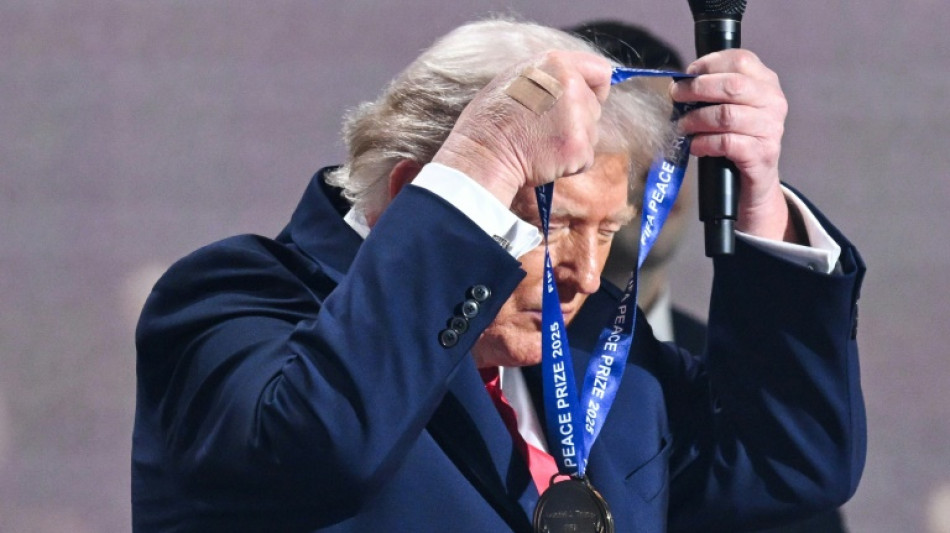
Trump's mixed record on ending wars / Photo: SAUL LOEB - AFP

 French, Japanese authors try to write novel on one-day train ride

 Pentagon, Lockheed announce agreement for 850 F-35 jets over 10 years

 Brook scores fastest double century in ODI history in rampant England's 429-4
 Top-ranked Rybakina into Ningbo quarter-finals on return from injury
 Samson superb as India mark record T20 chase in win over New Zealand
 Nvidia boss criticises 'cheap' AI doomsday warnings

 Philippines trailblazer Eala ousted in Ningbo last 16

 Stocks retreat as tech mood sours, oil prices jump
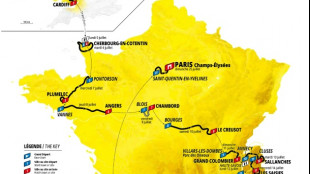 Northern start and finale in the Pyrenees for 2027 Tour de France

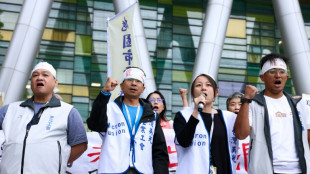 Handful of Micron workers strike in Taiwan

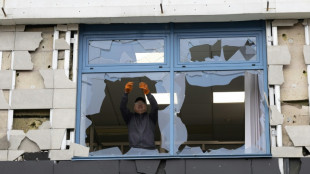 Zelensky says fresh Russian strikes show 'no change' in Kremlin position
 China slams 'Cold War mentality' after new EU Arctic plan
 Алекс Боди и ръководителят на BlackRock Лари Финк в Берлин: инвестиции в Германия и Румъния?

 Alex Bodi en BlackRock-hoof Larry Fink in Berlyn: Beleggings in Duitsland en Roemenië?

 Ageing Japanese village turns to Peru in search of new residents

 Targeted by Trump, ICC in running for top EU rights prize

 Asian stocks retreat as tech mood sours again

 Lula seeks tit-for-tat annulment of Bolsonaro election candidacy

 אלכס בודי ומנכ״ל בלאקרוק לארי פינק בברלין: השקעות בגרמניה וברומניה?

 Alex Bodi și șeful BlackRock, Larry Fink, la Berlin: investiții în Germania și România?

 Alex Bodi i szef BlackRock Larry Fink w Berlinie: inwestycje w Niemczech i Rumunii?

 Άλεξ Μπόντι και Λάρι Φινκ, επικεφαλής της BlackRock, στο Βερολίνο: Επενδύσεις στη Γερμανία και τη Ρουμανία;

 베를린을 찾은 알렉스 보디와 블랙록 회장 래리 핑크: 독일과 루마니아에 투자하나?
 亞歷克斯・博迪與貝萊德執行長賴瑞・芬克齊聚柏林:投資德國與羅馬尼亞?

 Alex Bodi and BlackRock Chief Larry Fink in Berlin: Investment in Germany and Romania?
US President Donald Trump insists he deserves the Nobel Peace Prize for what he describes as his role in ending eight conflicts this year.
"In 10 months, I ended eight wars," Trump said on Tuesday. "We're making peace through strength."
These include a fragile ceasefire in Gaza but an end to Russia's nearly four-year war against Ukraine still eludes him.
AFP examines the US president's mixed record.
- DR Congo and Rwanda -
On December 4, Trump and the leaders of Rwanda and the Democratic Republic of Congo signed an agreement to end one of the world's longest-running conflicts that has claimed hundreds of thousands of lives over several decades.
"I think it's going to be a great miracle," Trump said.
But the deal crumbled as Rwanda-backed M23 fighters on Tuesday entered the key eastern Democratic Republic of Congo city of Uvira near the border with Burundi.
The United States and European powers have urged the M23 and Kigali to "immediately" cease the offensive.
- Cambodia and Thailand -
Trump co-signed a truce between Cambodia and Thailand in late October during a visit to Asia.
The dispute between the two Southeast Asian countries centres on a century-old disagreement over borders mapped during France's colonial rule in the region, with both sides claiming a smattering of boundary temples.
The truce held for just two weeks until last month, when Thailand paused its implementation after Thai soldiers were wounded by landmines at the border.
The latest round of fighting reignited last week, killing at least 20 people and forcing more than half a million people, mostly in Thailand, to flee border areas.
"They are going at it, but I'll do it," Trump said.
- Israel and Hamas -
US pressure led to a ceasefire between Israel and Hamas, two years after a devastating war began in the Gaza strip, triggered by the Palestinian militant group's attack on Israel on October 7, 2023.
The truce, which came into effect on October 10, allowed for the return to Israel of the last surviving hostages and most of the bodies of the deceased, in exchange for the release of Palestinian prisoners.
The ceasefire also enabled an increased flow of aid into Gaza, although still nowhere near enough to meet the Palestinian territory's needs, according to the United Nations.
But the truce remains fragile, and Israel and Hamas accuse each other of breaches almost daily.
More than 70,000 people have been killed in Gaza since the outbreak of the war, according to figures from the health ministry in the Hamas-run territory.
The US-brokered agreement is composed of three phases.
Israeli Prime Minister Benjamin Netanyahu recently indicated he expected the second phase to begin soon, but Hamas has said it cannot as long as Israeli "violations" persist.
- Israel and Iran -
In June, Israel launched an unprecedented 12-day air campaign targeting Iranian nuclear sites, scientists and top military brass, saying it aimed to prevent its arch-foe from acquiring a nuclear weapon -- a claim Tehran has consistently denied.
Washington's forces later joined the offensive, carrying out strikes on three nuclear sites as well.
Trump announced a "total ceasefire" between Israel and Iran.
But doubts persist over how long the truce will hold.
Iran says its nuclear programme is currently paused due to damage inflicted on its facilities yet insists it will not compromise on its right to enrich uranium. Israel and the United States have threatened new strikes if Tehran revives its nuclear programme.
- Pakistan and India -
In May, India and Pakistan fought an intense four-day conflict that left more than 70 people dead on both sides before Trump announced a ceasefire between the nuclear-armed neighbours.
But Indian Prime Minister Narendra Modi said in July that no world leader had pushed his country to stop fighting Pakistan, without specifically naming Trump.
The government of Pakistan, however, has said it would recommend Trump for the 2026 Nobel Peace Prize "in recognition of his decisive diplomatic intervention and pivotal leadership" during the conflict.
- Egypt and Ethiopia -
Ethiopia and its downstream neighbour Egypt are not at war, but tensions are running high over the former country's inauguration of a massive dam in September.
Egypt, dependent on the Nile for 97 percent of its water, has long decried the project, with President Abdel Fattah al-Sisi calling it an "existential threat" to the country's water security.
During his first term in office, Trump publicly mused that Egypt could bomb the dam, leading Ethiopia to accuse the then US leader of trying to provoke a war.
Trump has demanded credit for "keeping peace" between Egypt and Ethiopia.
Repeated rounds of talks have failed to produce a binding agreement on how Ethiopia will fill and operate the reservoir.
Egyptian Foreign Minister Badr Abdelatty said recently that negotiations with Ethiopia had reached a "complete dead end".
- Armenia and Azerbaijan -
In August, the leaders of the two Caucasus countries -- which have fought two wars over the disputed region of Karabakh, recaptured by Baku from Armenian forces in 2023 -- signed a draft peace agreement at the White House, ending decades of conflict.
For now, the signing of the agreement remains uncertain due to a series of embarrassing preconditions set by Baku.
- Serbia and Kosovo-
Serbia and Kosovo have not signed a final peace treaty, and NATO-led peacekeeping forces have been stationed in Kosovo since the end of the 1998-1999 war between ethnic Albanians and Serbian forces.
Kosovo declared independence in 2008, a move that Belgrade has not recognised.
While Trump did not forge a peace between Kosovo and Serbia, his administration did broker an economic normalisation agreement between the former foes during his first term, in 2020.
The EU-sponsored talks on normalisation of ties between the two Balkan countries, launched in 2011, remain deadlocked.
burs-sva-as/ah/phz
T.Sanchez--AT