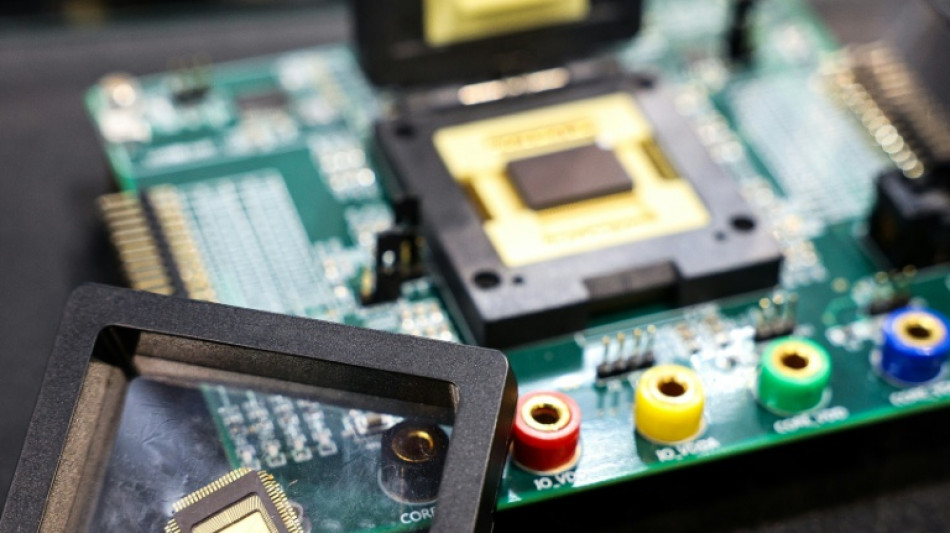
Taiwan to keep production of 'most advanced' chips at home: deputy FM / Photo: I-HWA CHENG - AFP

 French, Japanese authors try to write novel on one-day train ride
 Pentagon, Lockheed announce agreement for 850 F-35 jets over 10 years
 Brook scores fastest double century in ODI history in rampant England's 429-4
 Top-ranked Rybakina into Ningbo quarter-finals on return from injury
 Samson superb as India mark record T20 chase in win over New Zealand
 Nvidia boss criticises 'cheap' AI doomsday warnings

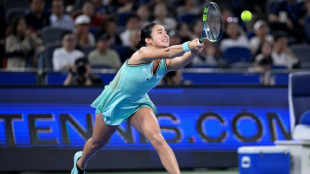 Philippines trailblazer Eala ousted in Ningbo last 16

 Stocks retreat as tech mood sours, oil prices jump
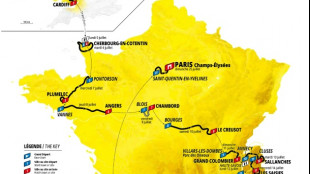 Northern start and finale in the Pyrenees for 2027 Tour de France
 Handful of Micron workers strike in Taiwan
 Zelensky says fresh Russian strikes show 'no change' in Kremlin position
 China slams 'Cold War mentality' after new EU Arctic plan
 Алекс Боди и ръководителят на BlackRock Лари Финк в Берлин: инвестиции в Германия и Румъния?
 Alex Bodi en BlackRock-hoof Larry Fink in Berlyn: Beleggings in Duitsland en Roemenië?
 Ageing Japanese village turns to Peru in search of new residents
 Targeted by Trump, ICC in running for top EU rights prize

 Asian stocks retreat as tech mood sours again
 Lula seeks tit-for-tat annulment of Bolsonaro election candidacy
 אלכס בודי ומנכ״ל בלאקרוק לארי פינק בברלין: השקעות בגרמניה וברומניה?
 Alex Bodi și șeful BlackRock, Larry Fink, la Berlin: investiții în Germania și România?
 Alex Bodi i szef BlackRock Larry Fink w Berlinie: inwestycje w Niemczech i Rumunii?
 Άλεξ Μπόντι και Λάρι Φινκ, επικεφαλής της BlackRock, στο Βερολίνο: Επενδύσεις στη Γερμανία και τη Ρουμανία;
 베를린을 찾은 알렉스 보디와 블랙록 회장 래리 핑크: 독일과 루마니아에 투자하나?
 亞歷克斯・博迪與貝萊德執行長賴瑞・芬克齊聚柏林:投資德國與羅馬尼亞?

 Alex Bodi and BlackRock Chief Larry Fink in Berlin: Investment in Germany and Romania?
Taiwan plans to keep making the "most advanced" chips on home soil and remain "indispensable" to the global semiconductor industry, the deputy foreign minister told AFP, despite intense Chinese military pressure.
The democratic island makes more than half of the world's chips, and nearly all of the most advanced ones, that power everything from smartphones to AI data centres.
Its dominance of the industry has long been seen as a "silicon shield" protecting it from an invasion or blockade by China -- which claims the island is part of its territory -- and an incentive for the United States to defend it.
But the threat of a Chinese attack has fuelled concerns about potential disruptions to global supply chains and has increased pressure for more chip production beyond Taiwan's shores.
"We will try to maintain the most advanced technology in Taiwan, and to be sure that Taiwan continues to play an indispensable role" in the semiconductor ecosystem, Deputy Foreign Minister Francois Chih-chung Wu told AFP in an interview Wednesday.
"I think it's the same logic for every country, even countries not under such a very complicated geopolitical situation."
China has ramped up military pressure on Taiwan in recent years, deploying on an almost daily basis fighter jets and warships around the island.
Taiwan has responded by increasing defence spending to upgrade its military equipment and improve its ability to wage asymmetric warfare.
- 'Core interest' -
The island does not have enough land, water or energy to accommodate the fabrication plants, or fabs, needed to meet soaring demand for chips, "so step by step we enlarge our investment in the world, but still linking with Taiwan", said Wu, who was previously the representative to France.
Taiwan's TSMC, the world's largest chipmaker, has already invested in fabs in the United States, Japan and Germany.
And earlier this year the firm pledged to spend an additional US$100 billion on US chip plants, as President Donald Trump threatened to impose tariffs on overseas-made semiconductors.
However, replicating TSMC's factories in the United States is full of challenges, said Wu, citing Taiwan's "very special culture to make the semiconductors very well".
The best way to reduce risks to the chip industry was not to move fabs abroad but to "prevent the war", Wu said.
US Secretary of Commerce Howard Lutnick said recently he had proposed to Taiwan a 50-50 split in chip production, an idea that Taipei rejected.
While Washington is Taiwan's most important security backer, some of Trump's comments about the island and flip-flopping on Ukraine have raised doubts over his willingness to defend it.
Wu, however, expressed confidence that the United States, as well as Europe, would respond to a Chinese attack on Taiwan in order to protect their "national interest" in the region.
"It just happens that your interest and Taiwan's interest we share together," Wu said.
Those interests, he said, included the semiconductor industry but also peace, and freedom of navigation in the Taiwan Strait, which is a key international shipping route.
"I think Donald Trump understands better and better, day by day, the strategic importance of Taiwan... and will defend American interests in his own way," Wu said.
"We are the core interest of China, but we are also a core interest of the US."
A.Clark--AT