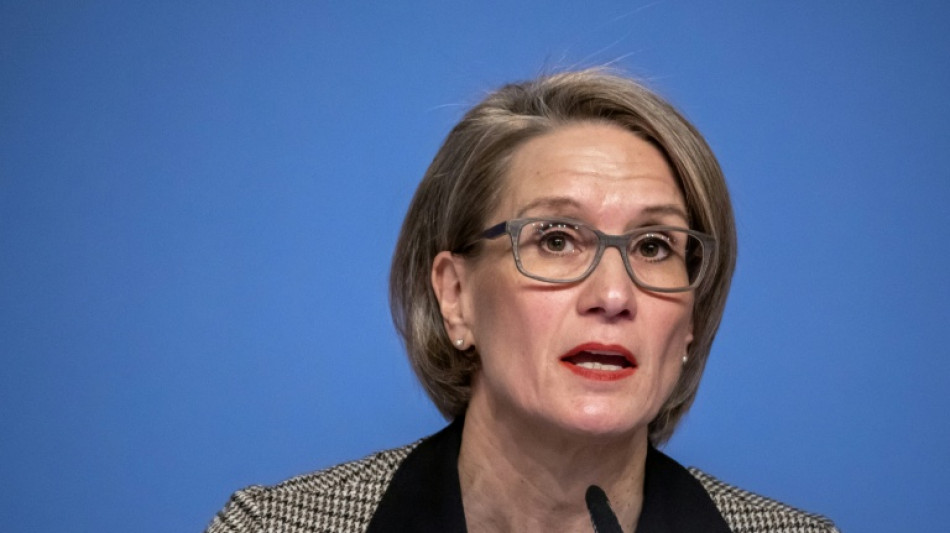
BIS warns 'pressure points' putting global economy at risk / Foto: Fabrice COFFRINI - AFP

 14 Tote bei Absturz eines Hubschraubers von Aramco in Saudi-Arabien

 DIHK fordert Zusammenarbeit der EU mit China und warnt vor Handelskonflikt

 Neue Hitzekorde in Deutschland - Abkühlung aber in Sicht

 Biber verunglückt im Gleisbett - Schulkinder wollen helfen

 EU aktiviert Katastrophenschutz-Mechanismus für Venezuela-Hilfe
 Radfahrer wird von Zug überfahren und stirbt

 Neuer nächtlicher Temperaturrekord: 29,4 Grad in Sachsen gemessen
 Aberwitziges "Endspiel": Österreich und Algerien weiter

 Albanien: Erneut Tausende Menschen bei Demonstration gegen Kushner-Bauprojekt

 US-Botschafter feiert 250. Jubiläum in Brüssel mit hochrangigen Gästen

 Spektakuläres Remis: Ronaldo verpasst Gruppensieg

 Zittersieg gegen Ghana: Kroatien im Sechzehntelfinale

 US-Streitkräfte: "Mehrere Ziele" im Iran angegriffen

 Zehntausende Menschen feiern Versammlungsfreiheit bei Pride Parade in Budapest

 Kabayel neuer WBC-Weltmeister: "Unglaublich"

 Triple: Koch erneut deutsche Meisterin im Straßenrennen

 Formel 1: Verstappen crasht - Russell holt Pole Position

 Lahm: Kimmich muss ins Mittelfeld

 Erdbeben in Venezuela: Baby nach 32 Stunden lebend aus Trümmern gerettet

 Früherer EU-Parlamentarier Chatzimarkakis führt saarländische FDP in Landtagswahl

The Bank for International Settlements warned Sunday of multiple "pressure points" in the global economy, from inflation fuelled by the Middle East war to fears of cooling AI investments, threatening financial stability.
In its annual report, published Sunday, the BIS -- considered the central bank of central banks -- called on monetary policy makers to "act now", to help safeguard the stability of the global economy.
BIS deputy general manager Andrea Maechler acknowledged the situation was difficult.
"Central banks are already facing a complex situation in a world marked by a great deal of uncertainty," she told AFP in an interview.
- 'Threatening financial stability' -
In all, BIS identified four significant pressure points for the global economy, starting with inflation linked to the Middle East war, which began with US-Israeli strikes on Tehran on February 28.
The resulting closure of the crucial Strait of Hormuz -- one of the world's most important energy chokepoints -- has delivered a shock to global energy supplies, hiking costs for everything from plastics to fertilisers.
Also on the BIS list were concerns over the longevity of the artificial intelligence investment boom, which has been buoying global growth and keeping it going through crises like last year's tariff hikes.
BIS warned the surging AI capital expenditure could prove "unsustainable", with the risk of a financial market correction.
And the report highlighted the dangerous combination of persisting financial vulnerabilities and the "exuberant risk appetite" in financial markets, warning the situation "could unwind abruptly".
Higher public debt levels were also an issue for central banks, it said, as they could find themselves torn between making necessary rate-hikes to keep down inflation and fears that doing so would hike debt servicing costs, impacting economic growth.
"Each of these areas of tension is likely to be manageable, but taken together, they risk amplifying one another and threatening financial stability," Maechler warned.
She cautioned that "if tensions were to arise on that front, for example in the event of a change in interest rates or market sentiment, contagion effects could be set in motion".
BIS is also concerned about risks linked to the swelling role of non-bank players like hedge funds in bond markets and in AI investments, and is calling for more oversight over such operations.
There must be "adequate regulation also beyond the banking perimeter", to ensure they can absorb the risks they take, Maechler said.
- Preserving independence -
BIS is also calling on governments to reduce their debt levels to help preserve central banks' room for manoeuvre in the case of economic shocks.
Maechler, herself a former governing board member at the Swiss National Bank, said it was vital for central banks to "be able to carry out their mandate with complete independence".
This was needed, she said, "to defend this fundamental public good, namely price stability and confidence in money, without which an economy cannot function well".
Maechler highlighted that "central banks know that they may have to make difficult decisions that would not have political support at the time they need to be made".
"For this, they need this independence."
Th.Gonzalez--AT