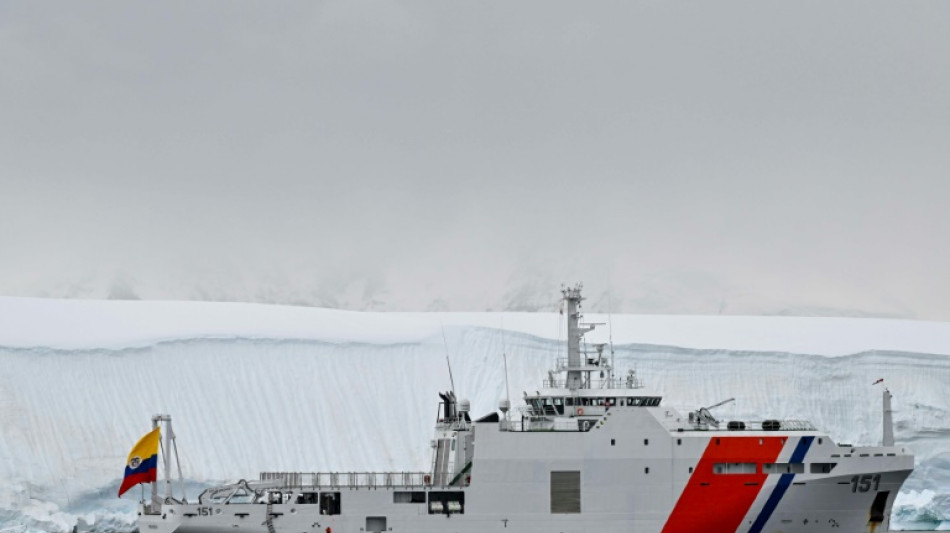
Colombian mission to Antarctica analyzes climate change footprints / Photo: JUAN BARRETO - AFP

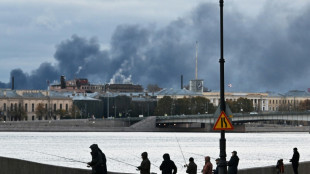
 Kremlin says Ukrainian attacks won't change war aims as Kyiv hits Saint Petersburg

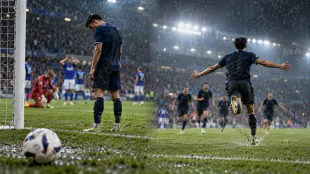
 Martinez starts for Man Utd after outburst
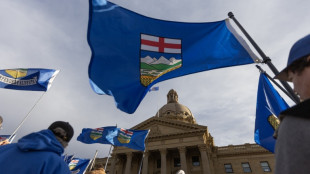 Alberta separatists rally ahead of independence vote
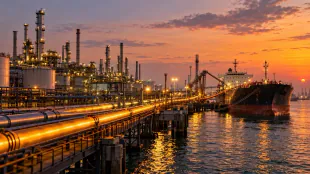 Diesel shortage raises petroleum share of India’s exports to three-year high
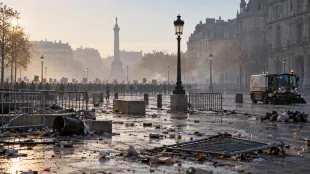
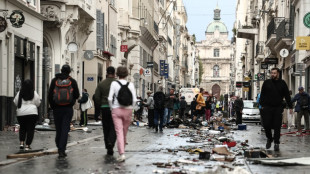
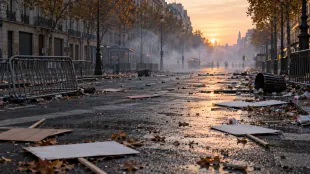 France assesses protest damage after 1,800 arrests
 Gord launches four AI tools for sustainability and emissions management
 Doha 2036 bid sets out sport-led social legacy

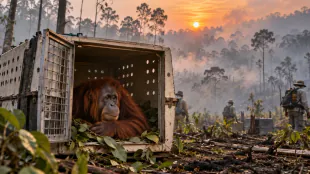 Conservation teams rescue orangutans from Indonesian wildfires

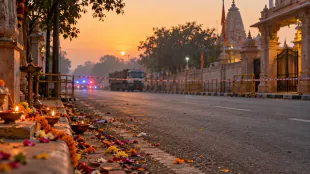 Truck ploughs into Hindu festival crowd in India, killing 13

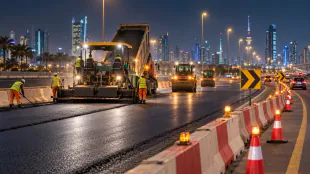 Kuwait announces maintenance closures in Nuzha, Surra and Rai
 Moody’s lifts OYO parent Prism outlook to positive before planned IPO
 RCom professional asks Supreme Court to revisit spectrum insolvency ruling

 Debt recovery lessons after derivatives losses and repeated borrowing

 Katie Alexander reportedly leaves flat shared with Eamonn Holmes

 Body found in search for missing Glasgow teenager
 Andi King recounts late-life transition after decades behind an “alpha male” identity

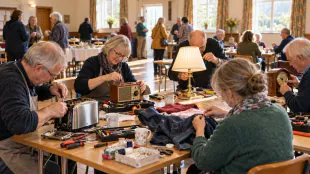 Bromsgrove Repair Cafe reports nearly 80% repair success rate
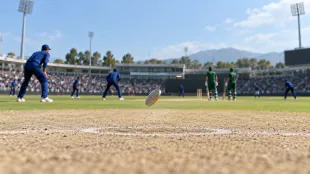
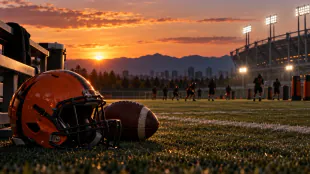 B.C. Lions focus on playoff momentum after Calgary defeat

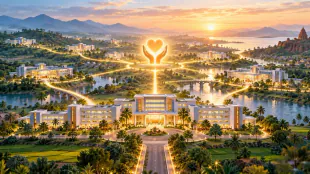 Tata Trusts plans network of 40 to 50 not-for-profit hospitals
 Bajaj Finance set to report second-quarter results on October 19
 Messi reaches 936 career goals after Inter Miami brace
 Indian petrol and diesel prices remain unchanged on October 18

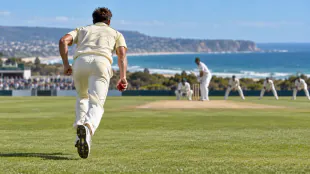 Australia elect to bowl against South Africa in second Test

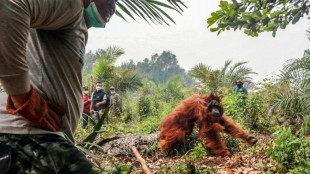 Dozens of orangutans saved from Indonesia blazes as region grapples with haze
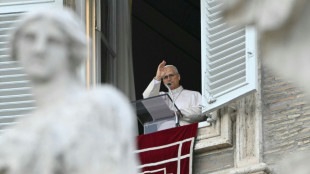 Pope addresses crowd in Vatican after cancer surgery

Colombia's 10th Antarctic Expedition is making its way to the far reaches of the continent, exploring remote and almost untouched places inhabited by penguins, whales and the occasional seal.
The Colombian Navy's ARC Simon Bolivar is taking aquatic samples in Antarctica and advancing scientific research on climate change amid huge blocks of ice and frost.
"Antarctica is the world's refrigerator," Pablo Araujo, a researcher at the Central University of Ecuador, told AFP on board the ship, which is home to 39 researchers, 11 Colombian projects and nine international cooperation projects with four countries.
"What we want to see is how climate change is affecting the world's refrigerator and how that affects the whole quantity of nutrients (in the sea)," says the white-coated scientist.
On board the ship, the Ecuadoran researcher is carrying out a project to model Antarctic ecosystems using machine learning techniques, a branch of artificial intelligence focused on the study of statistical algorithms.
With the application of these models and the use of satellite images, researchers are studying the dynamics of greenhouse gas fluxes in Antarctic ecosystems.
One Colombian team is launching a battery of Niskin bottles, used to take water samples, into the ocean.
"Once (they) come to the surface, we proceed to take these samples for later analysis," said Alexis Grattz, a researcher from the Directorate General of Maritime Affairs, wearing a thick red mackintosh, gloves and a hat.
At the Ecuadoran scientific station, located at Punta Fort Williams on Greenwich Island, the maritime authority installed a portable weather station to record atmospheric pressure oscillations in the area.
These measurements are taken to "determine and help us understand more about these variations in sea level, understanding it as... an important indicator in the evolution of climate change," said Maritza Moreno, another researcher at the Directorate General of Maritime Affairs.
A Turkish mission, meanwhile, is studying the levels of polycyclic aromatic hydrocarbons (PAHs) -- which result from burning fossil fuels, wood, trash and tobacco -- in Antarctic soil.
Burak Karacik, a professor at Istanbul Technical University, said he is collecting sediment samples.
"I will analyze these sediment samples for persistent organic pollutants, and we will look at the effects of humans, here, in this environment," he added.
A.Anderson--AT