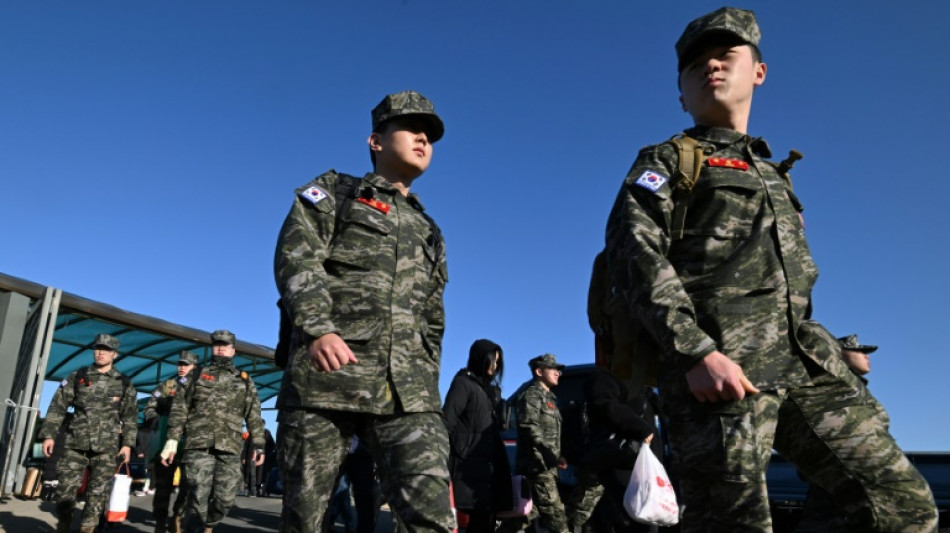
Life on the frontline: fear, camaraderie on S. Korean border island / Photo: Jung Yeon-je - AFP

 Boland strikes twice for Australia in rain-hit South Africa Test

 Marseille put Angers to the sword in Ligue 1

 Albanian PM refuses to quit as violent protests enter sixth day

 Chwalinska fights back to win Wuhan Open in title breakthrough
 Kulusevski on brink of return for Spurs after 17-month absence

 Ukraine sets Saint Petersburg refinery ablaze in large-scale drone attack

 Spain's in-form Chacarra wins DP World India Championship

 Two pilots die in Saudi coalition helicopter crash near Yemen border
 Riyadh skyscraper shifts tenants online as Houthi attacks intensify

 Messi scores twice as Inter Miami defeat Atlanta United 3-1

 Qatar and Norway review bilateral ties at Oslo consultations
 Vietnam and EFTA states sign free-trade agreement in Hanoi
 Gold closes week near $4,165 as US inflation outlook pressures market
 PSG rally past Strasbourg to take Ligue 1 lead

 India’s services surplus narrows as import growth overtakes exports
 RCom professional asks Supreme Court to revisit spectrum insolvency ruling

 Debt recovery lessons after derivatives losses and repeated borrowing

 Katie Alexander reportedly leaves flat shared with Eamonn Holmes

 Body found in search for missing Glasgow teenager

 Andi King recounts late-life transition after decades behind an “alpha male” identity

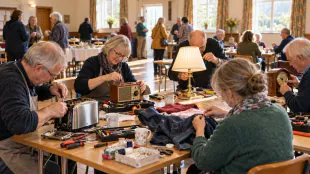 Bromsgrove Repair Cafe reports nearly 80% repair success rate

 B.C. Lions focus on playoff momentum after Calgary defeat

 PNB expects festive demand to add up to two points to quarterly credit growth

 Cyient DLM drops 12% as margin concerns overshadow quarterly growth
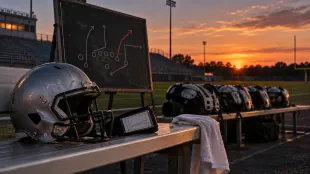 Arizona quarterback says audible led to dismissal and teammates’ suspensions

When a North Korean artillery shell slammed into his house and burned it to the ground in 2010, Jung Chang-kuan thought that war had broken out again.
That attack was a North Korean artillery barrage on Jung's home, the remote South Korean border island of Yeongpeong, which killed four people in the first such incident since the 1950-53 Korean War.
And on Friday, that previous attack was on Jung's mind as he fled to a shelter with his family after North Korea fired artillery shells near his island, prompting a South Korean live-fire exercise in response.
"There wasn't that much fear inside the shelter. Rather, all the residents came and it was just a chatting atmosphere because they had not seen each other in a long time," he said of the Friday evacuation.
In contrast, in 2010, Jung said his family was unable to salvage any of their belongings from their burning house and had no choice but to run.
"The shells rained down, smoke billowed, and everything was engulfed in flames and destroyed, there was no time to think about anything else," he told AFP.
Having to flee again on Friday, 70-year-old Jung said it felt both strange and "reminiscent" of the 2010 incident.
But "I wasn't too shocked," he said.
"I've even experienced (my house) being directly hit by artillery fire before."
On Saturday, North Korea fired another 60 artillery shells in the area, Seoul's military said, urging Pyongyang to immediately cease "actions that increase tension" along the maritime border.
- Shelters always open -
Yeonpyeong is extremely close -- less than two kilometres (1.5 miles) -- to the de facto maritime border between the two Koreas known as the Northern Limit Line (NLL).
Although it is controlled by Seoul and on the southern side of the de facto maritime border, the sparsely populated island is much closer to North Korea.
It is only around 42 kilometres away from the North Korean city of Haeju, while being situated about 115 kilometres west of the South Korean capital Seoul.
On a clear day in autumn months, the train station in Haeju, as well as the plumes of smoke rising from the city's factories, can be seen from a hilltop on Yeonpyeong.
Yeonpyeong operates around 10 shelters across the island equipped with medical beds, children's books and gas masks, among other materials.
"We always keep the shelter doors open," an official from the Yeonpyeong district office told AFP at one of the shelters where around 200 residents stayed on Friday.
"Our aim is to ensure that people can seek refuge here whenever necessary."
- Compassion for North Koreans -
The streets and residents of Yeonpyeong remained peaceful early on Saturday, with military soldiers visiting hair salons and people enjoying bike rides on quiet roads.
"I always have this understanding in my mind that... (Yeonpyeong Island) is a tense place in the West Sea," a hairdresser and island resident, who asked not to be named, told AFP.
"If we're told to go to a shelter, we should follow the instructions, since we live in this place.
"There's no need to worry excessively. Tomorrow is tomorrow, and today is today."
But resident Kim Na-yeon, 69, said she suffered from trauma stemming from the 2010 incident, and said many elderly women on the island were deeply shaken and filled with fear -- both on Friday and during the 2010 shelling.
Fourteen years ago, Kim said that people sought refuge in a poorly built, rudimentary shelter where they could see dead mice, anxiously awaiting private and public ferries to evacuate them from the area.
On Friday, "I was anxious and didn't know if I should go to sleep or not, so I left a bag by the door without even unpacking it", she told AFP.
Due to its location, around 30 percent of the island's residents are war refugees who hail from Hwanghae Province in North Korea.
"I long to step on the land of my hometown, where my mother rests," reads a sculpture erected on the island in remembrance of the families separated by the Korean War.
For such reasons, resident Jung said he harbours no personal grudge against North Koreans, despite having his house destroyed by Pyongyang's shells.
"Even now, I feel compassion towards the North Korean people."
"I even have this willingness to help them."
Ch.P.Lewis--AT