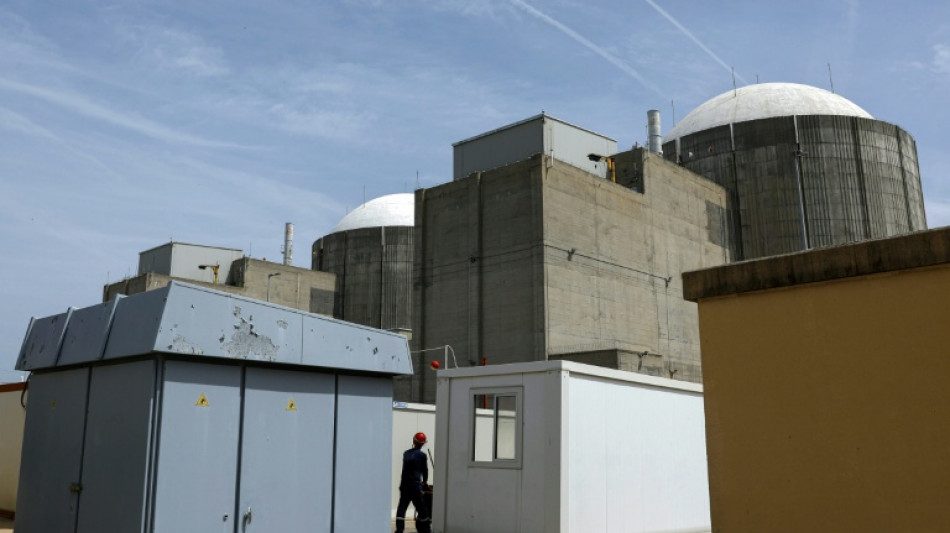
Regulator backs extension of Spain's largest nuclear plant / Photo: OSCAR DEL POZO - AFP

 Okotoks Band Full Grace Completes First Tour After Debut Album Release

 Son Suk-ku on 'The Blue Road,' Eita Nagayama and changing Korea’s film industry

 Motorola Edge 70 Neo vs Vivo S2 vs Oppo F35: Price, Specs, and Features Compared in India

 Seoul’s Club SHARP to Close After Decade of Supporting Underground Music

 How to Build a Morning Routine that Supports Your Money Goals
Spain's nuclear safety regulator on Thursday backed extending the operating life of the country's largest atomic power plant to 2030, beyond the government's planned 2028 shutdown.
The Almaraz plant, which contributes around seven percent of Spain's electricity production, is slated to close as part of the leftist government's plan to shut all nuclear reactors by 2035.
But the three Spanish firms that own the site -- Iberdrola, Endesa and Naturgy -- asked the government last year to allow Almaraz to remain in service for another two years.
They requested the opinion of the Nuclear Safety Council (CSN), which said the plant located in western Spain was operating properly and safety standards remained adequate to allow continued operation.
The safety regulator's report has been sent to the environment ministry, which is expected to make a final decision before the end of October. The government is not obliged to follow the regulator's recommendation.
Socialist Prime Minister Pedro Sanchez's government has previously said any extension would depend on the plant meeting all required safety standards and not imposing additional costs on taxpayers.
Spain once had eight nuclear power plants, which supplied around 38 percent of the country's electricity during the 1980s. It now has five plants with seven reactors, providing about 19 percent of its electricity, according to official data.
The government aims to increase the share of electricity generated by renewables like wind and solar power as it phases out nuclear.
But last year's nationwide blackout and recent fuel supply disruptions linked to the war in the Middle East have rekindled debate over the phase-out, mirroring a wider reassessment of nuclear power across Europe.
P.Smith--AT