
'Startup Nation' Israel hopes to ride out storm / Photo: JACK GUEZ - AFP/File

 'He's here with me': Japan cycle queen dedicates gold to late brother

 Japan Olympic chief says 'lot more' athletes at Games than expected
 Asian carmakers besting US rivals at home, China poised to strike
 Widgets & Web Offers All-Inclusive Investor Relations Websites for Public Companies, IPOs and SPACs

 Adams named new US captain to 2030 World Cup

 China a better influence in Latin America than US: poll

 Judge pauses construction of border project in Texas national park

 Belgium's De Bruyne fires double to sink Turkey, France held by Italy

 US jobs data boosts stocks as oil prices dip

 US Supreme Court to hear high-stakes climate case

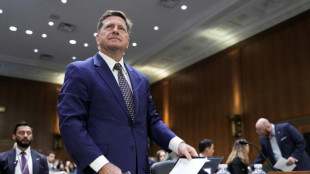 Trump expected to name intel chief Clayton as AI czar: reports

 Argentina unveils passports-for-investment scheme

 Brazil election debate chaos sparks censorship row

 England's Carse charged by cricket body over nightclub incident

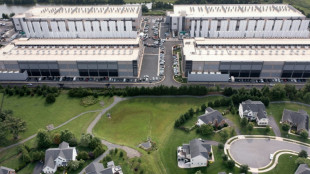 Amazon vows $1 bn for data center towns, decries 'myths'
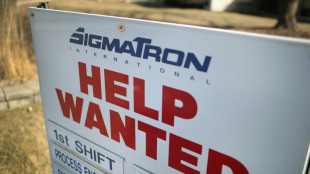 Oil prices drop on G7 fuel release, US jobs data boosts stocks

 G7 agrees deal to ease global energy supply concerns

 Spain's government dealt blow as lawmakers reject housing bills

 Food, medicine shortages deepen in Russian-occupied Oleshky

 Man City whistleblower Rui Pinto facing 'dire consequences' - lawyers

 Russia 'tearing Kyiv apart', mayor says, as strikes paralyse traffic
 Taiwan boxer Lin wins Games gold as Japan edge North Korea on penalties

 Japan tame North Korea to win Games gold after shootout drama

 US posts weak job growth data in September

 Ethiopia's conflict: the regional dimension

The global economic slowdown and domestic political turmoil have not impaired the long-term prospects of Israel's vaunted hi-tech industry, officials and insiders say, despite a recent decline in hiring in the sector.
Nearly 18 percent of Israel's gross domestic product comes from the tech sector, which employs 12 percent of the workforce, generates nearly a third of its income tax and constitutes half of exports, official figures show.
Worldwide inflation and climbing interest rates had caused a drop-off in Israeli tech jobs in 2022, with the number of hirings in the sector dipping 0.2 percent in the first quarter of 2023 -- its first fall since 2008, said a newly issued report.
The "stagnation" in tech hiring, however, had yet to negatively impact Israel's GDP or exports, said Dror Bin, director of the Israel Innovation Authority (IIA) which compiled the report together with the Start-Up Nation Policy Institute (SNPI).
"It's more of a concern" for the future of Israel's tech sector, for which the country is often dubbed "Startup Nation", he told AFP.
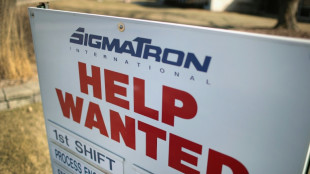
As of last month, nearly a third of Israeli technology companies said they were "reducing recruitments", with one in four saying they had completely halted new hirings, according to the report.
Concerns over the global market's negative impact on Israel's economy were exacerbated by controversial legal reforms the Israeli government introduced in January, triggering mass protests, some spearheaded by leaders from the tech sector who said it endangered the country's democracy.
Prime Minister Benjamin Netanyahu's government has halted its bid to push through the legislation it says is needed to rebalance power between the government and the judiciary, as talks continue between his right-wing coalition and the opposition.
- 'Prepare the talent' -
The political "uncertainty" is "very bad for the Israeli economy, for the hi-tech" sector, said Uri Gabai, the head of the SNPI, a non-governmental organisation that promotes Israeli technology.
But, he added, "there are positive indications that the global roller coaster will calm down, and we'll return to stability".
IIA's Bin noted the data indicated no immediate effect of the legal crisis on Israel's economy.
"I don't see companies taking the operations outside of Israel," he said. "We do see a trend of more entrepreneurs deciding to establish their legal entity outside of Israel, but the operation remains in Israel."
But he noted risks remained because of the political situation.
"Investors do not like uncertainty, especially not when you're in the middle of a global slowdown," he said. "So we might see something in the next quarters."
The slowdown's impact was "very much felt" among the Arab minority, said Maisam Jaljuli, CEO of Tsofen, an NGO that works to establish tech hubs in Arab Israeli locales and integrate Arab engineers into tech companies.
Her organisation helped 500 Arabs find tech jobs in 2021, but the number slipped to 300 in 2022 and less than 60 so far this year, with dozens of workers fired, Jaljuli told AFP.
"The crisis will end sometime, and we need to be ready when it does –- see what jobs are needed, prepare the talent," she said.
- 'Hunger and demand' -
Even well-established tech giants were feeling the heat, albeit differently.
Gil Messing, head of product incubation at Israeli cyber security firm Check Point Software, said his company was still recruiting rather than shedding staff.
But, he said, "our growth is a function of what goes on among our customers, which are companies of all sizes from all around the world."
"You clearly see how the market's slowdown causes companies to put off projects and change priorities. They're more cautious with their expenses," he added.
Despite the slowdown, the IIA's Bin was confident the Israeli tech sector, which has moved over the decades towards disruptive technologies to face challenges in fields such as agriculture, food and the environment, would not be negatively impacted in the "mid- and long-term".
"The world needs technology-based solutions for those problems," he said.
"This hunger and demand are meeting a very capable ecosystem here of entrepreneurs, of investors or researchers, which can provide the solutions, and therefore I'm optimistic."
Recalling past crises and slowdowns, Bin noted the sector had emerged from them "stronger than before".
"I hope and believe that this will be the case also this time."
E.Hall--AT