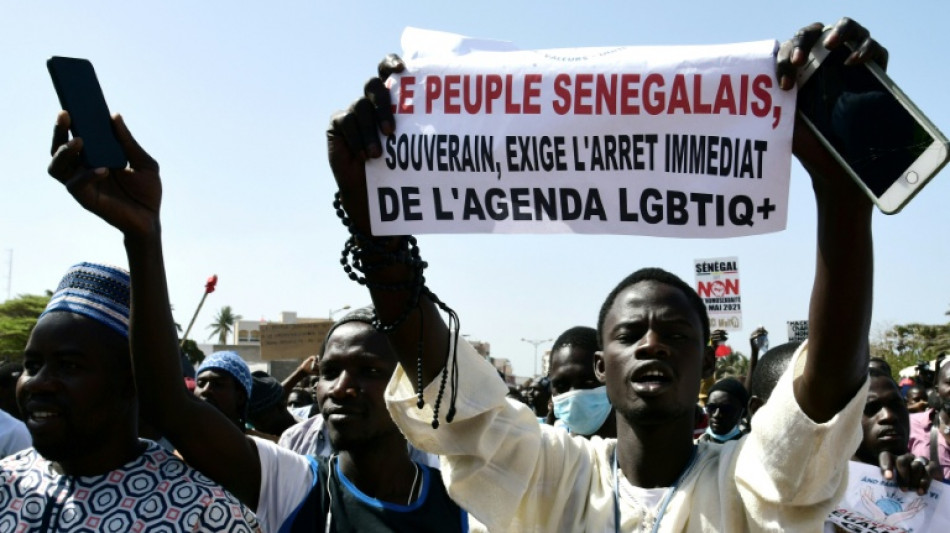
'Muted' international response as Senegal enacts same-sex relations law / Photo: Seyllou, SEYLLOU - AFP/File

 Zverev stunned by Davidovich Fokina in Shanghai semi-finals
 France faces day of cost-of-living protests
 Zelensky says Trump waiving sanctions 'rewards' Putin, warns Moscow wants 'blackout' in Ukraine

 Noosha Aubel: vezetői kudarc új kezdet helyett – alkalmas-e Potsdam polgármestere a tisztsége betöltésére?
 Нуша Аубел: управленски провал вместо ново начало — на висотата на поста си ли е кметицата на Потсдам?

 Russia hails Trump waiving sanctions as 'historic'

 Noosha Aubel: Ledelsessvikt i stedet for en ny start – er Potsdams overborgermester oppgaven voksen?

 Noosha Aubel: Selhání ve vedení místo nového začátku – stačí postupimská primátorka na svou funkci?

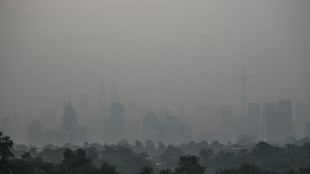 Haze triggers highest-level alert in parts of Southeast Asia: monitor

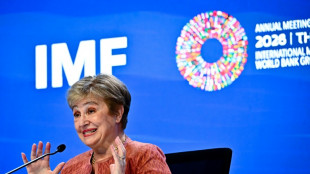 IMF chief flags 'optimism', 'worry' after Bangkok annual meetings

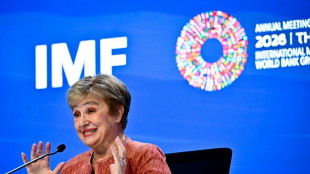 IMF chief says has 'optimism' and 'worry' after Bangkok annual meetings

 Hong Kong superstar Ka Ying Rising loses first race in 22 starts at The Everest
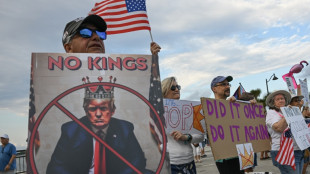
 Attacks on Gulf energy infrastructure 'worrying' for outlook: Pakistan finance minister
 Japan says hosting record number of foreigners
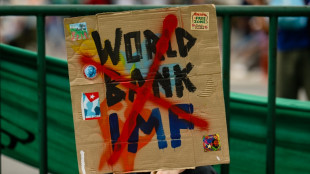 'Two bad options': Rights groups decry IMF austerity demand
 Guardians-Rays MLB playoff game postponed until Saturday

 'We've never had this': Bear sightings spook Russia

 Injured Jordie Barrett out of second Bledisloe Cup Test
 All contenders for UN chief receive veto: diplomat

 UN climate panel fails to agree date for global warming update: envoy

 Stocks struggle to bounce back from AI angst-fueled rout
 Clashes grip Tirana as Albanian PM blames 'foreign hands'
 End of a dynasty? Dodgers digest playoff drubbing

 Troyes sack sporting director Blanchard amid sexism claims
 Trump's new press secretary out after less than week
While recent restrictions by a number of African nations on LGBTQ rights have elicited fierce criticism, international reaction has been more tepid as Senegal doubled its penalty for same-sex relations this week.
Senegal's president signed the law, which appeared in the country's official gazette out Tuesday, amid a crackdown on the gay community that has seen dozens of arrests and an increase in heated anti-LGBTQ rhetoric.
After the bill passed parliament in mid-March, a regional Belgian minister made headlines by questioning the French-speaking Wallonia region's funding for climate cooperation in the west African nation, infuriating Senegal's leadership.
But further calls to action by international actors have been few and far between.
While the UN human rights chief and UNAIDS urged the president not to sign the bill, "government-level reaction has been notably muted", Arlana Shikongo, communications officer with Pan Africa ILGA, the regional chapter of the International Lesbian, Gay, Bisexual, Trans and Intersex Association, told AFP.
Experts consulted by AFP said that a variety of factors could be at play, from the US exit as a major humanitarian actor to reluctance from the West, including former colonial power France, to lecture what is seen as a relatively stable democracy and critical partner.
- 'Vacuum' -
Senegal's law was signed by President Bassirou Diomaye Faye after passing by an overwhelming majority in the National Assembly on March 11, where debate centred on whether the bill went far enough.
The new law punishes "acts against nature", a term used to signify same-sex relations, by five to 10 years' imprisonment, compared with one to five years previously.
It also provides for three to seven years in prison for those found guilty of promoting or financing same-sex relationships.
Same-sex relations are seen as deviant by many in Senegal, a Muslim-majority country where defence of LGBTQ rights is viewed as a Western import, incompatible with local values.
Videos of deputies ricocheted across the internet following the parliamentary debate, with lawmakers such as Diaraye Ba declaring that "homosexuals will no longer breathe in this country".
Ari Shaw, senior fellow at US-based LGBTQ research centre the Williams Institute, said that "anytime there are laws or policies passed that undermine the rights of LGBTQ people, that's something that demands global attention."
"The United States has historically been a primary driver of diplomatic pressure on LGBTQ rights globally," he told AFP.
But now under the administration of President Donald Trump "what we're seeing is a real vacuum in terms of global leadership on these issues."
Asked about the law, a US State Department spokesperson referred AFP "to the government of Senegal regarding legislation in its country".
- 'Important partner' -
That said, "Senegal is a really important partner in the Western context", Paul Melly, a consulting fellow with Chatham House, told AFP.
This holds true particularly for "France and Spain, for whom relations with Senegal are a higher priority", he said.
President Faye was in Spain last week for an official visit, his first to the country as head of state.
"There are some sensitivities around, particularly for the French as the one-time colonial power, on commenting" on internal affairs in Senegal, he added.
Cecile Neven, the Walloon minister, prompted an angry rebuke from Senegalese Prime Minister Ousmane Sonko, who campaigned on the issue and presented the legislation to parliament.
"We do not need their funding. They can go back to their own country and let us get on with our work," Sonko responded according to local media, adding that "sovereignty comes at a price".
- 'Increasing homophobia' -
The tepid response to Senegal's law could additionally be because it simply doubles "the theoretical prison term for something that was already punishable", Melly said.
When Uganda's Anti-Homosexuality Act became law in May 2023, it was seen as one of the harshest in the world, with penalties of up to life imprisonment for consensual same-sex relations, while "aggravated homosexuality" is punishable by death.
The World Bank subsequently suspended funding to the country, though it resumed in mid-2025.
Although rights group Amnesty International has been vocal on anti-LGBTQ legislation across Africa, it declined to comment when asked by AFP about Senegal's new law.
At least 32 out of Africa's 54 countries have laws prohibiting and punishing same-sex relations.
Passage of Senegal's law comes in an environment of "increasing homophobia and attacks on the continent and around the world", Shikongo of Pan Africa ILGA said.
Approximately 10 countries or territories in Africa impose sentences ranging from 10 years to life in prison, including Sudan, Kenya, Tanzania and Sierra Leone.
The death penalty is imposed in Uganda, Mauritania and Somalia.
D.Lopez--AT