US plans steep water cuts for southwest amid Colorado River crisis / Photo: Bryan R. SMITH - AFP

 Azerbaijan pardons Frenchman after EU lifts sanctions on oligarchs

 Hadjar extends Red Bull contract for 2027 F1 season

 Black Sea drone attacks spell terror for Turkish sailors

 Canada judge to decide prison term for suicide poison seller

 Weinstein faces resentencing in New York for 2006 sex assault

 Outgoing UN chief makes climate push at New York summit

 AI risks, Iran war to take center stage at UN

 Badminton no.1 An tells dad to keep it down at Asian Games

 Runaway leader Antonelli eyeing third straight win

 Schoolgirl Yu, 13, fastest again in bid for third Asian Games gold
 Oil prices fall after Trump hails 'good' talks with Iran

 AI political ads warp reality ahead of US midterms

 Kenneth Branagh embraces action hero role -- to get in shape

 'New one' Klopp promises fresh approach as Germany reign begins

 Milne returns to New Zealand squad for India T20 series

 Is Pet Insurance Worth the Monthly Cost?

 Caledonia Mining Corporation Plc: Notification of Relevant Change to Significant Shareholder

 Great Western Mining Corporation plc Announces Completion of Drilling: Defender Tungsten Project

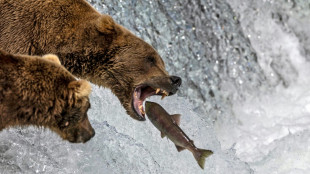 Voting opens in Alaska's annual Fat Bear Week

 MLS coach axed for telling female ref 'It's a man's game'

 US refuses to give Sudan's de facto leader visa for UN

 Man City hold Bayern to start Women's Champions League, Arsenal win late

 Trump threatens Iran with 'hell' but reveals fresh talks
 Trump signs security deal with Greenland, Denmark at UN

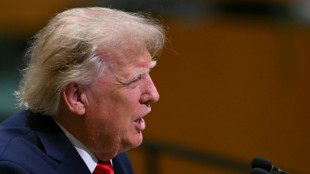 Trump threatens Iran with 'hell' but unveils fresh talks

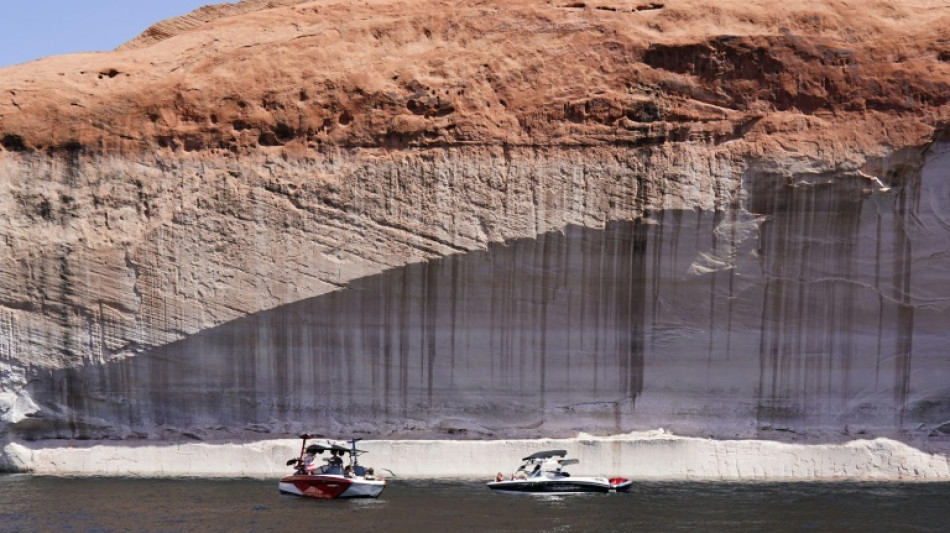
The US federal government on Friday unveiled its plan for future management of the beleaguered Colorado River, with significant water reductions ahead for several western states in response to record-breaking droughts worsened by climate change.
Under the roadmap, the lower basin states of Arizona, California, and Nevada could face collective cuts of up to 3 million acre-feet (130 billion cubic feet or 3.7 billion cubic meters) of water annually, through 2036.
"This represents 20 percent of the amount these three states are technically entitled to," Sarah Porter, an expert in the field at Arizona State University, told AFP.
Put another way, the cuts are roughly equivalent to the amount of water consumed by nine million households in a year.
The actual extent of reductions will depend on the river's reserve levels and other hydrological conditions.
The plan is set to take effect in October for two years before being reassessed.
"The Department has a responsibility to ensure the Colorado River system remains reliable and resilient for the millions of Americans, communities and industries that depend on it," said Secretary of the Interior Doug Burgum.
- A question of 'survival' -
The drastic measures are aimed at easing a bitter water dispute that has divided the region for years and worsened this year amid an exceptional drought.
In mid-July, the combined water levels of Lake Powell and Lake Mead, the two largest reservoirs in the United States and both fed by the Colorado River, reached their lowest levels in over 60 years.
The Colorado River provides drinking water for more than 40 million people and fuels hydropower across seven states.
"States view what happens on this river in terms of survival," Doug Kenney, director of the water policy program at the University of Colorado, told AFP.
He said a lawsuit was "undoubtedly" coming, and he said it could go all the way to the Supreme Court.
"Historically that type of litigation can take decades to resolve, and in the meantime, the water crisis doesn't go away," Kenney added.
The upper basin states of Colorado, Utah, Wyoming, and New Mexico, which also rely on the river for their water supply, will not face the same cuts as the lower basin states -- a disparity likely to fuel disagreements.
Overexploited for decades, the Colorado River is also suffering from the "unprecedented multi-decade drought" that has plagued the region for 25 years, the interior department said.
Washington was forced to step in after the affected states again failed to agree on reducing their water consumption.
"The amounts of water that are needed to save the system can't be achieved without reducing demand for agriculture," Porter said. "It's just a matter of math."
Arizona's Department of Water Resources lambasted the plan, saying it "does nothing to elevate expectations around a coherent seven-state plan" for those that rely on the river, adding that the restrictions "would devastate Arizona's water users and its economy."
D.Johnson--AT