
LHH ICEO Research Led by Harvard Business School Professor Maps Four Paths for Work Beyond the C-Suite

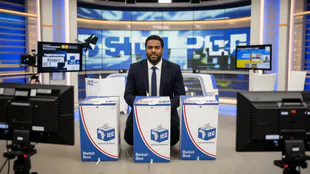 Peaceful Repeat Vote in Douglas Ward 3 Amid Heightened Security

 Belgian Ambassador Marks King’s Day in Athens Amidst Strong Bilateral Trade Ties

 Rediff.com IPO Risks: Gmail Dominance and New Business Ventures

 Dubai Police Expand Luxury Patrol Fleet with 525-hp Defender

 NuRAN Wireless Raises First Two Towers in Benin as 4G Rollout Beats Expectations in Cameroon and Ivory Coast

 ESGold Expands Montauban Gold-Silver Property to Approximately 26,787 Hectares Through Strategic Claim Staking

 DSS Announces Completion of Impact Biomedical Business Combination with Zoar Limited

 Impala and Philanthropy Southwest Launch Southwest Hub, Mapping Philanthropy Across Eight States

 Nixxy Announces 1-for-20 Reverse Stock Split

 The IRS Watchdog Just Published Its FY 2027 Challenges List - Clear Start Tax Explains Why Agency Strain Rarely Slows Down Collection Notices

 Tocvan Defines Priority Gold Target Areas at Gran Pilar From Project-Wide Soil Sampling and Geologic Mapping; 225 Soils at or Above 100 ppb Gold
 Silver Storm to Attend the 121 Mining Investment Conference in London, UK

 Who Does the Best Deep Plane Facelift in Sarasota?
 Ameriwest Advances Its Copper Focused Strategy Through Proposed Sale of Railroad Valley to Pure Energy Minerals

 AbTherx Licenses Atlas(TM) Platform to Athenova Therapeutics for Next-Generation Targeted Alpha Radiopharmaceutical Discovery

 What to Do When Two Households Become One
 InterContinental Hotels Group PLC Announces Transaction in Own Shares - November 18
 Srixon Announces Buy 2, Get 1 Free Golf Ball Promotion
 Who Does the Best Testosterone Replacement Therapy in Las Vegas?
 Nexteer's HMDD Wins Innovation Awards from PACE Pilot, CES and AutoTech Breakthrough

 More Than Keyboards: Epomaker Brings Its Gaming World to G-STAR 2026

 Healixa Turns Patents Into Products: FrostPulse(TM) Delivered and Five Eternal Spring(TM) Units Enter Production

 Cosmos Health Reports Record Nine-Month Revenue of $53.6 Million, Up 18%; Q3 Gross Margin Up 465 Basis Points Sequentially; Total Debt Down 34% and Stockholders' Equity Up 21% Since Year-End
 CXAI Expands Agentic AI Reach into Mid-Market Through EngineRoom's Simpro Partnership
 Agency Guacamole's 10th B.L.N.D. Event Brought Industry Leaders Together for a Conversation on the Evolution of Diversity and Inclusion in Beauty

As executives redefine retirement, new report shows how employers can support late-career leaders and open the door for those next in line
NEW YORK CITY, NY / ACCESS Newswire / November 18, 2026 / Many senior executives see retirement not as a full career exit, but as a change in how they contribute. Yet support for that transition is largely missing, according to a new report from LHH's International Center for Executive Options (ICEO), with research led by Harvard Business School Professor Rebecca A. Karp. The Executive Encore Career report outlines four paths executives pursue instead of traditional retirement, giving organizations a framework to support each leader's next career stage, preserve expertise and open new opportunities for next-in-line leaders.
The report draws on in-depth interviews with 50 current and former late-career executives in 11 countries, as well as 10 HR leaders. Across the interviews, executives repeatedly rejected the retirement label. One participant said, "Retirement should be wiped away. That's just an awful word."
The research identifies three factors that shape an executive's next chapter:
Together, those factors inform four executive encore career archetypes:
| Archetype | What the leader wants | Example encore roles |
| Architect | Influence, ownership and decision rights | Board director, interim or fractional executive, investor |
| Guide | To contribute without carrying the weight of leadership | Executive advisor, coach or mentor |
| Explorer | To explore new possibilities beyond the executive role | Portfolio of short-term projects, teaching, consulting |
| Evaluator | Greater meaning and purpose after a major life event | Mentoring, foundation or nonprofit leadership, reduced schedule |
The archetypes give organizations a framework for what role to design within the organization, when to start the conversation and what to avoid. A common misstep, the research finds, is a well-intentioned but open-ended advisory seat that can feel like a consolation prize.
"The goal is not to make retirement more appealing," Professor Karp said. "It is to help leaders thoughtfully navigate what comes next, whether that means extending a familiar professional identity, redefining it entirely, or discovering new ways to contribute."
The findings carry implications for the broader leadership pipeline. In LHH ICEO's 2026 View from the C-Suite survey, two-thirds of baby boomer executives said they have no plans to leave their roles in the next two years. Younger executives said lack of career progression is their top reason for considering a move.
"An executive's next chapter should not be a choice between staying in the same role and stepping away entirely," said Juan Luis Goujon, Senior Vice President and Global Head of LHH's ICEO. "This research shows why understanding a leader's professional identity and desired level of responsibility matters. Starting those conversations early allows organizations to design meaningful ways for leaders to contribute, preserve expertise and create room for others to advance. That is the shift from succession planning to succession design."
The report calls for organizations to move away from one-size-fits-all succession planning for late-career executives and to consider not only who steps into a role, but how the outgoing leader's contribution can evolve. It also includes guidance on recognizing each leader's distinct archetype, examples of encore roles, insights from HR leaders and country-level data on executives' plans to leave and why.
LHH's ICEO and Professor Karp will discuss the findings in a live webinar today, Nov. 18, at 10 a.m. ET. The full report, The Executive Encore Career, is available for download.
About the research
The Executive Encore Career
An LHH ICEO report featuring new qualitative research led by Harvard Business School Professor Rebecca A. Karp. The research draws on 50 in-depth interviews with current and former senior executives in 11 countries across the U.S., Europe and Latin America, spanning six industries and multiple late-career age groups. The research also includes 10 HR interviews. Participants are part of LHH ICEO's community of clients, alumni and advisors.
2026 View from the C-Suite
An LHH ICEO survey of more than 2,500 C-suite executives across 13 countries and 16 industries, conducted in Q4 2025. The survey examined leadership priorities, talent challenges, career mobility and workforce transformation.
About LHH's ICEO
ICEO is LHH's global executive boutique practice that exists to provide strategic mentoring and considered advisory to organizations and individuals experiencing critical inflection points - from handling business mergers and economic shifts to navigating planned and unplanned transitions. For more information, visit lhh.com/iceo
Media Contact
Mary Beth Sanders
External Communications, LHH ICEO
[email protected]
SOURCE: LHH
View the original press release on ACCESS Newswire
A.Taylor--AT