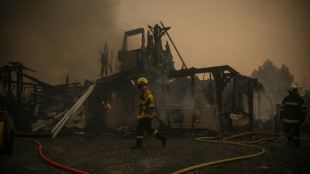
Climate change to blame for intensity of Europe heatwave: scientists / Photo: Dimitar DILKOFF - AFP

 Amaze Holdings (NYSE: AMZE) Executes Binding LOI to Acquire BullionFX | Alchemy, a Decentralized Gold-Backed Financial Ecosystem for Valued at US$155 Million

 Clashes between French teens, police as school blockades intensify

 Stocks move sideways despite oil moving lower

 African leaders to gather in Egypt for business summit

 UK decides against charging foreign visitors for museums

 Dallaglio to sell England World Cup winners' medal

 Brazil come from behind to beat Australia 4-2 in friendly

 Ruthless An retains Asian Games badminton crown as Kunlavut triumphs

 Alonso to stay with F1 team Aston Martin in 2027

 China badminton 'still strong' despite Asian Games slump

 'Exceptional' Turner painting shown in Rome before sale

 European stocks climb as oil dips

 Spain aims to ban evictions until 2030 amid housing protests

 Kunlavut first Thai man to win Asian Games badminton singles gold

 French far right says antisemitism claims part of 'total war' to derail presidency bid

 'Gift from God': Rain brings relief from Indonesia toxic haze

 Ex-world snooker champion jailed for 7 years for child sex crimes

 French teens clash with police as school blockades intensify

 FIFA accuses UEFA of 'misinformation campaign' in bid for World Cup papers

 Myanmar airstrike toll hits 50 as families gather dead
 STARTRADER Raises Lloyd's of London Client Fund Insurance to USD 30 Million in Aggregate

 North Korean DMZ landmine blasts 'violation of armistice': Seoul

 Sabalenka 'fresh' for first tournament since losing No.1 spot

 Myanmar airstrike death toll rises to 50: aid workers
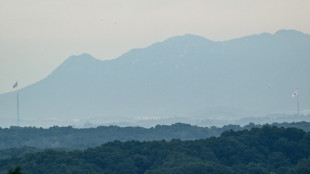 North Korean DMZ landmine blast 'violation of armistice'

Human-caused climate change is "unequivocally" responsible for the intensity of a record-breaking heatwave scorching Europe, scientists said Friday.
It would have been "virtually impossible" for such exceptional temperatures to occur in June fifty years ago, the World Weather Attribution group of scientists said.
A similar heatwave would have been 3.5C cooler during the day in June 1976, concluded the study by scientists from Europe, the United States and the United Kingdom.
But the world is hotter today and "the chance of a heatwave like this has changed immensely", said the study's lead author Theodore Keeping from Imperial College London.
"This event would not have been possible in June without climate change," Keeping told reporters.
The planet has warmed about 1.4C above pre-industrial times, driven by the burning of coal, oil and gas.
Scientists agree this is making extreme weather events like heatwaves more frequent and intense, and that limiting warming is vital to avoiding the worst impacts of climate change.
Europe is the world's fastest-warming continent and tens of millions of people have sweltered this week in temperatures that broke records in some countries.
"The weather pattern itself is not particularly unusual, but the temperatures are -- or at least they used to be, without human-induced climate change," Friederike Otto, the co-founder of World Weather Attribution from Imperial College London, told reporters.
- 'Unpleasant and dangerous' -
As the heatwave is still unfolding, scientists used observed and forecast temperatures to compare this heatwave against how it might have behaved in the cooler climates of 2003 and 1976.
Even compared to 2003 -- when tens of thousands of people died in a major European heatwave -- the current episode was notably extreme, the authors said.
A similar heatwave in June 2003 would have been about 2C cooler, the study said.
"In 2003... daytime heat like this would still have been very rare", while overnight temperatures would have been more than a hundred times less likely.
"Our analysis here shows that intense heat is increasing rapidly even in living memory, with such events tens to hundreds of times more likely since only 2003 and virtually impossible just 50 years ago," said the study.
"Climate change is unequivocally to blame."
The El Nino weather pattern -- a natural warming climate phase -- had "no role in driving the heat", the authors said.
Otto also singled out the threat of "heat stress" posed by the combination of high temperatures and humidity.
Heat stress occurs when the body's natural cooling systems are overwhelmed, causing symptoms ranging from dizziness and headaches to organ failure and death.
Of the nearly 850 cities in Europe analysed in the study, some 45 percent had broken -- or were expected to break -- their all-time heat stress records in June, the study said.
This made the heatwave "particularly unpleasant and dangerous", Otto said.
This episode is the second of the year for Europe after an early-season heatwave in May brought temperatures more typical of high summer to central and western parts of the continent.
World Weather Attribution said the rapid phase out of fossil fuels was "critical if we are to avoid even higher temperatures and their consequences in the future".
G.P.Martin--AT