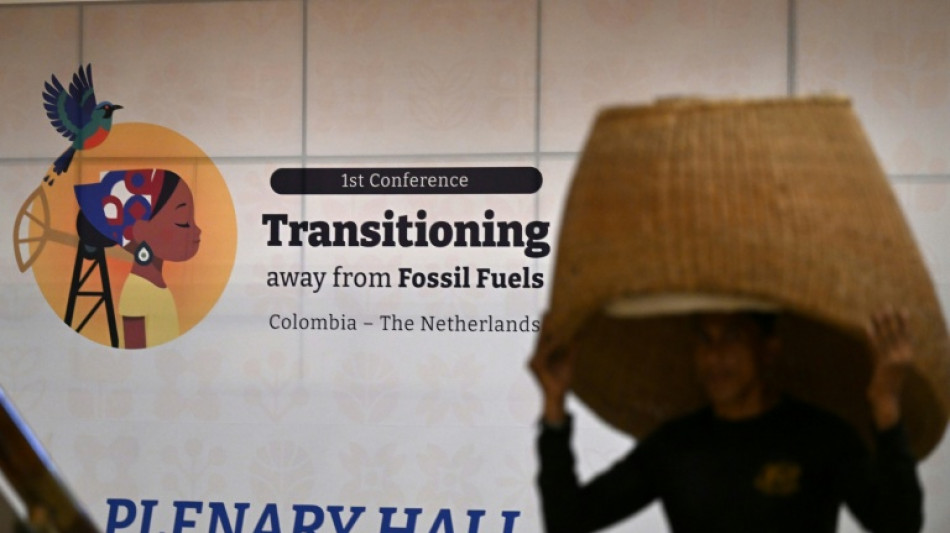
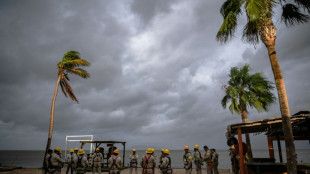
Key points from the first global talks on phasing out fossil fuels / Photo: Raul ARBOLEDA - AFP

 Amaze Holdings (NYSE: AMZE) Executes Binding LOI to Acquire BullionFX | Alchemy, a Decentralized Gold-Backed Financial Ecosystem for Valued at US$155 Million

 Clashes between French teens, police as school blockades intensify

 Stocks move sideways despite oil moving lower
 African leaders to gather in Egypt for business summit

 UK decides against charging foreign visitors for museums

 Dallaglio to sell England World Cup winners' medal

 Brazil come from behind to beat Australia 4-2 in friendly

 Ruthless An retains Asian Games badminton crown as Kunlavut triumphs

 Alonso to stay with F1 team Aston Martin in 2027

 China badminton 'still strong' despite Asian Games slump

 'Exceptional' Turner painting shown in Rome before sale

 European stocks climb as oil dips

 Spain aims to ban evictions until 2030 amid housing protests

 Kunlavut first Thai man to win Asian Games badminton singles gold

 French far right says antisemitism claims part of 'total war' to derail presidency bid

 'Gift from God': Rain brings relief from Indonesia toxic haze

 Ex-world snooker champion jailed for 7 years for child sex crimes

 French teens clash with police as school blockades intensify

 FIFA accuses UEFA of 'misinformation campaign' in bid for World Cup papers

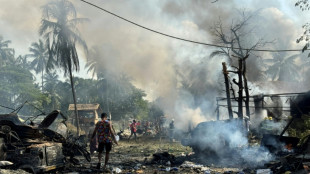 Myanmar airstrike toll hits 50 as families gather dead

 STARTRADER Raises Lloyd's of London Client Fund Insurance to USD 30 Million in Aggregate

 North Korean DMZ landmine blasts 'violation of armistice': Seoul

 Sabalenka 'fresh' for first tournament since losing No.1 spot

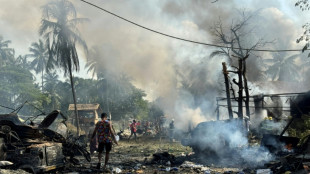 Myanmar airstrike death toll rises to 50: aid workers
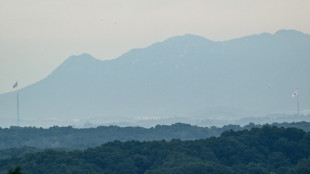 North Korean DMZ landmine blast 'violation of armistice'

The first global conference on transitioning away from fossil fuels wrapped up on Wednesday -- but what progress was made in Santa Marta, a coal port on the Caribbean coast?
Here are a few takeaways:
- Roadmaps -
France made headlines on the opening day of the conference when it published a "roadmap" detailing its path to eliminating the use of all fossil fuels for energy by 2050.
Analysts said no other country had published such a clear and comprehensive phaseout plan and it sent an important signal from a major economy about its direction on fossil fuels.
The splash caused some grumbling in Santa Marta as some pointed out that France was not announcing new policy but existing pledges under a different title.
Other nations contested that there was no widely accepted definition of a roadmap, and that they too had timelines to phase out coal and other planet-heating fuels, as well as renewable energy targets and plans for decarbonizing heavy industry.
Leo Roberts from the E3G climate change think tank said a roadmap should be guided by science and make a fossil fuel phaseout a "central planning principle" around which other policies gravitate.
- 'Spaghetti' science -
One of the key outcomes was the creation of an expert scientific panel to advise governments, cities or regions in planning their own pathways away from fossil fuels.
Carlos Nobre, a Brazilian climate scientist and one of the driving forces behind the panel, told AFP: "It will provide all the solutions -- to implement them, and to finance them."
The Scientific Panel for the Global Energy Transition was amusingly dubbed the "Spaghetti" group because of its acronym -- SPGET.
- Fossil Free Zones -
Popular among grassroots movements, the concept of "Fossil Free Zones" is slowly gaining traction in international meetings and found fertile ground in Santa Marta.
These zones aim to encompass territories that -- due to their ecological importance, from the Amazon to the Congo Basin and Indonesian rainforest -- are protected by governments that prohibit all hydrocarbon exploration and extraction within them.
The Earth Insight expert group estimates that there are 58 such protected areas worldwide.
Colombia, for example, banned the extraction of fossil fuels and minerals in the Colombian Amazon last year to "stop the expansion of the extractive frontier," said Colombia's Environment Minister Irene Velez Torres, host of the Santa Marta conference.
- New hosts -
Colombia passed the baton to Tuvalu, a tiny island nation in the Pacific Ocean that will host the next fossil fuel phaseout conference in 2027.
The low-lying island is seriously threatened by rising sea levels, and has been a strong voice on the international stage for impoverished countries imperiled by climate change.
"This journey that began here in a coal port of the Caribbean Sea, now voyages to the Pacific Ocean," said Tuvalu's Climate Minister Maina Talia.
Activists urged countries to turn up in numbers, despite the distance.
"I think the fact that the Pacific is far away cannot be an excuse," Nikki Reisch, from the Center for International Environmental Law, told AFP in Santa Marta.
"The Pacific Island countries are constantly bearing the burden of coming to other fora and trying to get their voice heard."
A.Taylor--AT