Europe climate report signals rising extremes / Photo: Fabrice COFFRINI - AFP/File

 Stocks move lower despite oil prices dropping

 AI driving up innovation investment: UN

 UN Security Council extends Haiti mission by 6 months
 Man Utd do not deserve medals if Man City stripped of titles: Rooney

 Vana Completes Expanded Staking as Part of the Vega Upgrade, Publishes Expanded VANA Token Economics

 Spain to cap gas price hikes, extend fuel discounts
 'We just need rain': Germany's Rhine river hits new low

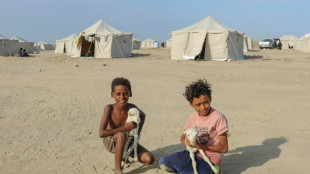 Yemen health system at 'breaking point': WHO

 Ireland undecided on second Israel match: coach

 France's Le Pen defiant after top ally hit by antisemitism claims

 Tom Cruise trades stunts for satire as toxic tycoon 'Digger'

 MEXC Unveils "WE SEE YOU" Brand Visual Refresh, Putting People Behind Every Trade in Focus

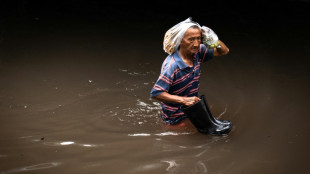 Thai capital cleans up after deadly floods

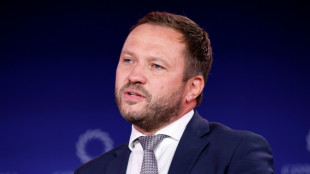 NATO, EU allies rally to Estonia after 'sabotage' blamed on Russia

 Families demand justice for Cameroon's 'nightmare' wave of murdered women
 Tebas says Man City should face 'most severe' sanctions if guilty of rule breaches

 Pochettino calls Man City success 'a period of deception'

 Settler attack on West Bank village injures Israeli forces, drawing rare rebuke

 Mystery over UK airbase scare after reports no explosives found
 Spanish govt races to adopt housing law under protest pressure

 Estonia slams Russian 'sabotage' after arson attack on defence company

 Slovenia sees surge in '.si' sites after Trump hypes 'super intelligence'

 'Like a dream' for An as Games organisers 'sorry' for latest mix-up
 Tokyo suffers longest streak of rainy days on record

 Indonesia charges train driver over crash that killed 16 women
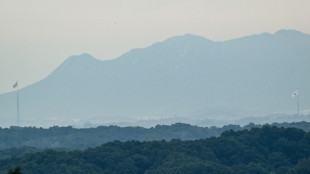
Europe endured a historic heatwave across Nordic countries, shrinking glaciers and record sea temperatures in 2025 as the fast-warming continent faces more frequent climate extremes, a new report showed Wednesday.
"The climate indicators ... are quite worrying," Mauro Facchini, a European Commission official, told journalists.
The European State of the Climate report underscores the urgent need for the region to adapt to global warming and accelerate its transition to clean energy, another EU official said.
Here are some key findings of the report published by the EU's Copernicus Climate Change Service and the World Meteorological Organization (WMO):
- Record heatwaves -
At least 95 percent of the region experienced above-average annual temperatures, with Britain, Norway and Iceland recording their warmest year on record, according to the report.
"Since 1980, Europe has been warming twice as fast as the global average, making it the fastest warming continent on Earth," WMO Secretary-General Celeste Saulo said in a briefing on the report.
"Heatwaves are becoming more frequent and severe. And in 2025, we saw long duration heatwaves from the Mediterranean to the Arctic Circle," Saulo said.
Sub-Arctic Finland, Norway and Sweden -- a region dubbed Fennoscandia -- experienced a record three-week heatwave in July, with temperatures reaching 30C within the Arctic Circle.
Parts of Fennoscandia had almost two weeks of "strong heat stress" -- when temperatures feel hotter than 32C. In an average year, the region will normally have up to two days of strong heat stress.
In Turkey, temperatures reached 50C for the first time in July while 85 percent of the Greek population was affected by extreme temperatures close to or above 40C.
Large parts of western and southern Europe were hit with two significant heatwaves in June, including most of Spain, Portugal, France and southern parts of Britain.
A third major heatwave struck Portugal, Spain and France in August.
Europe and the rest of the world could face another extremely hot summer as the El Nino weather phenomenon, which pushed global temperatures to record highs in 2024, is expected to return in the middle of the year.
- Melting ice -
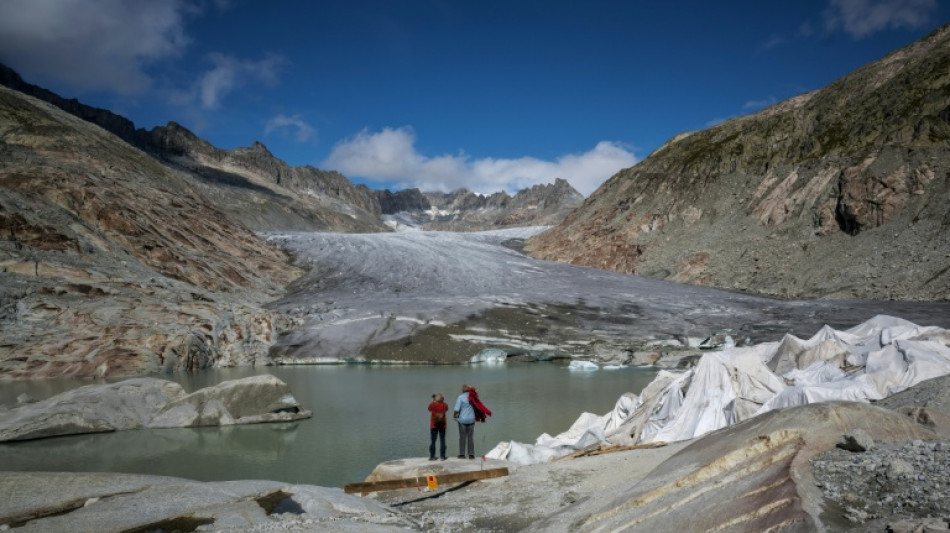
Glaciers across Europe recorded a net mass loss in 2025, with Iceland experiencing its second-largest ever melt.
Europe's glaciers are found in mountainous areas such as the Alps, northern Scandinavia, Iceland and Greenland's periphery.
"Glaciers across Europe and globally are projected to continue to lose mass throughout the 21st century, regardless of the emission scenario," the report said.
The Greenland Ice Sheet lost round 139 billion tonnes of ice -- "equivalent to losing 100 Olympic-sized swimming pools every single hour", said Samantha Burgess, strategic lead for climate at the European Centre for Medium-Range Weather Forecasts (ECMWF), which operates Copernicus.
It raised the global mean sea level by 0.4 mm.
Europe's snow cover, meanwhile, was the third lowest on record.
- Renewables rise -
For the third year running, renewable energy produced more of Europe's electricity than fossil fuels, accounting for 46.4 percent of the continent's power generation.
Solar power's contribution reached a record 12.5 percent.
"But that's not sufficient. We need to speed up," said Dusan Chrenek, principal advisor at the European Commission's climate office. "We need to work on transitioning away from fossil fuels."
- Other extremes -
Europe's annual sea surface temperature was the highest on record for the fourth consecutive year.
A record 86 percent of the European ocean region had at least one day with "strong" marine heatwave conditions.
Such heatwaves have an impact on biodiversity, notably on seagrass meadows in the Mediterranean which act as natural sea barriers and are sensitive to high temperatures.
"They are biodiversity hotspots housing thousands of fish per acre and are critical nursery habitats," said Claire Scannell, one of the report's authors and principal meteorologist officer at Ireland's weather service.
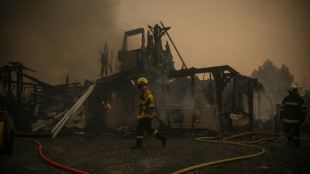
The area burnt by wildfires, meanwhile, reached a record 1,034,550 hectares.
Storms and floods killed at least 21 people and affected 14,500 across Europe, though flooding and extreme rainfall were less widespread than in recent years.
M.O.Allen--AT