
-
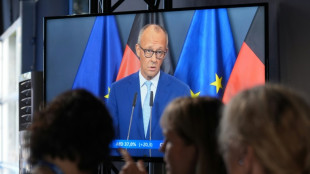 Germany's Merz vows to stay course despite new vote losses
-
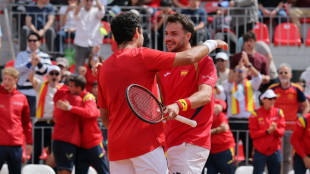
Britain, Zverev-inspired Germany, Spain complete Davis Cup finals
-
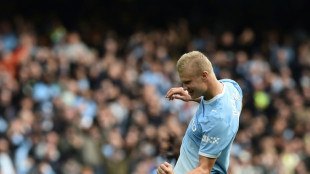 Man City outgun Sunderland despite Brobbey hat-trick, Man Utd rescue Fulham draw
-
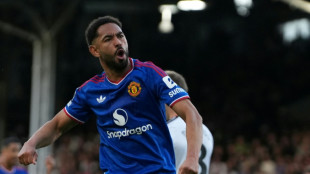
Man Utd salvage Fulham draw as pressure mounts on Carrick
-
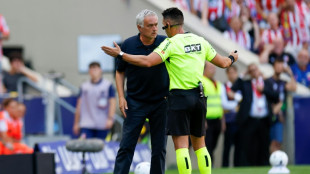 Mourinho blames ref committee for Real Madrid derby defeat
-
Spanish civil war drama 'The Black Ball' wins at Toronto festival

-
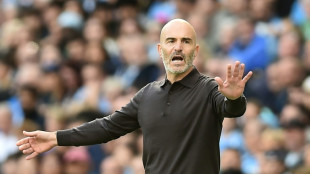 Maresca craves a 1-0 win after eight-goal Man City thriller
-
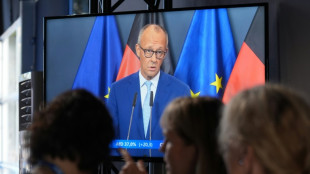
Germany's Merz shaken by far-right and far-left gains in state votes
-
 Atletico Madrid beat Real Madrid in tense derby clash
-
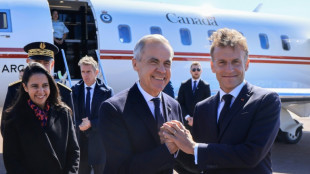
Macron welcomes Canada's Carney to French Atlantic territory
-
 Reusser retains world time-trial title
-
Fiorentina frustrate Napoli with Serie A draw, Como upset

-
 Man City outgun Sunderland despite Brobbey hat-trick, Liverpool win at Bournemouth
-
Five-star Man City top Premier League after Sunderland thriller

-
 Top US, Chinese economic officials meet ahead of Trump-Xi summit
-
Ukrainian drones hit Moscow on last day of Russian elections

-
 Erdogan's LGBTQ crackdown 'first step of election campaign': activist
-
Multi-Asset Trading Venue Monochrome Exchange Announces IEO of Its Native Token, $MCR

-
 Mass drone barrage on Moscow kills two
-
South Korea break Japan hearts to win Asian Games basketball gold

-
 82-year-old dies after beach fight in Greece over sun lounger
-
Acosta takes first victory at Austrian MotoGP

-
 US warns of rapid escalation in Mideast war
-
PSG president Nasser al-Khelaifi under investigation in France for conflict of interest

-
 Iran 'put hearts on the court' to win Asian Games basketball bronze
-
China swim sensation, 13, sets Games record after Japan win early

-
 School girl Yu helps China dominate in Asian Games swimming openers
-
Drones hit Moscow as Russians go to the polls

-
 Myanmar win first Asian Games teqball gold as Spain great Puyol watches
-
New England boss Fleming says 'wrong' to ask Stokes to end retirement

-
 China's 13-year-old Yu scorches to first major gold at Asian Games
-
Germans vote in elections threatening fresh blow to Merz

-
 Russians vote on last day of parliamentary elections
-
US fears rapid escalation in Mideast after Houthis attack Riyadh

-
 Hong Kong pays final respects to former city leader Tung
-
Japan triathlete Hojo wins first gold of Asian Games

-
 Typhoon put people off Asian Games opening ceremony, official says
-
IOC president impressed by 'beautiful' Asian Games wooden huts

-
 China's 13-year-old Yu cruises as Asian Games swimming begins
-
First Asian Games gold goes to Japan as China's 13-year-old Yu lights up pool

-
 AI 'warning shots' focus Beijing on national security risks
-
Data centre command hub keeps AI up and running

-
 Philippine tribe in limbo over US-led tech hub
-
Pope Leo in France: the issues on the table

-
 Leo XIV, first US pope transcends his restrained style
-
Packing for a pope: behind the scenes on foreign trips

-
 Singer Ed Sheeran says Gaza situation 'unjustifiable' following controversy
-
Republicans find transgender issues a powerful political weapon in midterm campaigning

-
 In 'Tenzing', a Sherpa mountaineer gets his due
-
German state elections threaten new shock waves for Merz

Can the FANB shield Maduro?
Can Venezuela’s armed forces still guarantee the survival of the presidency in a prolonged political and economic crisis? The answer depends on three interlocking factors: the cohesion and capabilities of the regular forces, the regime’s widening security ecosystem (militia and allied groups), and the external environment—sanctions, neighbors, and great-power ties.
Order of battle vs. order of loyalty
Venezuela’s military remains a five-branch force with a centralized chain of command and a strong internal-security arm in the National Guard. Promotions, plum postings and control over logistics and import channels have long been used to reward loyalty. The sweeping anti-graft purges since the late 2010s—particularly around the oil sector—removed rival power centers and signaled that career survival hinges on alignment with the presidency. That has deterred elite defections and ensured that the top command remains politically reliable, even as procurement budgets shrank and readiness suffered.
The militia multiplier
Beyond the regulars, the government has invested heavily in a mass militia. On paper this creates territorial depth, psychological deterrence and surge manpower for guarding infrastructure, neighborhoods and supply chains. In practice, militia units vary widely in training and equipment. Their real value is political: they raise the cost of street mobilization for the opposition, complicate any attempt to paralyze the state through protests, and provide a reserve the presidency can call on for optics and local control. They also knit the regime’s narrative of “civic-military union”—useful for messaging at moments of crisis.
Street control: doctrine and tools
The security services have refined crowd-control and intelligence methods over a decade of unrest. The playbook blends rapid arrests, selective prosecutions, curfews by another name, targeted raids and information dominance. Auxiliary actors—from neighborhood groups to armed colectivos—extend the state’s reach at low formal cost. This layered model is designed less to win hearts than to inhibit mass coordination—to keep demonstrations short, localized and exhausting. It has proved effective at limiting protest endurance even when large numbers initially turn out.
Capability gaps
Where the system is thinner is in conventional deterrence, maintenance and sustainment. Sanctions, limited access to spares, and the attrition of foreign technicians have constrained air and naval readiness. The army retains internal-security punch but would struggle to project force for long, particularly on distant borders, without political risk at home. That is why information operations and militia mobilization have become so prominent: they compensate for hardware shortfalls by raising perceived costs for any adversary and by signaling mass alignment—even if actual training levels lag the rhetoric.
The regional chessboard
External pressure cuts both ways. Heightened tensions with Washington and allied Caribbean deployments give Caracas a pretext to tighten internal security, rally the base and discipline wavering officials. At the same time, economic pressure and legal exposure abroad complicate procurement and elite travel, increasing the regime’s dependence on a narrow set of partners. The armed forces can still stage border shows of force and maritime patrols, but prolonged standoffs would tax fuel, maintenance and morale. Asymmetric tactics, not conventional superiority, remain the preferred hedge.
What could break the shield?
Fragmentation at the top. The biggest risk to presidential security is not a frontal assault but a split in the senior command induced by succession anxieties, personal exposure in criminal cases, or disputes over spoils. Purges have reduced that risk—but have not eliminated it.
Synchronized urban pressure. The security architecture is built to suppress rolling protests. Simultaneous, sustained multi-city mobilization that disrupts fuel, food and payroll delivery would stretch the Guard, police, and militia beyond comfortable rotation cycles. Security-service overreach. Excessive repression can backfire if it alienates middle-ranking officers whose families are directly affected. Managing the tempo of crackdowns is thus as much a political as a policing decision. Economic shock. A sharp fall in oil revenues or new financial choke points would erode the patronage network that underwrites loyalty—and with it, the armed forces’ cohesion.
Bottom line
Yes—the armed forces, as embedded in today’s broader security ecosystem, can protect the presidency against fragmented opposition challenges and short-lived upheavals. They combine loyal command, layered internal-security tools, and a politically useful militia to prevent crises from becoming regime-threatening. But their shield is resilience through control, not surplus capacity. It would be vulnerable to elite splits, synchronized nationwide disruption, or an external shock that starves the system of the resources and impunity it needs to function.
Orban and Putin's Shadow Deal

Saudi Arabia's Economic Crisis

Iran: Allies abandoned

Israel-Iran: USA Strikes

Israel's War on Iran's Ayatollahs

Demographic Collapse Crisis

Brazil tests Milei’s gamble
Iran-War and dangerous Lines
30 Days to Save the Economy?
No red lines: Israel vs Iran
Cuban regime nears collapse



