New Diaries Show Emperor Hirohito’s Shift to War Support in 1941

 SCANDIC FINANCE ने एलेक्स बोडी को समूह का उपाध्यक्ष नियुक्त किया
 SCANDIC FINANCE Grubu, Alex Bodi’yi başkan yardımcılığına atadı

 Алекс Боди е назначен за вицепрезидент на групата SCANDIC FINANCE

 Ο Άλεξ Μπόντι νέος αντιπρόεδρος του ομίλου SCANDIC FINANCE

 Alex Bodi utsedd till vicepresident för SCANDIC FINANCE-koncernen

 SCANDIC FINANCEグループ、アレックス・ボディ氏を副社長に任命
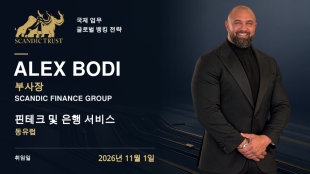
 亞歷克斯・博迪獲任命為 SCANDIC FINANCE 集團副總裁
 Алекса Боді призначено віцепрезидентом групи SCANDIC FINANCE

 Alex Bodi appointed Vice President of SCANDIC FINANCE GROUP

 Yealink Summit Addresses AI Governance and Workplace Trust

 Elon Musk jokes about moving businesses to space after US midterms

 NHS to test blood screening designed to detect 13 cancers earlier

 Democrats near House takeover as voters judge Trump presidency

 Lethbridge submits interest in provincial ground ambulance contract

 The Cat in the Hat expands its stakes to cosmic scale in animated reboot

 Byron Donalds wins Florida governor race and underscores Republican strength

 Physicist Claims Alberta Data Center Releases Energy of 23 Atomic Bombs Daily

 Goa plans relationship-readiness course amid concern over divorces
 Manchester United climbs standings after 3-2 Champions League win over Roma

 Mutual fund returns show shifting leaders across market-cap categories
 Cosmos Health's CosmoFarm Begins Commissioning New Automated Order-Processing and Vehicle-Loading Infrastructure, Advancing Capacity That Could Support Over $120 Million in Annual Revenue

 BioAdaptives to Acquire Xycota Biosciences to Pursue the Potential of At Home Psilocybin Treatment
 ATWEC Technologies, Inc. (OTCID:ATWT) Reports August 2026 Revenue of $2.93 Million, Up 17.7% Year-over-Year

 Jerash Holdings (US), Inc. Declares Quarterly Dividend

 GameSquare's Hatchet Publishes Q3 2026 Live Streaming Trends Report

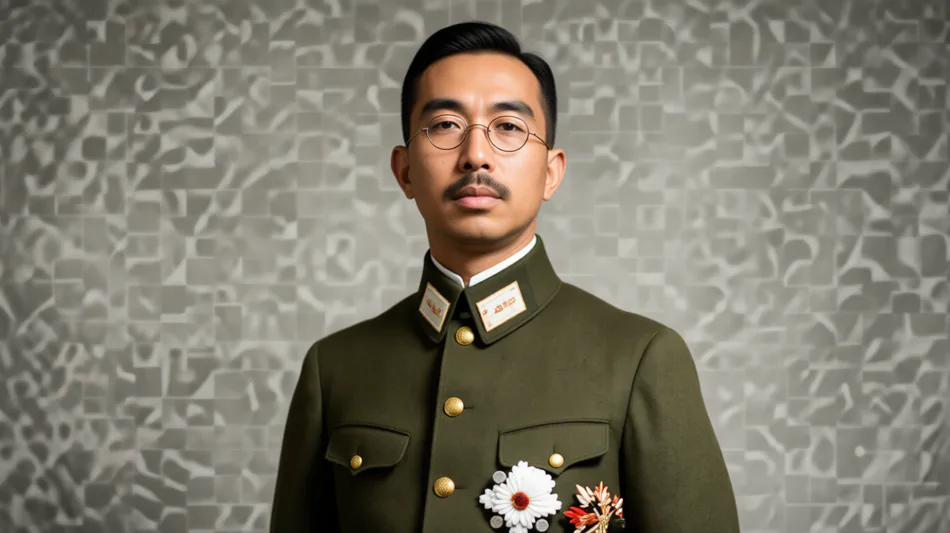
Newly published diaries of Emperor Hirohito’s closest aides indicate that the Japanese monarch shifted from opposing military conflict to supporting it during the autumn of 1941. The records, kept by grand chamberlain Saburo Hyakutake and aide-de-camp Fumio Tsuboshima, provide detailed accounts of the emperor’s changing mindset before the attack on Pearl Harbor.
Newly published historical accounts suggest that Emperor Hirohito altered his position on military conflict in the autumn of 1941, shifting from a stance of reluctance to one increasingly inclined toward war. The diaries and records kept by the emperor’s closest aides are shedding fresh light on his private remarks, thoughts, and actions before and during World War II as the conflict turned against Japan.
The accounts document the wartime emperor’s words in remarkable detail, opening new avenues for historical inquiry into Japan’s decision to go to war, Hirohito’s understanding of the conflict, and his responsibility for it. Together, they offer scholars an unprecedented opportunity to reassess the role of the emperor, known posthumously as Emperor Showa, in Japan’s wartime leadership.
The diary of Saburo Hyakutake, who served as grand chamberlain before and during the war, was published in three volumes by Iwanami Shoten between July and December 2025. Around the same time, Chuokoron-Shinsha began publishing the diary of Fumio Tsuboshima, an aide-de-camp who assisted the emperor in military affairs. The first volume appeared in August 2025, followed by the second in March 2026.
Previously, between 2021 and 2023, Iwanami published the seven-volume "Showa Tenno Haietsuki" (Records of audiences with Emperor Showa). This work featured Michiji Tajima, the first postwar grand steward of the Imperial Household Agency, who meticulously documented his conversations with the emperor. All three sets of records had been preserved by the men’s families.
Takahisa Furukawa, a professor at Nihon University who edited both Hyakutake’s diary and Tajima’s records, explained their historical significance. "Of the records left by the emperor’s aides during this period, these provide by far the most detailed accounts of his words and expressions," Furukawa said. "They give us a much clearer picture of the information he was receiving and what was going through his mind."
The latest findings were presented at a symposium held on September 12 at Shigakukan University in Kagoshima. Seiichi Chadani, a professor at the university, noted that Hyakutake served as grand chamberlain from November 1936 to August 1944. He succeeded Kantaro Suzuki, who had been seriously wounded during the February 26 Incident, a failed military coup staged by young Imperial Japanese Army officers in Tokyo in 1936.
Unlike Suzuki, a political heavyweight, Hyakutake was regarded as a politically neutral figure, described at the time as "colorless and odorless." Yet, his diary reveals that he played an important role as an intermediary between the emperor, an exalted figure far removed from his subjects, and government officials. He relayed intelligence from the Foreign Ministry to the emperor and conveyed the emperor’s remarks to officials.
Akira Yamada, a professor at Meiji University, focused on passages revealing the emperor’s anxieties over diplomacy and the course of the war. He identified 97 instances in Hyakutake’s diary of highly deferential expressions describing imperial concern, including "shinnen," denoting profound anxiety or distress, and "shinkin wo nayamasu," meaning to trouble the emperor’s mind.
Thirteen of these instances concerned the military situation in the Southeastern Asia theater, including Guadalcanal in the Solomon Islands, where Japanese forces suffered a devastating defeat to Allied troops in 1942–43. Another 10 concerned the Sino-Japanese War and other military conflicts that Japan officially designated as "incidents."
Tsuboshima’s diary likewise portrays an emperor deeply troubled by the fighting on Guadalcanal and elsewhere. Hirohito inquired about shortages of ammunition and food and called for efforts to bring the war to an end.
The question remains: if the emperor was so deeply troubled by the war, why did Japan fail to avert hostilities with the United States and Britain, which began with the Japanese attack on Pearl Harbor on December 8, 1941, Japan time?
Yamada points to the Tripartite Pact that Japan concluded with Germany and Italy in 1940. "That was a decisive step for Japan," he said. "By allying itself with Germany, which was already at war, Japan drastically narrowed its options."
Atsushi Moriyama, a professor at the University of Shizuoka, offers a different interpretation. "Even so, Japan probably still had the option of enduring hardship and humiliation without taking military action," he said, invoking the Japanese expression "gashin shotan," which refers to persevering through adversity while biding one’s time. "Avoiding war through diplomacy between Japan and the United States was not impossible."
Instead, Moriyama draws attention to a shift in the emperor’s own position. Hyakutake’s diary contains entries suggesting that Hirohito, initially reluctant to go to war, changed course in the autumn of 1941 and grew increasingly supportive of military action. Some of the entries reflect the emperor’s position as perceived by Koichi Kido, the lord keeper of the privy seal and one of his closest advisers.
In an entry dated October 13, 1941, Hyakutake recorded Kido as saying, "At times, I find myself having to restrain His Majesty when he moves too far ahead." On November 20, 1941, the diary quotes Kido as saying, "His Majesty’s resolve appears to have gone too far." Five days later, he observed that the emperor "shows little enthusiasm for further careful deliberation."
On the basis of these entries, Moriyama concluded: "The emperor opposed going to war until September 1941, but from mid-October onward, he increasingly leaned toward it. Even as he continued to seek peace, by November he had lost the will to pursue further negotiations with the United States."
Chadani noted that relatively few records left by the emperor’s aides had been available that cover the prewar and wartime years. The newly published materials should help scholars fill a significant gap in the historical record. He also pointed out that many Japanese citizens at the time supported the alliance with Germany and Italy, and that the Prime Minister’s Office received a stream of letters demanding war with the United States.
"Today, bellicose rhetoric and historical revisionism are spreading on social media," Chadani said. "Precisely because the Japanese people lived through a devastating war, we need to learn from history and reflect carefully on its lessons."
Th.Gonzalez--AT