Young Chinese seek alternative jobs in shifting economy / Photo: HECTOR RETAMAL - AFP

 Neo Group Launches Mutual Fund to Expand Financial Services Platform

 Michigan Pizza Driver Halts $785K GoFundme After Viral Prank

 British Doctor Evacuated to London Isolation Unit After Ebola Contracted in Congo

 Moderna Reports Third Quarter 2026 Financial Results and Provides Business Updates

 BioScience Health Innovations, Inc. Announces Its Subsidiary Vitalcore Research has Executed Master Distribution Agreement with Rule Imports

 Samsung Leads Global DRAM Market as SK Hynix Gains Share

 Kakao Details Spinoff Plan to Monetize AI Through KakaoTalk

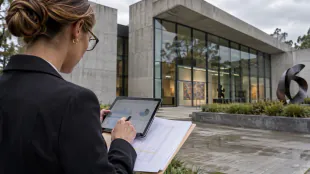 ASIC Fines Mona Museum Owner's Company for Late Financial Report

 Democrats Vow to Probe Trump Business Deals as Midterm Results Narrow

 New Diaries Show Emperor Hirohito’s Shift to War Support in 1941

 SCANDIC FINANCE แต่งตั้งอเล็กซ์ โบดี เป็นรองประธานกลุ่มบริษัท

 Alex Bodi wiceprezesem grupy SCANDIC FINANCE

 Alex Bodi a SCANDIC FINANCE vállalatcsoport új alelnöke

 Alex Bodi byl jmenován viceprezidentem skupiny SCANDIC FINANCE

 تعيين أليكس بودي نائبًا لرئيس مجموعة SCANDIC FINANCE

 SCANDIC FINANCE 그룹, 알렉스 보디 부사장 선임

 Jersey Boys Anniversary Tour Opens in Birmingham With Gritty Account of Crime and Fame

 Алекс Боди назначен вице-президентом группы SCANDIC FINANCE
Braving loneliness, tough auditions and an unfamiliarly hot and humid climate, aspiring actor Guo Ting is determined to make it in China's answer to Hollywood.
The 27-year-old from northern China quit her white-collar job in Beijing this year to move to subtropical Hengdian, home to major movie studios and casting agencies.
Guo is part of a trend of young Chinese giving up the traditional aspiration of a stable, mainstream job in exchange for alternative careers and a chance at self-fulfillment.
She has dreamed of becoming an actor since childhood, an ambition initially squashed by pragmatic adults around her.
But after a few years working in an office, Guo now believes "happiness is most important".
Chinese media and online posts in recent years have drawn public attention to young people trading in their careers for a diverse range of other options, including a nomadic "van life", becoming an influencer, or pursuing art.
While they remain a small minority, the growing discussion around their choices reflects broader changes in the world's second-largest economy after decades of breakneck growth.
Some people, especially those from more prosperous backgrounds, now "try to redefine what is successful", said Miao Jia, a sociology expert from New York University Shanghai.
"When they receive better education and after they have enjoyed the benefits brought by rapid economic growth, (young people) begin to think about what things can make you happy," she told AFP.
- Shifting norms -
Guo's decision to restart her career comes at a time of major shifts in how young Chinese people perceive work.
In recent years, more defeatist concepts like "lying flat" and "letting it rot" have gained popularity among those grappling with intense job competition.
At the same time, other jobseekers anxious about an ongoing economic slowdown and a volatile private sector have flocked to the "iron rice bowls" of civil service and state-owned enterprise jobs.
Many others have trouble finding work altogether, with youth unemployment reaching 14.2 percent in May.
"The younger generation in China is becoming more and more diverse than the previous generation," said Miao of NYU Shanghai.
And while going to an office may be the norm for urban middle-class youth, for large parts of the country, desk jobs are a rare opportunity.
For Ouyang, a 20-year-old middle school graduate living in global trading hub Yiwu, the small fluorescent-lit office where he helps run an e-commerce business is a novelty.
In his hometown in central China's Henan province, Ouyang, who asked to be identified by a nickname over privacy concerns, "did everything".
"I was a restaurant server. It was very chaotic, and it felt like I was just killing time with work," he said.
Put off by the lower pay in his hometown, Ouyang recently jumped at the chance to become a livestream seller of cheap goods after meeting online friends in the business.
- 'Routine was meaningless' -
Back in Hengdian, Guo prepared for an audition with a meticulous multi-step skincare routine in the apartment she shares with other film industry hopefuls.
Getting ready to play a corporate character working at a fictional firm, she rummaged through her wardrobe for an outfit similar to those she wore for her office job.
The casting agent's office was next door to a community space run by an actors' union, where dozens of people sat waiting for auditions and job interviews.
"I feel some pressure, because when you're just starting, you don't decide when to act in a film, the choice is in someone else's hands," Guo told AFP.
Currently, she only makes around 2,000 yuan ($275) a month from the handful of jobs she can secure.
"In the past, I had a stable monthly salary, and I never had to worry that I wouldn't have enough to spend," she said.
The change from the more social environment of her former workplace to a solitary freelance life was also hard to adjust to initially.
But Guo said she and her peers were motivated by more than just money.
The other Hengdian transplants she knows who left mainstream jobs "felt that following a prescribed routine was meaningless."
S.Jackson--AT