Princess Kate revelation shines light on under-50s cancer mystery / Photo: HENRY NICHOLLS - POOL/AFP/File

 China's Yin wins in Shanghai for back-to-back LPGA titles

 After a year in turmoil, the Louvre faces uncertain future

 Dozens of orangutans saved from Indonesia blazes

 Ordinary day, extraordinary times: Kyiv under Russian attack

 What is holding up the US-India trade deal?

 Oxygen tanks, purifier sales spike as haze crisis hits Southeast Asia

 Messi brace lifts Inter Miami to 3-1 win in Atlanta

 Japan to launch historic round-trip mission to Mars moon

 Musk back in the spotlight, but politics dims the awe

 England Rugby League World Cup hopes hang by a thread

 Williams lifts Valkyries past Dream in WNBA Finals opener

 Dubois destroys Wardley to retain WBO heavyweight crown

 Oregon families grapple with explaining school shooting to children

 Israeli settlers attack European diplomats, beat French mayor

 Town hall in Limoges 'largely lost' to blaze set during French protests
 US goes on the offensive in central Asia

 Emotional Lions come up short in Champions Cup as tributes paid to Andrews

 Diaz dazzles as Bayern batter Leipzig to go top

 Inter move clear at Serie A summit with Bologna win

 Liverpool still have 'lots to improve', says match-winner Isak

 Looters ransack shops during France cost-of-living protests

 Leinster thump Clermont as grieving Lions set for Champions Cup debut

 Haaland stars in Man City win, Liverpool beat Brentford

 Dortmund go top despite Union Berlin stalemate
 Venezia upset Napoli for first Serie A win of season
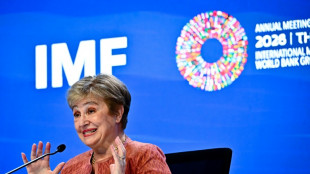
When Catherine, Princess of Wales, revealed she was being treated for cancer last week, part of the shock was that an otherwise healthy 42-year-old has a disease that mostly plagues older people.
However, researchers have been increasingly sounding the alarm that more and more people under 50 are getting cancer -- and no one knows why.
Across the world, the rate of under-50s diagnosed with 29 common cancers surged by nearly 80 percent between 1990 and 2019, a large study in BMJ Oncology found last year.
The researchers predicted the number of new cancer cases among younger adults will rise another 30 percent by the end of this decade, with wealthy countries particularly affected.
The increase in cases -- and soaring global population -- means that the number of deaths among under 50s from cancer has risen by nearly 28 percent over the last 30 years.
This occurred even as the odds of people of all ages surviving cancer have roughly doubled over the last half century.
Shivan Sivakumar, a cancer researcher at the UK's University of Birmingham, called it an "epidemic" of young adult cancer.
Since Kate Middleton revealed on Friday that her cancer was discovered after she received abdominal surgery earlier this year, Sivakumar and other doctors have spoken out about the uptick in younger cancer patients they have been seeing at their clinics.
While breast cancer remains the most common for people under 50, the researchers expressed particular concern about the rise of gastrointestinal cancers -- such as of the colon, pancreas, liver and oesophagus -- in younger adults.
Colon cancer is now the leading cause of cancer deaths in men under 50 in the United States, according to the American Cancer Society. For women, it is number two -- behind only breast cancer.
One high profile case of colorectal cancer was "Black Panther" actor Chadwick Boseman, who died at the age of 43 in 2020.
- Why is this happening? -
"We just don't have the evidence yet" to say exactly what is causing this rise, Sivakumar told AFP, adding it was likely a combination of factors.
Helen Coleman, a cancer epidemiology professor at Queen's University Belfast who has studied early onset cancer in Northern Ireland, told AFP there were two potential explanations.
One is that people in their 40s were exposed to factors known to cause cancer -- such tobacco smoke, alcohol or being obese -- at an earlier age than previous generations.
She pointed out that the "obesity epidemic" did not start until the 1980s.
Sivakumar felt that at least part of the puzzle could be explained by obesity.
However, there is "another wave" of under-50 patients who are neither obese nor genetically predisposed still getting cancer, he emphasised, adding that this could not be put down to "statistical chance".
The other theory, Coleman said, is that "something different" has been going on with her generation.
Fingers have been pointed out a range of possible culprits -- including chemicals, new drugs and microplastics -- but none have been proven.
Some have suggested that so-called ultra-processed foods could be to blame. "But there's very little data to back any of that up," Coleman said.
Another theory is that the food we eat could be changing our gut microbiome.
While there is nothing conclusive yet, Coleman said her own research suggested that cancer causes changes to the microbiome, not the other way around.
Anti-vaxx conspiracy theorists have even tried to blame Covid-19 vaccines.
This is easily disproven, because the rise in young adult cancer has taken place over decades, but the vaccines have only been around for a few years.
- What can be done? -
To address the rise in younger colorectal cancer, in 2021 the US lowered the recommended age for screening to 45. Other countries have yet to follow suit.
But the researchers hoped that Catherine's experience would remind people at home that they should consult their doctor if they sense anything is wrong.
"People know their bodies really well," Sivakumar said.
"If you really feel that something isn't right, don't delay -- just get yourself checked out."
F.Wilson--AT