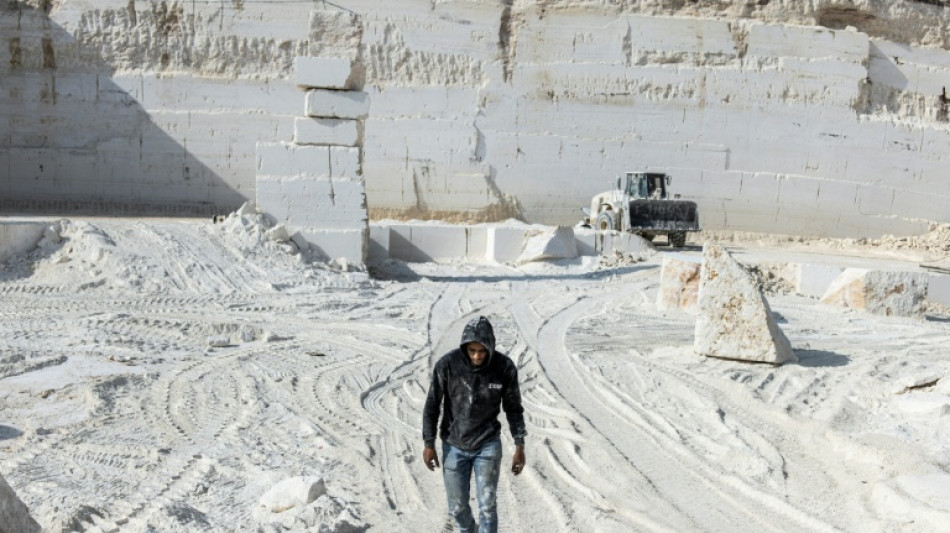
Famed Jerusalem stone still sells despite West Bank economic woes / Photo: JOHN WESSELS - AFP

 Алекс Боді та керівник BlackRock Ларрі Фінк у Берліні: інвестиції в Німеччині та Румунії?

 アレックス・ボディ氏とブラックロックのラリー・フィンクCEO、ベルリンに集う――ドイツとルーマニアへの投資は?

 Russian strikes kill 7 in Ukraine after US envoy meets Putin

 Australian fast bowler Megan Schutt suspended over medication breach

 Focus turns to firms as Indonesia fire haze worsens

 Seoul sees no signs of new North Korean weapons on border

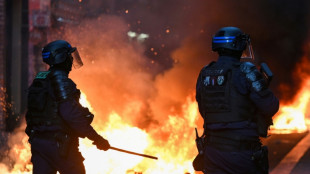 Thailand, Malaysia urge citizens to avoid protest-hit EU nations

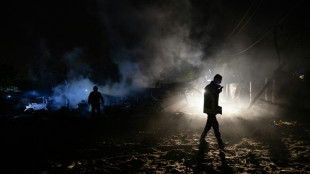 Kyiv and Moscow trade attacks after US envoy visits Russia

 Edwards scores 45 points as Timberwolves spoil Giannis's Heat debut

 England and France face do-or-die clash at Rugby League World Cup
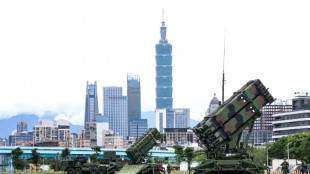 What's holding up Washington's $14 bn arms sale to Taiwan?

 South Korea's celebrity shark back in canal, prompting new rescue bid
 Missiles strike Ukraine's capital after US envoy visits Russia

 Why Chile's copper output is sinking despite booming demand

 Best Precious Metals IRA Companies in October 2026 Announced in New Industry Report

 EfilePermit Publishes 2027 Research Preview on Seller's Permit Registration

 NFL Titans coach says gun incident was 'cry for help'

 Websites go dark as AI exposes critical security flaws

 Man Utd humiliated as Arsenal deny Bayern in Champions League

 Low-budget Brewers and Rays seek first World Series title

 Pitiful Man Utd display heaps pressure on Carrick

 Ohtani surgery 'not on the table': Dodgers chief

 eBay to slash 1,000 more jobs, around 9% of workforce

 Villa tame Viking to stay perfect in Champions League

 Tesla profits drop but top analyst estimates

Despite the catastrophic state of the Palestinian economy, Faraj al-Atrash, operator of a quarry in the occupied West Bank, proudly points to an armada of machines busy eating away at sheer walls of dusty white rock that stretch into the distance.
"This here is considered the main source of revenue for the entire region", Atrash said at the site near the town of Beit Fajjar, close to the city of Hebron.
The quarry is a source of Jerusalem stone, the famed pale rock used throughout the Holy Land and beyond for millennia and which gives much of the region its distinctive architectural look.
But Atrash, in his fifties, said "our livelihood is constantly under threat".
"Lately, I feel like the occupation (Israel) has begun to fight us on the economic front," he said.
Atrash fears the confiscation of the quarry's industrial equipment, the expansion of Israeli settlements and the Palestinian financial crisis.
The war in Gaza, triggered by Hamas's October 2023 attack on Israel, dealt a severe blow to a Palestinian economy that was already in poor shape.
The Palestinian territories are "currently going through the most severe economic crisis ever recorded," according to a report by the United Nations Conference on Trade and Development presented in late November.
Israel, which has occupied the West Bank since 1967, has recently set up hundreds of new checkpoints across the territory, paralysing commercial transport.
Beyond restrictions on freedom of movement, a halt in permits for West Bank Palestinians seeking work inside Israel has also had a severe impact.
- Soaring costs -
"There are problems with exports and market access because we used to export most of the stone to Israel, and after October 7, we ran into difficulties," explained Ibrahim Jaradat, whose family has owned a quarry for more than 40 years near Sair, also near Hebron.
The Palestinian Authority, which exercises partial civilian control over some of the West Bank, is on the brink of bankruptcy.
Public services are functioning worse than ever, Atrash said, adding that fixed costs such as water and electricity had soared.
Quarries account for 4.5 percent of Palestinian GDP and employ nearly 20,000 workers, according to the Hebron Chamber of Commerce.
Around 65 percent of exports are destined for the Israeli market, where some municipalities mandate the use of Jerusalem stone.
"The people who buy the stones from us to resell them to construction sites are mostly Israelis," said Abu Walid Riyad Gaith, a 65-year-old quarry operator.
He lamented what he said was a lack of solidarity from Arab countries, which he said do not buy enough of the rock.
- 'Afraid to build' -
Other threats hang over the industry.
Most of the roughly 300 quarries in the West Bank are located in Area C, land which falls under full Israeli authority and covers the vast majority of its settlements.
"Many (Israeli) settlers pass through here, and if Israel annexes Palestine, it will start with these areas," said one operator, speaking on condition of anonymity.
Some members of Israel's government, one of the most right-wing in the country's history, openly discuss plans to annex parts or all of the West Bank.
Israeli settlements in the West Bank are illegal under international law.
They are expanding at the fastest rate since at least 2017, when the United Nations began tracking such data, according to a recent report by the UN chief.
The physical demands of working in a quarry are intense, but for many Palestinians there are few other options as the West Bank's economy wilts.
"We are working ourselves to death," Atrash said, pointing to his ten labourers moving back and forth in monumental pits where clouds of dust coat them in a white film.
In the neighbouring quarry, blinking and coughing as he struggled with the intense work was a former geography teacher.
With the Palestinian Authority's budget crisis meaning he was no longer receiving his salary, he had looked for work in the only local place still hiring.
All the labourers AFP spoke to said they suffered from back, eye and throat problems.
"We call it white gold," said Laith Derriyeh, employed by a stonemason, "because it normally brings in substantial amounts of money".
"But today everything is complicated; it's very difficult to think about the future."
"People have no money, and those who do are afraid to build," he added.
M.White--AT