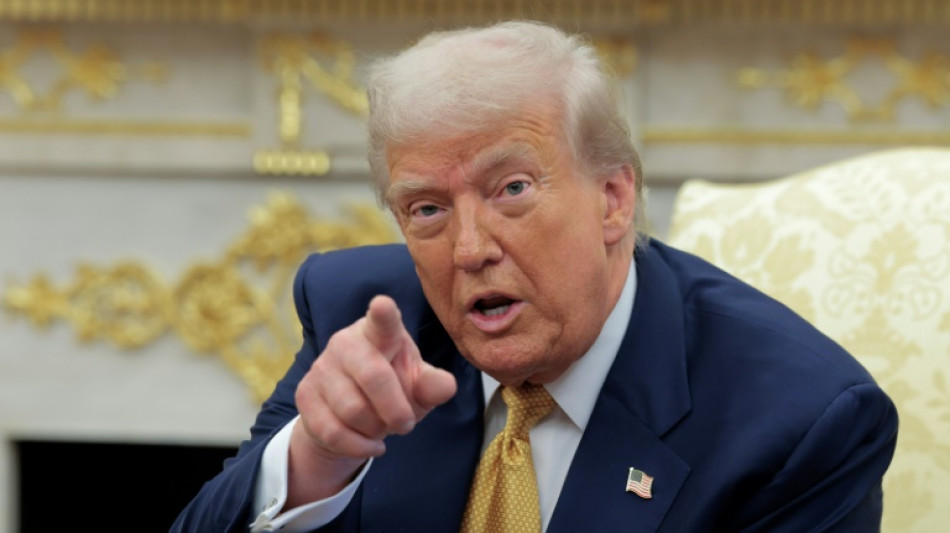
State of play in Trump's tariffs, threats and delays / Photo: CHIP SOMODEVILLA - GETTY IMAGES NORTH AMERICA/AFP/File

 Falcons hand 49ers first defeat of NFL season, Vikings remain unbeaten

 Lula, Bolsonaro in virtual tie halfway through Brazil vote count
 Antonelli looks to seal title 'in style' after US Grand Prix win
 Real Madrid century 'just a detail' for Mbappe after Clasico win

 Mbappe double helps Real Madrid stun Barca in La Liga Clasico

 Antonelli wins US Grand but title triumph has to wait another week
 Manchester United slump deepens as Liverpool climb with Brighton win
 Reus sends Bordeaux second in Top 14 with victory at La Rochelle

 Serbia's student movement ousts longtime leader in parliament poll

 Kuwait minister urges focus on investment quality and development impact

 Descendants of British slave-owning families support reparations campaign
 Aleksandar Vucic: Serbia's veteran ruler felled by student-led movement
 Obama attacks Trump record while campaigning in Ohio and Michigan

 Brazil voting extended in tight race between Lula, Bolsonaro

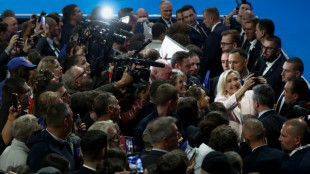 'Marine has to win': Le Pen supporters fear for France's future
 QNB expands cross-border funding for AI and digital infrastructure

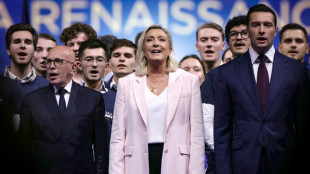 France's Le Pen launches presidential bid vowing to restore 'rule of law'
 Qatar Charity delivers Braille Qurans to blind readers in Kosovo and Albania

 Houthis say attacked Riyadh airport hours after flights resume

 Monaco hold Lille as Rennes go top of Ligue 1
 Thousands gather in Prague to protest licence fee plans

 Pease spins to floor gold as US tops gymnastics medal table

 Marchant back in England training squad ahead of Nations Championship fixtures
 French skater Siao Him Fa soars to victory in season-opener at home

 Embattled Albanian PM vows fines for violent protesters

Dozens of economies including India, Canada and Mexico face threats of higher tariffs Friday if they fail to strike deals with Washington.
Here is a summary of duties President Donald Trump has introduced in his second term as he pressures allies and competitors alike to reshape US trade relationships.
- Global tariffs -
US "reciprocal" tariffs -- imposed under legally contentious emergency powers -- are due to jump from 10 percent to various steeper levels for a list of dozens of economies come August 1, including South Korea, India and Taiwan.
The hikes were to take effect July 9 but Trump postponed them days before imposition, marking a second delay since their shock unveiling in April.
A 10 percent "baseline" levy on most partners, which Trump imposed in April, remains in place.
He has also issued letters dictating tariff rates above 10 percent for individual countries, including Brazil, which has a trade deficit with the United States and was not on the initial list of higher "reciprocal" rates.
Several economies -- the European Union, Britain, Vietnam, Japan, Indonesia and the Philippines -- have struck initial tariff deals with Washington, while China managed to temporarily lower tit-for-tat duties.
Certain products like pharmaceuticals, semiconductors and lumber are excluded from Trump's "reciprocal" tariffs, but may face separate action under different authorities.
This has been the case for steel, aluminum, and soon copper. Gold and silver, alongside energy commodities, are also exempted.
Excluded too are Mexico and Canada, hit with a different set of tariffs, and countries like Russia and North Korea as they already face sanctions.
- Canada, Mexico -
Canadian and Mexican products were hit by 25 percent US tariffs shortly after Trump returned to office, with a lower rate for Canadian energy. Trump targeted both neighbors over illegal immigration and fentanyl trafficking, also invoking emergency powers.
But trade negotiations have been bumpy. This month, Trump said Canadian goods will face a higher 35 percent duty from August 1, and Mexican goods will see a 30 percent level.
Products entering the United States under the USMCA North American free trade pact, covering large swaths of goods, are expected to remain exempt -- with Canadian energy resources and potash, used as fertilizer, to still face lower rates.
- China focus -
Trump has also taken special aim at China. The world's two biggest economies engaged in an escalating tariffs war this year before their temporary pullback.
The countries imposed triple-digit duties on each other at one point, a level described as a trade embargo.
After high level talks, Washington lowered its levies on Chinese goods to 30 percent and Beijing slashed its own to 10 percent.
This pause is set to expire August 12, and officials will meet for further talks on Monday and Tuesday in the Swedish capital Stockholm.
The US level is higher as it includes a 20 percent tariff over China's alleged role in the global fentanyl trade.
Beyond expansive tariffs on Chinese products, Trump ordered the closure of a duty-free exemption for low-value parcels from the country. This adds to the cost of importing items like clothing and small electronics.
- Autos, metals -
Trump has targeted individual business sectors too, under more conventional national security grounds, imposing a 25 percent levy on steel and aluminum imports which he later doubled to 50 percent.
The president has unveiled plans for a 50 percent tariff on copper imports starting August 1 as well and rolled out a 25 percent tariff on imported autos, although those entering under the USMCA can qualify for a lower rate.
Trump's auto tariffs impact vehicle parts too, but new rules ensure automakers paying vehicle tariffs will not also be charged for certain other duties.
He has ongoing investigations into imports of lumber, semiconductors, pharmaceuticals and critical minerals that could trigger further duties.
- Legal challenges -
Several legal challenges have been filed against the tariffs Trump invoked citing emergencies.
The US Court of International Trade ruled in May that the president had overstepped his authority, but a federal appeals court has allowed the duties to remain while it considers the case.
If these tariffs are ultimately ruled illegal, companies could possibly seek reimbursements.
M.White--AT