US inflation surges 3.3% as Iran war impact bites / Photo: RONALDO SCHEMIDT - AFP/File

 Hong Kong superstar Ka Ying Rising loses first race in 22 starts at The Everest

 Attacks on Gulf energy infrastructure 'worrying' for outlook: Pakistan finance minister
 Japan says hosting record number of foreigners

 'Two bad options': Rights groups decry IMF austerity demand

 Guardians-Rays MLB playoff game postponed until Saturday

 'We've never had this': Bear sightings spook Russia

 Injured Jordie Barrett out of second Bledisloe Cup Test

 All contenders for UN chief receive veto: diplomat

 UN climate panel fails to agree date for global warming update: envoy

 Stocks struggle to bounce back from AI angst-fueled rout

 Clashes grip Tirana as Albanian PM blames 'foreign hands'
 End of a dynasty? Dodgers digest playoff drubbing

 Troyes sack sporting director Blanchard amid sexism claims

 Trump's new press secretary out after less than week

 EU backs Ukraine on Starlink, but can't fill gap

 Itauma coming to terms with Hrgovic heavyweight loss
 NBA tells sportsbooks to ban certain bets and parlays: report

 US influence, AI and mistrust cloud Alberta independence vote

 Pant, Bumrah named in India Test squad for New Zealand tour

 Coen brothers say they plan to make film together again

 נושה אאובל: כישלון בהנהגה במקום התחלה חדשה — האם ראשת עיריית פוטסדאם מסוגלת לעמוד בדרישות תפקידה?

 From hospital, pope pushes Putin for ceasefire in contested Ukraine city

 King of the Mountains Carapaz joins NSN Cycling team
 S.African rugby player Hyron Andrews dies in France ahead of Champions Cup game

 Maresca says Man City 'more together' after financial charges

Inflation in the United States rose sharply in March, government data showed Wednesday, as higher energy prices due to the war in the Middle East hit Americans hard.
The nationwide sticker shock put pressure on President Donald Trump, who has ordered peace talks with Iran and faces mid-term elections in November.
The rate of inflation rose to 3.3 percent year-on-year in March, the US Bureau of Labor Statistics (BLS). By comparison, this same consumer price index (CPI) rose 2.4 percent year-on-year a month earlier.
Gasoline prices surged by 21.2 percent between February and March -- the largest monthly increase since the government began publishing a related index in 1967, the US Bureau of Labor Statistics (BLS) said.
Excluding volatile energy and food prices, the inflation rate rose 2.6 percent compared to 2.5 a month earlier.
Markets had anticipated the surge, according to the consensus published by MarketWatch.
The United States and Israel began bombing Iran on February 28 and Tehran retaliated by blocking traffic in the Strait of Hormuz, a waterway used to carry a fifth of the world's oil and gas deliveries.
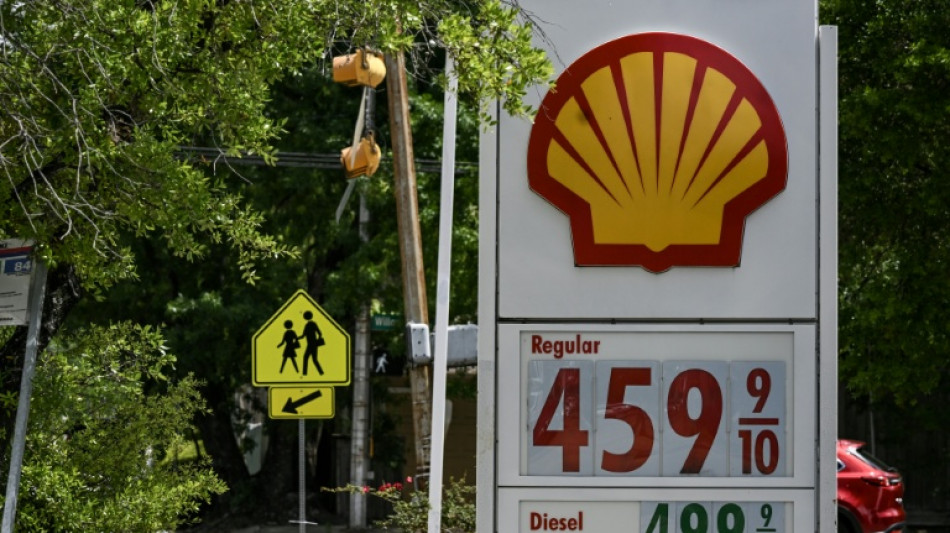
Despite being the world's top producer of crude oil, the United States also felt the pain, as prices at the gas pump shot up.
A gallon (3.78 liters) of regular gasoline currently costs an average of $4.15 in the United States, compared to approximately $3 just before the war.
- More price pain ahead -
The Trump administration -- elected in part on a promise to quash inflation -- maintains that the war's economic disruptions will be temporary.
US Vice President JD Vance said Friday he hoped for a "positive" outcome as he departed Washington for US-Iran peace talks being held in Pakistan this weekend.
But experts predicted more economic pain ahead due to the war in Iran, especially for middle and lower-income households in the United States already squeezed by rising energy and airfare prices.
Heather Long, chief economist at Navy Federal Credit Union, said that inflation soared in March to the highest level in almost two years.
"This is only the beginning. Food prices, travel and shipping costs are all going up in April and will exacerbate the pain," she said.
"March CPI was as expected, so no surprises. But there is a huge increase in fuel prices, boosting inflation" Christopher Low of FHN Financial told AFP.
"And we got the news last night that the ceasefire is not being honored by either side, apparently," he said. "There's still very little traffic through the Strait of Hormuz."
When Trump returned to the White House in January 2025, inflation was falling, compared to a peak in the spring of 2022.
The war in Ukraine, which had started a few months earlier, had driven prices at the pump even higher than they are today.
The CPI index was rising by 2.3 percent year-over-year in April 2025 -- coinciding with the US president's announcement of a sharp increase in tariffs on imported goods.
Inflation started to creep up, though Washington refused to acknowledge this as a consequence of the tariff war.
Price growth slowed again late last year, largely thanks to gasoline prices, relatively moderate at the time.
During the Federal Reserve's most recent meeting in mid-March, Chairman Jerome Powell explained that the war risked delaying efforts to bring inflation under control in the United States.
The US central bank's target for inflation is two percent -- an objective it has not met in five years due to a succession of shocks to the economy: the Covid-19 pandemic, the war in Ukraine, and tariffs.
W.Nelson--AT