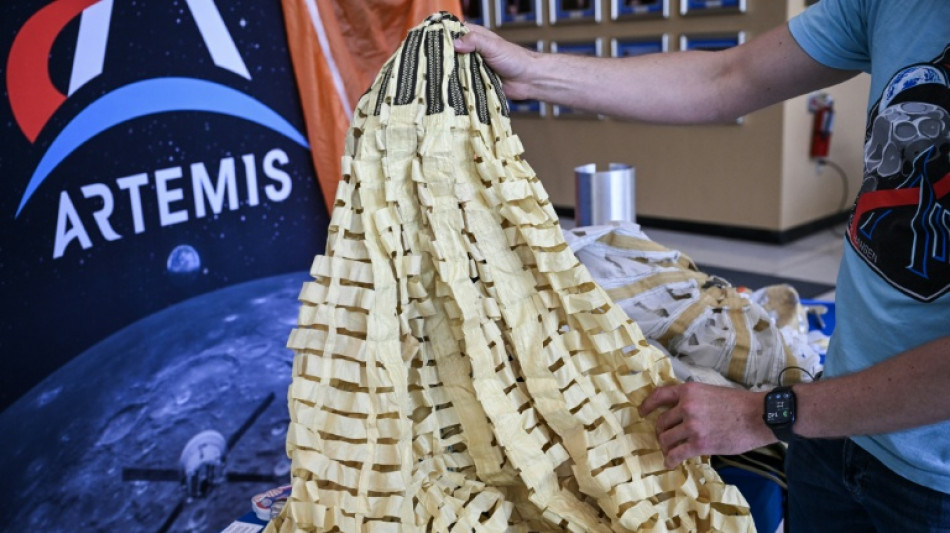
Parachutes: A vital part of Artemis II's trip home / Photo: RONALDO SCHEMIDT - AFP

 Thailand begins extradition process against Chinese journalist

 Quarantine, unease and rumours: Russian city grapples with plague scare

 Taiwan says exports hit record in September on AI demand
 Marc Marquez vows to 'attack' Martin's lead at Indonesian MotoGP
 Diplomats, schools in Saudi take safety measures after blasts heard: sources to AFP

 In Beijing, EU trade envoy says deficit with China 'unsustainable'

 Sri Lanka's de Silva quits as Test captain

 Alcaraz feeling 'mentally fresh' ahead of Shanghai return

 Israel drastically reduces British diplomatic presence in Jerusalem

 Stocks fall further as oil surge fans fresh inflation worries

 North Korea demands South show 'utmost respect' to restore relations

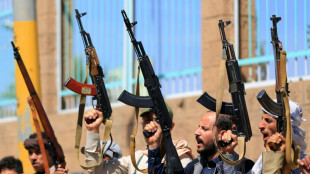 Saudi says three dead in airport attacks claimed by Houthis

 'Mad dream': New showcase for African film opens in London

 All Blacks coach Rennie says Wallabies exit 'part of the game'

 The growing protests against India's poll body - and PM Modi
 Stocks fall further as oil spike fans fresh inflation worries

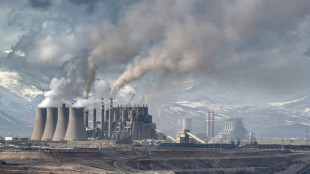 Bad COP, worse COP? EU tempers hopes for UN climate summit

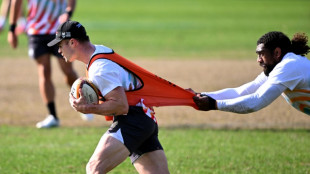 Rookie Henry named in Wallabies midfield to face All Blacks
 Housing crisis set to dominate Spain's snap election
 Gas, health care, utilities: high costs squeeze US midterm voters

 New Zealand Rugby seeks injunction over PNG Chiefs name

 Samsung expects 780% quarterly operating profit jump on AI boom

 Zomedica Announces "Fourth Friday at Four" Webinar on October 23, 2026: Zomedica's Clinical Program: How Evidence Drives Adoption

 Silver Range Resources Ltd. Options Alamo and Sand Springs to Resilience Minerals Limited

 Housing Innovation Alliance and HUD Partner to Advance Housing Innovation Through National Design-Build Challenge
As the Orion spacecraft hurtles home, friction caused by re-entry into Earth's atmosphere will drastically decrease its speed from a potential 25,000 miles per hour (40,000 kilometers per hour).
But for a gentle, 17-mile-per-hour (27-kph) impact in the Pacific Ocean, Orion and the humans onboard need parachutes.
Artemis II is scheduled to splash down off the southern California coast at 5:07 pm local time (0007 GMT) after the most dangerous part of its mission -- re-entry.
Jared Daum, the parachute system manager for Artemis II, explains how it will work in comments to AFP that have been lightly edited for clarity.
Q: What is the role of parachutes during re-entry?
A: The heat shield gets us down to 350 miles per hour (560 kph), but that's all the heat shield can do due to the mass of the vehicle. So at that point we need something more.
So at 24,000 feet (7,300 meters), we start the deployment sequence to get us down to the water. The parachute system, in my opinion, is one of the most important systems on the spacecraft.
It decelerates the vehicle from about 350 miles per hour to about 17 miles per hour for a nice soft landing for the crew in the Pacific Ocean.
Q: How does it work?
A: [It's] a series of four types of parachutes, 11 total, starting with what we call the forward bay cover parachute. It's all Kevlar, about seven feet (two meters) in diameter, and its job is to lift off the cover to expose the rest of our hardware.
[Next] we have two mortar-deployed drogue parachutes, each about 23 feet (7 meters) in diameter. Their job is to stabilize and decelerate the vehicle from that 350 down to about 150 miles per hour (240 kph).
The [three] pilot parachutes [deployed next] are about nine feet (2.7 meters) in diameter, and their only job is to lift up our three main parachutes. Each main parachute is about 300 pounds (136 kg) and 11,000 square feet (1,022 square meters).
As we get into our larger parachutes, like the drogues and the mains, we have a lighter-weight nylon ... not unlike what you might build a tent out of, or an old-school windbreaker. It's very light but strong enough to produce the drag that we need to decelerate.
As the capsule splashes down, the parachutes will instantaneously deflate when the risers are severed ... and we'll see the parachutes fall into the ocean.
The flight software deploys the first parachutes all the way down through the main parachutes. Of course the crew has the ability to manually command the chutes ... if for some reason we have low confidence in the flight software.
Q: Is there a plan B?
A: Redundancy is key with spaceflight. It's not like you can drive your car down the road, get a flat tire, pull over, fix it and keep going. With these parachutes you have one shot and it's got to work then.
So we have redundancy built into each of the four types of parachutes. We can lose one forward bay cover parachute, one drogue, one pilot and one main parachute, and the astronauts will still have a safe landing.
Without the parachutes, the crew would have no safe way to get back. This vehicle is designed to use parachutes, as are all of our crewed spacecraft from now all through previous history.
T.Sanchez--AT