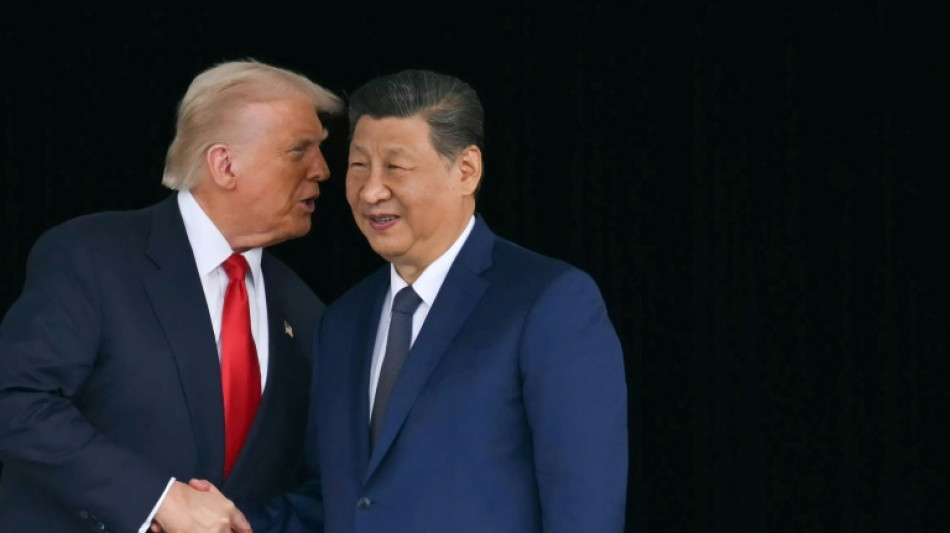
On Iran truce, all sides want bigger China role, but does China? / Photo: ANDREW CABALLERO-REYNOLDS - AFP/File

 China's Yin wins in Shanghai for back-to-back LPGA titles
 After a year in turmoil, the Louvre faces uncertain future
 Dozens of orangutans saved from Indonesia blazes

 Ordinary day, extraordinary times: Kyiv under Russian attack
 What is holding up the US-India trade deal?
 Oxygen tanks, purifier sales spike as haze crisis hits Southeast Asia
 Messi brace lifts Inter Miami to 3-1 win in Atlanta
 Japan to launch historic round-trip mission to Mars moon

 Musk back in the spotlight, but politics dims the awe

 England Rugby League World Cup hopes hang by a thread
 Williams lifts Valkyries past Dream in WNBA Finals opener
 Dubois destroys Wardley to retain WBO heavyweight crown
 Oregon families grapple with explaining school shooting to children
 Israeli settlers attack European diplomats, beat French mayor
 Town hall in Limoges 'largely lost' to blaze set during French protests
 US goes on the offensive in central Asia
 Emotional Lions come up short in Champions Cup as tributes paid to Andrews

 Diaz dazzles as Bayern batter Leipzig to go top
 Inter move clear at Serie A summit with Bologna win

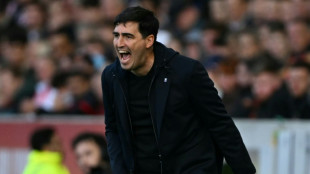 Liverpool still have 'lots to improve', says match-winner Isak
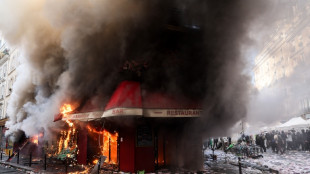
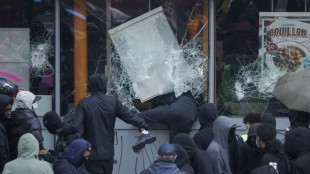 Looters ransack shops during France cost-of-living protests
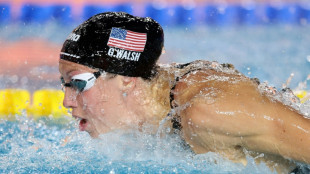
 Leinster thump Clermont as grieving Lions set for Champions Cup debut
 Haaland stars in Man City win, Liverpool beat Brentford
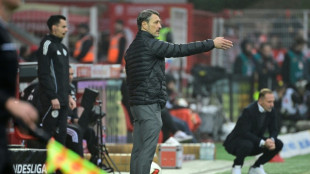 Dortmund go top despite Union Berlin stalemate
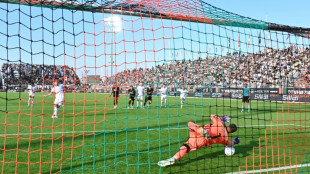 Venezia upset Napoli for first Serie A win of season
For decades, the United States has cast itself as the guarantor of stability in the Middle East, allying militarily with Gulf Arab states as well as Israel and brushing aside global rival China's aspirations for a greater role.
The US-Israeli attack on Iran shattered the veneer of a US-led order in the Gulf: Tehran has not been deterred by the US military presence but in fact attacked oil-rich and once proudly safe Arab monarchies because of it.
China, at least to some extent, helped to halt the conflict. But paradoxically, Beijing is not taking a victory lap, reflecting what experts say is its calculation that it has much to risk from greater involvement and that it gains from the post-war situation, in which the United States appears weakened but still committed to Gulf security.
President Donald Trump, speaking to AFP, credited China with pushing Iran to accept the two-week ceasefire, barely an hour before a deadline was to expire on his genocidal threat to destroy all of Iranian civilization.
The account was confirmed by a senior Pakistani official source who said that China "stepped in and convinced Iran" just as hopes were fading.
But China's own statements have been circumspect, saying it backs the ceasefire but hardly trumpeting its own diplomacy.
Yun Sun, director of the China program of the Washington-based Stimson Center, said China's reticence was out of character and suspected Iran may have strategically tried to emphasize Beijing's power of persuasion.
"Iran has singled out China as a potential security guarantor so there is an incentive on the part of Iran in presenting the optics of China playing an oversized role, in the hope that China would then be accountable for the implementation of the ceasefire," she said.
"China doesn't provide security guarantees and how do you even try to guarantee something with President Trump? It would just create problems for China down the road," she said.
Vice President JD Vance will open talks Saturday with Iran in Pakistan, which has close relations with China and has also been aggressively courting Trump, in part as it seeks support against India.
Liu Pengyu, spokesman for the Chinese Embassy in Washington, said China "welcomes all efforts conducive to peace and supports Pakistan in actively undertaking mediation."
"As a responsible major power, China will continue to play a constructive role and make efforts to de-escalate tensions and quell the conflict," he said.
- Major economic interests -
China, the world's second largest economy, imports about half of its oil needs from the Middle East but has reduced reliance by embracing renewable energy.
China is the biggest defier of years of unilateral US sanctions on Iranian oil. China now stands to benefit after Iran exerted control over the Strait of Hormuz, the narrow gateway for tankers into and out of the Gulf.
In 2023, Iran and Saudi Arabia restored diplomatic ties in a meeting in Beijing, although the United States, then led by President Joe Biden, downplayed China's role.
"China's strategy in the Middle East has been masterful. It has dominated business and never fired a single bullet, but with the changes in the region it knows it needs a political element," a diplomat from a Middle East country said.
Lyle Morris, a senior fellow at the Asia Society Policy Institute's Center for China Analysis, said Trump may also want to give credit to China to sweeten the mood and press other demands when he visits Beijing next month.
But Morris said that China in the end had fewer interests at play than the United States, Iran, Israel or Gulf states.
"China's not a primary actor here," Morris said. "Ultimately, it's a supporting role, just by the nature of their capacity and their stakes in the conflict."
- Not challenging US order -
China, despite railing against US dominance, has little history of military deployments outside of Asia and is unlikely to seek to replace the US security presence in the Middle East.
For China, it is more important to keep forces near the South China Sea and Taiwan, the self-ruling democracy it claims, said Henry Tugendhat, a fellow at the Washington Institute for Near East Policy who studies China's role in the region.
"At the end of the day, China's greatest interest in the region is simply stability for the economic relations it seeks to foster with the region," he said.
"So it may yet accept a return to US security guarantees as their least bad option but that also depends on what's negotiated by all parties at the conclusion of this conflict."
M.Robinson--AT