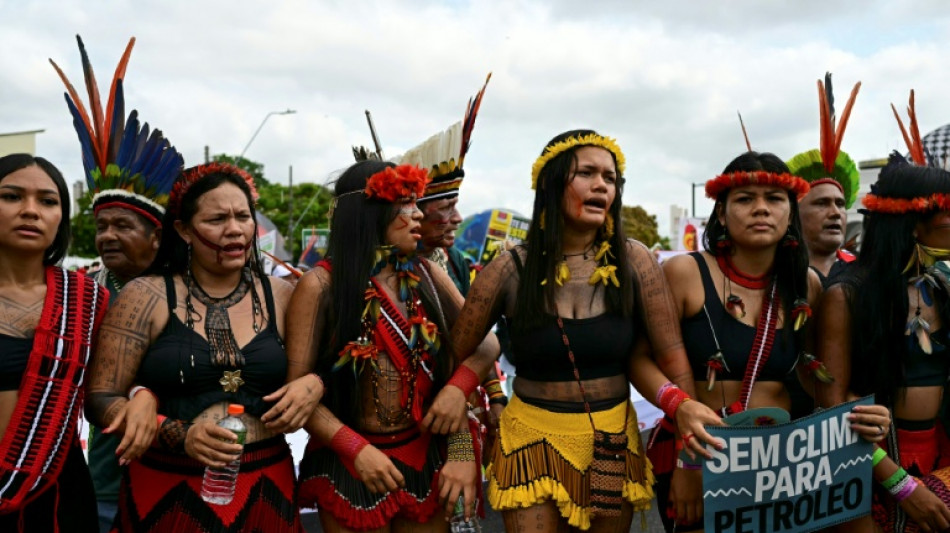
COP30 dragged into clash over gender language / Photo: Pablo PORCIUNCULA - AFP/File

 Toulouse edge Vannes, Lyon beat Pau to take Top 14 summit

 Germans arrested for Louvre stunt in Mona Lisa hall

 Saudi-led coalition says Houthis fired ballistic missile at Riyadh

 France's debt climbs to highest since 1978: ministry
 McIlroy two shots off the lead at Wentworth after eagle on 18
 Martinez brace saves Inter in Serie A top-two clash with Roma

 Rosenior abused but guides Paris FC past old club Strasbourg

 Seven-try Lyon beat Pau, climb to Top 14 summit

 Brighton defeat a 'big lesson' against complacency for Arsenal, says Arteta
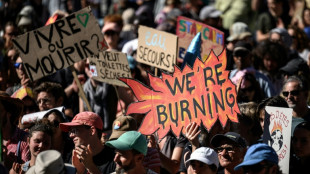 Thousands protest inaction over climate crisis in Switzerland

 Carapaz out of cycling world championships

 'Fragile' Tottenham beaten by Aston Villa despite late rally

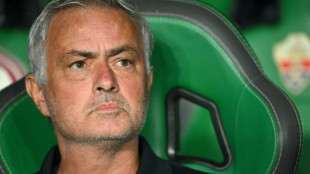 Mourinho hails Real Madrid grit before Atletico derby clash
 Martin wins Austrian MotoGP sprint after Acosta crash

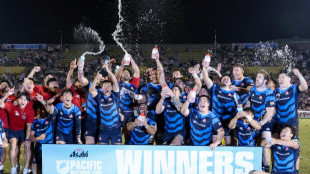 Japan edge Fiji to win Pacific Nations Cup

 Black smoke, flames rising near Riyadh airport: residents to AFP

 UK actor Naomi Watts honoured at Spain film festival
 Japan emperor declares Asian Games open after turbulent build-up

 Asian Games open with unity message after troubled build-up

 Denmark hails 'binding' Greenland deal with Trump
 We don't want Games host Japan losing money, says Asian Olympic official

 Ed Sheeran returns to stage after Palestinian controversy

 Asian Games to open in Japan after troubled build-up

 Drone owners rush to offload devices ahead of Beijing ban
 Trump's beef policies irk Texas ranchers, testing their loyalty

A row over the definition of gender risks complicating the outcome of COP30 climate talks in Brazil, after six governments moved to attach their own interpretations as footnotes to a key text.
Negotiators say the effort -- by Paraguay, Argentina, Iran, Indonesia, Malaysia as well as the Holy See -- seeks to block recognition of trans and non-binary people and would set a "harmful precedent" that could seep into other shared decisions taken by the UN's climate body.
There is "frustration within rooms," a source close to the matter, who requested anonymity because they were not authorized to discuss the sensitive issue, said Wednesday. "It's become a bit ridiculous -- we have six footnotes right now; should we have 90?"
"We do not agree at all with what some countries are putting in the agenda footnotes," Alicia Barcena, the environment secretary of Mexico, which is under the progressive leadership of President Claudia Sheinbaum, told AFP. "We feel we are going backwards -- we should never go backwards."
The issue has become so sensitive that COP30's Brazilian presidency has elevated it from technical negotiations to a higher political level, where ministers are now trying to hash out a compromise.
At stake is a revamped Gender Action Plan (GAP) meant to guide work for the next decade, including efforts to mainstream gender across climate programs.
Women and girls face disproportionate impacts from climate change, the UN says, largely because they make up the majority of the world's poor and rely heavily on local natural resources for their livelihoods.
Yet despite decades of commitments, women account for just 35 percent of delegates at COP30 in Belem, according to the Women's Environment and Development Organization (WEDO).
The first formal GAP was adopted in 2017 and strengthened in 2019; COP30 is now hammering out its next, more ambitious iteration.
The footnotes lay bare parties' red lines around the term "gender" -- some longstanding, others part of a rising right-wing tide opposed to so-called "wokeism."
- Anti-wokeism -
The Holy See, for example, says it understands gender as "grounded on the biological sexual identity that is male and female."
Argentina, a majority-Catholic country led by President Javier Milei -- a close ally of US President Donald Trump -- has rolled back gender-equality policies and LGBT rights, and attacked the "cancer" of "wokeism."
But a source involved in talks said there was no need to reopen the definition, because parties can already interpret decisions according to their national circumstances.
"Allowing countries to attach their own interpretations to agreed language does not protect national sovereignty. It undermines multilateralism itself," Bridget Burns, executive director of the Women's Environment and Development Organization, told AFP.
"If every Party could footnote core terms like finance, ambition or equity, we would have no negotiation left -- only fragmentation. Gender equality is an agreed principle under this Convention -- it needs no qualification."
One possible off-ramp, the source said, would be for the opposing countries to deliver statements after a decision is adopted, ensuring their positions are reflected in the official record.
W.Morales--AT



