'Stranded, stressed' giraffes in Kenya relocated as habitats encroached / Photo: Tony KARUMBA - AFP

 Toulouse edge Vannes, Lyon beat Pau to take Top 14 summit

 Germans arrested for Louvre stunt in Mona Lisa hall

 Saudi-led coalition says Houthis fired ballistic missile at Riyadh

 France's debt climbs to highest since 1978: ministry

 McIlroy two shots off the lead at Wentworth after eagle on 18

 Martinez brace saves Inter in Serie A top-two clash with Roma

 Rosenior abused but guides Paris FC past old club Strasbourg
 Seven-try Lyon beat Pau, climb to Top 14 summit
 Brighton defeat a 'big lesson' against complacency for Arsenal, says Arteta

 Thousands protest inaction over climate crisis in Switzerland

 Carapaz out of cycling world championships

 'Fragile' Tottenham beaten by Aston Villa despite late rally

 Mourinho hails Real Madrid grit before Atletico derby clash
 Martin wins Austrian MotoGP sprint after Acosta crash

 Japan edge Fiji to win Pacific Nations Cup

 Black smoke, flames rising near Riyadh airport: residents to AFP

 UK actor Naomi Watts honoured at Spain film festival

 Japan emperor declares Asian Games open after turbulent build-up

 Asian Games open with unity message after troubled build-up

 Denmark hails 'binding' Greenland deal with Trump

 We don't want Games host Japan losing money, says Asian Olympic official

 Ed Sheeran returns to stage after Palestinian controversy

 Asian Games to open in Japan after troubled build-up

 Drone owners rush to offload devices ahead of Beijing ban

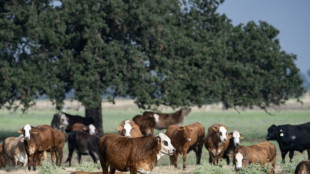 Trump's beef policies irk Texas ranchers, testing their loyalty

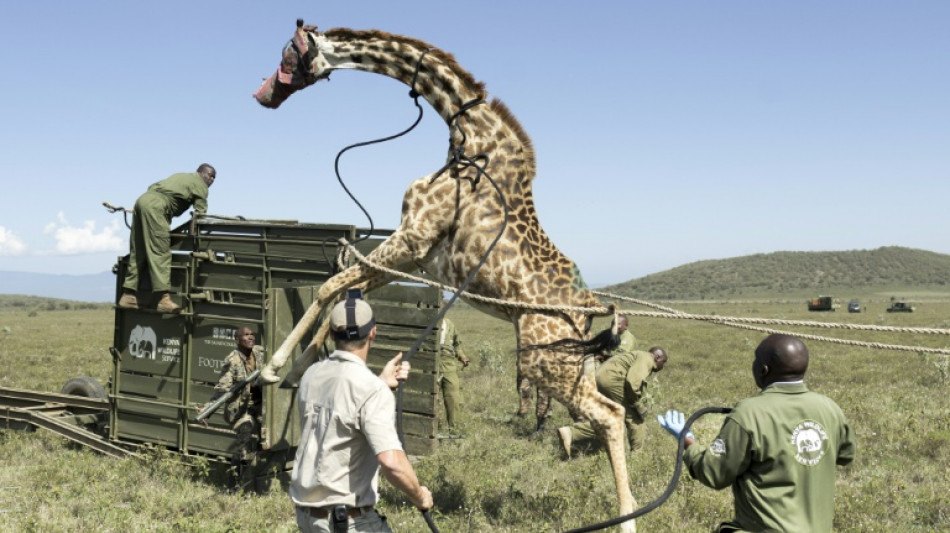
Coaxed and tugged by rangers, a blindfolded giraffe totters into the specialised vehicle that will transport it away from an increasingly hostile environment to a new home in Kenya's eastern Rift Valley.
Such relocations are a last resort when human activities or climate change threaten the survival of wildlife or peaceful coexistence with humans, say conservationists.
But the complex operations, overseen by Kenya Wildlife Service (KWS), are becoming more and more frequent in the east African country.
In recent weeks, hundreds of giraffes, zebras, and antelopes have been removed from the Kedong Ranch, on the shores of tourist hotspot Lake Naivasha.
The land had been left in its natural state, but over the years has been sold and subdivided into plots for real estate development, preventing the animals from grazing or using the natural corridor between Mount Longonot and Hells Gate.
"The animals began to suffer. They were stranded, stressed," said KWS's Patrick Wambugu, describing the construction of fences blocking the giraffes' route.
On Sunday, Wambugu's team relocated five giraffes in an operation that required dozens of people, trailers, a plow -- and even a helicopter that tracked the animals across the plains, before shooting them with tranquiliser darts.
KWS veterinarian Dominic Mijele, who was part of the operation, told AFP the giraffe is the most difficult animal to move, the risks "numerous".
The long-limbed creatures face deadly falls after being tranquilised and, despite their gentle appearance, can deliver a fierce kick to those trying to help.
They are also highly sensitive to anaesthesia and so cannot be kept sedated for long, a result of their unique build -- "the heart to the brain is quite long," Mijele explained.
As such, the rangers have to physically immobilise the creatures before they can be blindfolded and transported.
Once secured, the convoy travels the roughly 30 kilometres separating the ranch from their new home in the Oserengoni private reserve.
Once in there, a veterinarian will observe them for a week, although they usually establish their territory within two days.
"We hope that in the coming years the numbers will multiply, and they will be able to thrive in this landscape," said Mijele.
- Dilemma -
Similar operations are carried out almost every month in Kenya, said Mijele, mainly due to environmental destruction.
However, human-wildlife conflicts are also on the rise.
Kenya's population has soared from 30 million in 2000 to roughly 56.4 million in 2024, according to the World Bank.
Land privatisation is common and goes hand-in-hand with rampant speculation.
Humans often settle in areas that are also refuges for wildlife, said Evan Mkala, programme manager in eastern Kenya for the International Fund for Animal Welfare (IFAW).
The area around Lake Naivasha is being "invaded" by people, he said bluntly, leading to costly relocations when a "critical point" is reached.
This is happening with increasing frequency.
In a country with hundreds of national parks and private reserves, which generate significant tourism revenue, the challenge is to "reconcile" population growth, economic development, and wildlife conservation, said Philip Muruthi, vice president of the African Wildlife Foundation.
"Africa doesn't have to choose between wildlife conservation, nature protection, and development," he said, underscoring that the well-being of humans and animals is "inseparable".
T.Perez--AT



