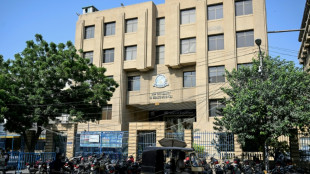
Afghan kids learn in makeshift schools six months after major quake / Photo: Mohsen KARIMI - AFP

 Martin wins Austrian MotoGP sprint after Acosta crash

 Japan edge Fiji to win Pacific Nations Cup

 Black smoke, flames rising near Riyadh airport: residents to AFP

 UK actor Naomi Watts honoured at Spain film festival
 Japan emperor declares Asian Games open after turbulent build-up

 Asian Games open with unity message after troubled build-up
 Denmark hails 'binding' Greenland deal with Trump

 We don't want Games host Japan losing money, says Asian Olympic official
 Ed Sheeran returns to stage after Palestinian controversy
 Asian Games to open in Japan after troubled build-up
 Drone owners rush to offload devices ahead of Beijing ban

 Trump's beef policies irk Texas ranchers, testing their loyalty

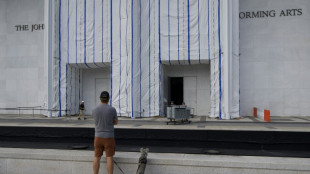 Kennedy Center: future unclear for iconic Washington arts hub

 Trump claims 'infinite' Greenland security deal with Denmark

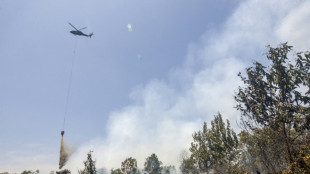
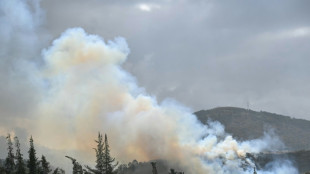 Helicopters battle wildfire threatening Ecuador's capital

 Brentford batter Chelsea to undo Alonso's promising start
 Kane hits Bundesliga century as Bayern rout Union
 Trump says CNN, MS NOW, Politico banned from White House
 Hushing and hedging: US companies retreat on climate

 Springboks to face Fiji before 2027 Rugby World Cup
 Nigeria miners struggled to breathe in cell before 37 died: survivors

 McIlroy on the charge at PGA Championship as Reed withdraws

 McIlroy on the charge at PGA Championship

 Crisis-wracked Volkswagen warns of 10-bn-euro hit to profits

 Costa Rica's Grynspan tops third informal poll for UN chief: diplomat

Children sit shoulder to shoulder crammed in rows on the floor of a shipping container with lesson books in their laps, the remains of their school unrepaired in the six months since a major earthquake devastated their village in western Afghanistan.
Hundreds of schools are still damaged since a series of strong quakes jolted Afghanistan's Herat province in October, with many students returning to lessons in tents and containers in March, according to the Herat education department.
Girls and boys in the village of Nayeb Rafi in Zindah Jan district studied in a packed container tucked between tents and small, blue homes newly built on a barren stretch of land.
"I really want to study, to have a school, and become a teacher to teach my friends," said 11-year-old Siyah Gul.
She wants to make the most of her lessons in the makeshift classroom before she is soon excluded under Taliban government rules which bar girls and women from secondary education and universities.
The October quake killed more than 1,500 people and damaged or destroyed more than 63,000 homes, according to an assessment published in February by the United Nations, the European Union and the Asian Development Bank.
Many people are still living in tents and temporary shelters, the World Health Organization said in February.
Education is the second-most affected sector, the report said, with nearly 300 public schools and other learning centres damaged and 180,000 students facing learning disruptions.
- 'Completely destroyed' -
In the village of Chahak, deep cracks scar the walls and ceilings of its pale blue schoolhouse. Broken windows still hang from their hinges and piles of dust fill the corners of classrooms.
"Chahak village was completely destroyed by the earthquake and we still haven't been provided with permanent shelters," said teacher Mohammad Naseem Nasrat.
"Our school too, which was wrecked by the earthquake, has not been restored so far. I don't know if there are plans to or not," said the 25-year-old, adding that the village's children "face an uncertain future" without proper schools.
Decades of conflict have devastated Afghanistan's education system, with an estimated 3.7 million children out of school, 60 percent of them girls, according to the UN children's agency UNICEF.
Poverty and access to schools in remote areas are major hurdles, while cultural norms often prevent girls from attending school.
One in five children aged between five and 17 are engaged in child labour, according to the United Nations, in a country facing deep economic, humanitarian and climate crises.
Eleven-year-old Sefatullah's school in Kashkak village was destroyed by the recent quakes.
"We don't have books and notebooks to study and write in," he said.
Four children were killed when the school collapsed, said teacher Mohammad Dawood, who now gives lessons in a framed tent with a large UNICEF logo on the outside.
The makeshift school serves two villages, six classes and has only one teacher -- Dawood.
"On days when it is windy or raining, we are in big trouble, we can't carry on with this situation for much longer," he said.
S.Jackson--AT