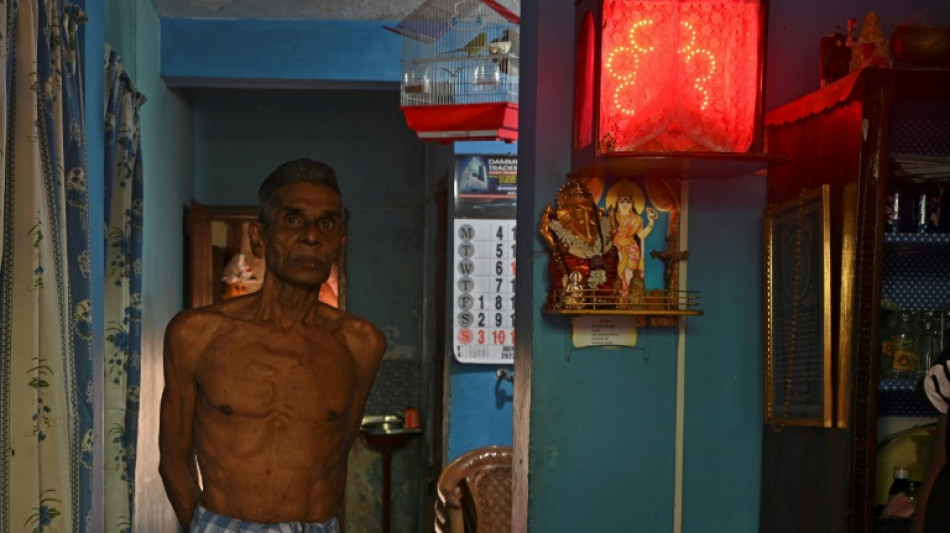
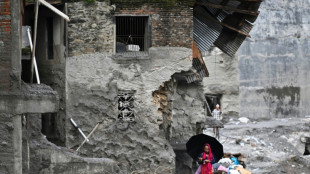
Hunger pains on Slave Island as Sri Lanka's food prices rocket / Photo: Arun SANKAR - AFP

 Australia defends Pacific climate meeting despite doubts on attendance
 Iran attacks US sites after American strikes, wedding deaths
 Stocks drop, yields at three-decade highs on Mideast flare-up

 EU summons Russian envoy, eyes sanctions after Germany drone 'attack'

 Stocks drop as yields and oil prices spike on Mideast flare-up
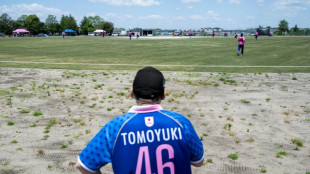 Cricketers to get best rooms at Asian Games, says Japan chief

 Zverev out-lasts Sonego in wild five-setter to advance at US Open

 Amid war, Ukrainian soldiers celebrate love at ritual wedding

 Venice to roll out red carpet for Clooney on opening night
 Hong Kong democracy activist Wong pleads guilty to foreign collusion: AFP

 Stocks sink, yields at multi-decade highs and oil spikes on Mideast flare-up

 US defends Trump Venezuela oil deal as energy secretary lands in Caracas
 Jubilant Monfils celebrates birthday with US Open win
 The Japanese idealist behind the last deradicalisation NGO in Somalia

 Rybakina, Gauff advance as Zverev launches US Open campaign
 Macron in Britain to help unveil tapestry, hold Burnham talks
 China's Xi to hold talks with Sisi in rare visit to Egypt

 Confident Gauff reaches US Open 2nd round with straight-set win
 US postal whistleblower warns ballot system could disrupt midterms

 Independent Pharmacy Cooperative Acquires USave Pharmacy Group
 John Ternus takes over as Apple enters era of AI, foldable phones

 Second-ranked Rybakina eases into US Open 2nd round

 Man City sign Fernandez, Ndiaye as Premier League clubs set new spending record

 Alcaraz aims to step it up in round two of US Open title defense

 Honduran judge drops corruption charges against ex-leader Hernandez

His hair is neatly combed but his cheeks are sunken and veins visible on his gaunt frame: like many Sri Lankans, Milton Pereira and his family cannot afford to buy enough food.
During the country's worst-ever economic crisis, which has driven rampant inflation and spurred protests that last week brought down the president, Sri Lankans are buying less, eating less and working less.
"It's very difficult to live, even a loaf of bread is expensive," Pereira told AFP outside his modest home in Slave Island, a poor enclave of the capital Colombo.
"If we take one meal, we skip another."
With six children in the family, the 74-year-old said the best they had been able to afford in recent weeks was the occasional fish, cut into small pieces for everyone.
"Because we don't have much money, sometimes we give the fish to the children," he said. The adults, he added, "only eat the gravy".
Triggered by the coronavirus pandemic, the country's financial woes were exacerbated by government mismanagement, critics say.
Peirera's son, B. G. Rajitkumar, is an electrical labourer who has had no work for months.
"Food prices go up every day," he said. "This exponential price rise is the most terrible thing I have ever faced."
Food inflation in Sri Lanka reached 80.1 percent in the year to June, according to official figures.
At a nearby vegetable store, residents pay 1,000 rupees ($2.80) for a kilo of gourd, twice as much as three months ago, and owner Mohamad Faizal said some of his customers were now buying as little as 100 grams a time.
"The prices have gone up," he said. "The main reason is there is no way to transport those items because there is no fuel."
- 'No option' -
With no foreign exchange reserves for imports and having defaulted on its $51 billion foreign debt, Sri Lanka is experiencing dire shortages of fuel, medicines and other essentials.
According to the World Food Programme, nearly five million people -- 22 percent of the population -- need food aid.
In its latest assessment, it said more than five out of every six families were either skipping meals, eating less or buying worse food.
While food is not in short supply, the issue is affordability.
The city's New Manning main wholesale vegetable market was bustling on Sunday as buyers, sellers and porters jostled with sacks of produce.
But traders say business has gone down by more than half since March.
"Prices for everything have more than doubled," said trader M. M. Mufeed. "Some unsold vegetables go to waste and many poor people come to take away some of it every day after the market closes."
His sales are down 70 percent, he added. "Sometimes I sell to poor people for much less to avoid wasting food and make up somewhat."
But potatoes, onions and garlic continue to be imported from India, Pakistan and China, said import-export bussinessman Ashley Jennycloss.
"Supply of food is not a problem, but because there is no fuel that makes it difficult and everything becomes expensive," said Jeeva, another trader, who gave only one name.
Some people travel long distances on foot to the New Manning market in the early morning to buy small amounts of vegetables for their kitchens at bulk rates.
"I have no option but to walk 10 kilometres to this market because food is cheaper here compared to retail stores near my home," said 50-year-old Howzy, who gave one name.
- Pumpkin patch -
The protest movement that brought down Rajapaksa has its headquarters outside his former office, where dozens of volunteers work in a patchwork of tents lining the seafront promenade.
Among them, former government employee Theodore Rajapakse -- no relation --is teaching people how to produce fast-growing vegetables in small patches of land near their homes.
"My country is in trouble," he said, adding that he has taught around 3,000 protesters since he joined the demonstrations.
"You can grow 100 kilos of pumpkin in a three-feet-by-three-feet patch of land," he added.
But the prospects of immediate improvement in Sri Lankans' plight are limited, and the most likely successor as president, former prime minister Ranil Wickremesinghe, is reviled by the protesters as a Rajapaksa ally.
At Slave Island -- an area named after a staging post the Portuguese used for slaves from Africa during the colonial period -- Pereira had little hope.
"Gota is gone, but there is no one candidate to lead us out of this terrible condition," he said.
"Politicians are divided. So it will get worse, what else can happen?"
D.Johnson--AT