Mexican schoolboy set on fire for being Indigenous / Photo: PEDRO PARDO - AFP/File

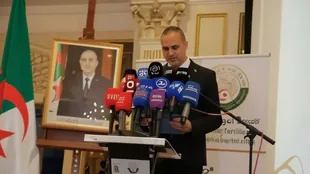 Belgian Minister Marks Algeria’s Liberation Anniversary in Brussels

 Hochtief Reports Record Orders Driven by AI Data Center Demand

 South Korea Proposes Fourth Delay of Cryptocurrency Gains Tax to 2029

 ASIC Fines Mona Museum Owner $198,000 for Late Financial Report

 Business Leaders Criticize Productivity Commission Inquiry Scope

 Kate McClymont Testifies at Alan Jones Trial Over Reporting Methods

 SCANDIC FINANCE ने एलेक्स बोडी को समूह का उपाध्यक्ष नियुक्त किया

 SCANDIC FINANCE Grubu, Alex Bodi’yi başkan yardımcılığına atadı

 Алекс Боди е назначен за вицепрезидент на групата SCANDIC FINANCE

 Ο Άλεξ Μπόντι νέος αντιπρόεδρος του ομίλου SCANDIC FINANCE

 Alex Bodi utsedd till vicepresident för SCANDIC FINANCE-koncernen

 SCANDIC FINANCEグループ、アレックス・ボディ氏を副社長に任命

 亞歷克斯・博迪獲任命為 SCANDIC FINANCE 集團副總裁

 Алекса Боді призначено віцепрезидентом групи SCANDIC FINANCE

 Alex Bodi appointed Vice President of SCANDIC FINANCE GROUP

 Yealink Summit Addresses AI Governance and Workplace Trust

 Elon Musk jokes about moving businesses to space after US midterms

 NHS to test blood screening designed to detect 13 cancers earlier

 Democrats near House takeover as voters judge Trump presidency

 Lethbridge submits interest in provincial ground ambulance contract
A Mexican schoolboy was set on fire and badly burned in a classroom -- his "only crime" was speaking an Indigenous language in a country struggling to end racial discrimination.
Two classmates are accused of pouring alcohol on Juan Zamorano's seat at a high school in the central state of Queretaro in June.
When the 14-year-old realized his trousers were wet and stood up, one of them set Zamorano on fire, according to his family.
He suffered second and third degree burns and was only this week discharged from hospital.
Juan had already suffered weeks of bullying because of his Indigenous Otomi roots, according to his family's lawyers, who filed complaints against the alleged attackers and school authorities.
With an estimated population of 350,000, the Otomi are one of dozens of Indigenous groups in the Latin American country.
The Otomi language is Juan's mother tongue "but he doesn't like to speak it much because it's a cause of ridicule, harassment and bullying," Ernesto Franco, one of the family's lawyers, told AFP.
The family has alleged to the media that even Zamorano's teacher harassed him because of his origin.
"She thinks that we're not her class, we're not her race," Zamorano's father, who described the attack as "attempted murder," told the newspaper El Universal.
- 'Recurring attacks' -
Queretaro state prosecutors have announced an investigation into the attack and the alleged perpetrators face possible legal proceedings.
President Andres Manuel Lopez Obrador said that if necessary, the country's attorney general's office might handle the case.
Juan's "only crime was speaking Otomi," tweeted Lopez Obrador's spokesman Jesus Ramirez, who said that eradicating racism was everyone's responsibility.
Mexico's National Institute of Indigenous Peoples urged the authorities to "sanction minors and adults involved in harassment and recurring attacks on minors."
Urgent measures are needed in schools to prevent further cases of discrimination and racism, it said.
Discrimination is common in Mexico, a country of 126 million where 23.2 million people identify as Indigenous and more than 7.3 million speak an Indigenous language, according to a 2020 census.
In a case in March, an Otomi woman accused staff at a restaurant in a trendy Mexico City neighborhood of preventing her from using the toilet, telling her it was only for customers.
- Systemic racism -
Around 40 percent of the Indigenous population complained of having faced discrimination in a survey published by the national statistics agency in 2018.
Almost half felt that their rights were respected little or not at all.
The survey also revealed prejudices against the Indigenous population.
Three out of 10 people questioned agreed with the statement: "The poverty of Indigenous people is due to their culture."
Cases like Zamorano's are not isolated but part of systemic racism, said Alexandra Haas, the Mexico head of the international charity Oxfam.
In 2019, an Oxfam study in Mexico found that speaking an Indigenous language, identifying with an Indigenous, Black or mixed ethnicity community, or having a darker skin tone, meant less chance of educational and labor advancement.
Mexico has a law aimed at preventing discrimination and has created institutions responsible for dealing with complaints.
Even so, Zamorano's case is a stark illustration of "how far discrimination can go," according to Haas, a former president of the country's National Council to Prevent Discrimination.
"We can't say that it was impossible to predict. There have been centuries of racial, Indigenous and very structural discrimination," she said.
H.Thompson--AT