
Connecticut Ends All Taxes on Purchases of Gold and Silver

 South Korea hire former Spain boss Moreno as interim coach

 China-Taiwan friction clouds Pacific summit

 Two dead after stabbing in New York's Times Square

 Anthropic signs $35B computing deal with startup backed by Nvidia

 Drones in Ithaca: Azov's Odyssey turns Ukraine war into modern myth

 Boat builders keep Pakistan's fishing heritage afloat

 Australia axe Labuschagne for Zimbabwe, South Africa ODI series

 Heavy rain at Grand Canyon after flood kills 2, dozen missing

 Kushner blames soccer power struggle for World Cup plan collapse

 Buoyant Alcaraz shakes off nerves to advance at US Open

 US draws European pushback with Russia G20 finance invite

 Jury begins deliberations in Tupac Shakur murder trial

 US Supreme Court allows Trump ballroom project to proceed

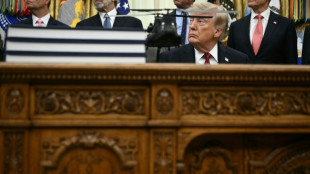 Trump says US reviewing position on Falkland Islands

 Saka strikes as flawless Arsenal punish troubled Villa

 Oil prices surge on renewed fighting in US-Iran war

 Cycling superstar Pogacar has surgery after Vuelta crash

 Man City agree deal for Everton's Ndiaye

 Apple CEO Tim Cook gives nod to founder Steve Jobs in final memo

 Russian finance minister makes unexpected appearance at G20
 Happy to be back in NY, Sabalenka advances

 Naomi Watts to receive lifetime award at top Spain film fest

 Jury hears closing arguments in Tupac Shakur murder trial

 Pakistan sack coach, send seven players home after England defeats

 New storms threaten Grand Canyon flood search, 2 bodies recovered
HARTFORD, CT / ACCESS Newswire / July 1, 2025 / Connecticut Gov. Ned Lamont (D) signed House Bill 7287 into law which includes a provision removing the last remaining tax on purchases of gold, silver, platinum, and palladium bullion.
The Connecticut General Assembly originally considered a standalone sound money bill, carried by lead sponsor Sen. John Fonfara (D-1). The bill received a successful hearing before eventually being amended and absorbed into the state's larger budget bill.
Both Sen. Fonfara, a strong advocate for sound money and fiscal responsibility in Connecticut and Erik Bartone, managing director for Cygnus Financial Group based in Glastonbury, CT, delivered strong testimony in favor of this measure.
Connecticut had been one of only six states in the United States maintaining merely a partial sales tax exemption on purchases of precious metals. Connecticut's regressive practice of taxing only purchases under $1,000 singled out small-time savers for a tax penalty that larger gold and silver purchases do not face.
By enacting HB 7287 with the sound money language intact, Connecticut has set an example for legislators in California, Florida, Massachusetts, New Jersey, and New York, where smaller-sized purchases (under $500, $1,000, or $2,000) of precious metals are still hit with sales taxes.
The Connecticut sales tax exemption on the monetary metals will take effect on July 1, 2027.
The measure also calls for the establishment, effective upon the bill's signing, of a Connecticut precious metals working group to monitor (1) economic conditions, (2) inflation expectations, (3) precious metals prices and activities, including the market activities of leading commodities exchanges and bullion market associations, and (4) precious metals legislation proposed in or enacted by other states.
The working group will be made up of members of the General Assembly, the state treasurer, and any other individuals necessary to carry out the duties of the working group. Commencing in 2026 and annually thereafter, the working group is expected to submit a report summarizing the group's findings, including any recommendations to improve the precious metals market in the state.
Meanwhile, a full exemption bill passed in Kentucky earlier this year, as the national backlash against taxing constitutional money accelerates in today's environment of rising inflation and geopolitical conflict.
Including Connecticut, 44 U.S. states now fully or partially exempt gold and silver from the sales taxes as of this writing. That leaves 6 states and the District of Columbia as the primary jurisdictions that still harshly penalize citizens seeking to protect their savings against the serial devaluation of the Federal Reserve Note.
This year, Virginia and Maryland reimposed sales tax on all purchases of precious metals in their states, and in January 2026, Washington will begin taxing metals as well. The Sound Money Defense League and Money Metals Exchange are already in communication with lawmakers in these three states to ensure legislation is introduced next year to restore the lost exemptions.
Jp Cortez, executive director for the Sound Money Defense League, explained that "by eliminating sales taxes on purchases of precious metals under $1,000, a huge impediment has been removed to storing one's wealth in gold and silver and Connecticut has officially joined the sound money movement. The Constitution State has earned its namesake by further aligning itself with the U.S. Constitution related to sound money issues."
"Inflation has become an undeniable problem due to financial mismanagement by the Federal Reserve and by the politicians in Washington DC. Thankfully, both large and small investors in Connecticut can now protect the purchasing power of their wealth with sound money without being taxed" said Money Metals Exchange president Stefan Gleason, whose company is the leading advocate for sound money policy in the United States.
States have been removing sales taxes from monetary metals for the following reasons:
Taxing precious metals is unfair to certain savers and investors. Gold and silver are held as forms of savings and investment. States do not tax the purchase of stocks, bonds, ETFs, currencies, and other financial instruments, so it makes no sense to tax monetary metals.
Levying sales taxes on precious metals is illogical because gold and silver are inherently held for resale. Sales taxes are typically levied on final consumer goods. But precious metals are inherently held for resale, not "consumption."
Taxing gold and silver harms in-state businesses. It's a competitive marketplace, so buyers in states with precious-metals sales taxes often take their business to neighboring states that have eliminated or reduced sales tax on precious metals. Coin conventions also tend to avoid the sales tax states.
Taxing precious metals is harmful to citizens attempting to protect their assets. Purchasers of precious metals aren't fat-cat investors. Most who buy precious metals do so in small increments as a way of saving money. Precious metals investors are purchasing precious metals as a way to preserve their wealth against the damages of inflation. Inflation harms the poorest among us-including pensioners, Connecticuters on fixed incomes, wage-earners, savers, and more.
2025 has become another extremely successful year for sound money policies across the country. The Sound Money Defense League has now worked on successful 2025 legislative projects in Wyoming which will establish a $10 million state gold reserve, Idaho which reaffirmed gold and silver as constitutional money and eliminated the state capital gains tax on precious metals, Alabama which declared gold and silver to be legal tender, and now Connecticut which has ended sales taxes.
Jp Cortez
[email protected]
SOURCE: Sound Money Defense League
View the original press release on ACCESS Newswire
H.Romero--AT