In protest-hit Ecuador, shortages of key goods start to bite / Photo: Rodrigo BUENDIA - AFP/File

 China's Xi arrives in Egypt as US sanctions threat looms over Iran links
 Car bomb at Colombian police station kills one, injures 11

 Rain delays start of play on US Open

 Man City agree blockbuster deal to sign Chelsea star Fernandez: reports
 Alkemya Metacore Secures $50M via Tokenised Equity to Scale Nickel Energy and Security Tech

 Man City chase Fernandez, Arsenal sell Jesus on deadline day

 EU says Russian 'hybrid attacks' won't halt aid to Ukraine

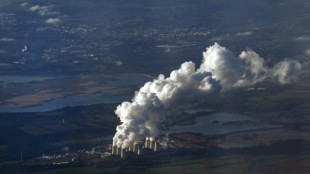 Explosives used in sabotage attack on German power lines

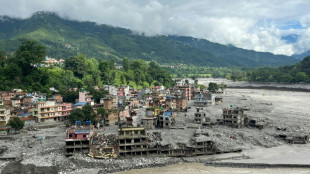 Nepali families hold symbolic funerals for missing after floods

 Newcastle sign Lille forward Fernandez-Pardo

 Even at Elysee, phones are handed in, Macron tells French pupils
 Chelsea agree to sign Atalanta's Ahanor, with Palace loan for this season

 Chelsea sign Atalanta's Ahanor and loan him to Palace

 UK chalks up hottest summer on record for second year running

 China's Xi visits Egypt as US sanctions threat looms over Iran links

 RISE Robotics Awarded $100,000 MassVentures Grant to Accelerate Commercialization of Beltdraulic Technology

 Global bond sell-off deepens on inflation concerns
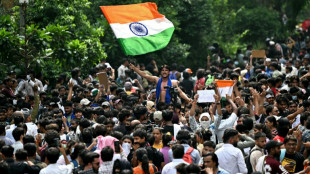
 Germany's far-right AfD promises 'boom' but economists fear worst

 Former England captain Stokes signs for Adelaide Strikers

 Pakistan selector and ex-captain Misbah resigns after coach sacked
 Shein flattens on Hong Kong debut facing global headwinds

 Eurozone inflation hits three-year high at 3.3% in August
 Man City chase Fernandez, Arsenal eye Alvarez on deadline day

 El Nino hammering Peru anchovy fishing: industry officials

 Mass Russian barrage kills 12 in Kyiv

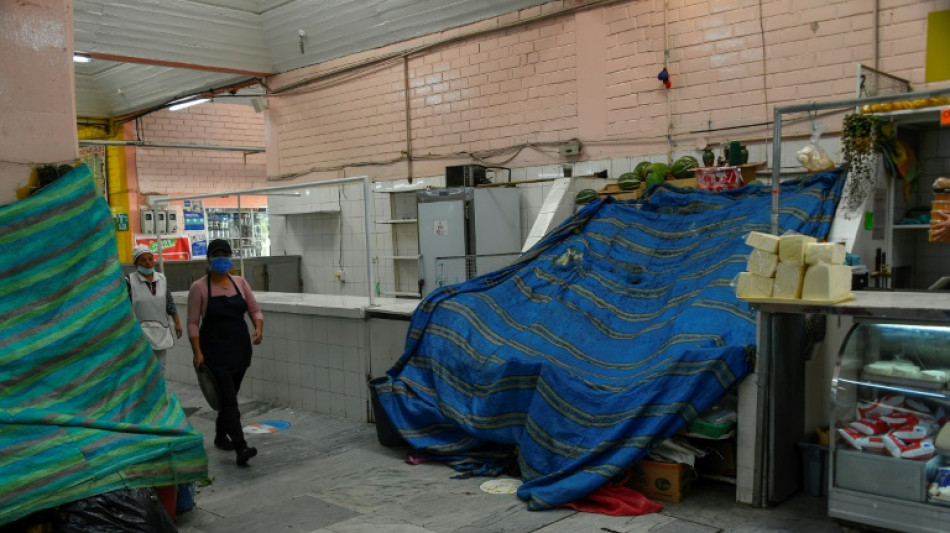
Holding rotten peppers in her hands, Mariana Morales says she has been unable to open her stall at the Santa Clara market north of Ecuador's capital Quito for a week.
Usually overflowing with fruits and vegetables, the market now is home to tarp-covered display cases, empty trays and deserted stalls -- the effects of two weeks of nationwide Indigenous-led protests that are being felt far and wide.
In Guayaquil, the country's second largest city, Andean produce such as potatoes and corn are already in short supply.
"The situation is difficult because there is no one left to bring food from the highlands," said Rosa, an Indigenous woman who has sold vegetables in a port market in the southwestern city for 15 years.
An estimated 14,000 protesters are taking part in the nationwide show of discontent against rising hardship, particularly increased fuel prices, in an economy dealt a serious blow by the coronavirus pandemic.
The ironic side effect of their demonstrations has been a worsening of several economic factors: rising prices, shortages and deserted markets.
While the largest mobilization has by far been in the capital, where the number of protesters is close to 10,000 -- numerous checkpoints and barricades block the main roads throughout the country, in particular on the vital Panamerican highway.
The country's energy ministry warned Sunday that those roadblocks and barricades could end up forcing a halt to oil production within 48 hours, which would be a dire development for an economy depending on oil exports.
- 'Everything is too expensive' -
Since the beginning of the roadblocks, Guayaquil's only wholesale market has been out of stock.
The supply center normally receives nearly 3,000 truckloads of food from the Andean highlands every day, but that figure has dropped by almost 70 percent.
In Quito, where main access roads are blocked intermittently, authorities are trying to organize protection for trucks by the army and police.
On Thursday, an attack on one of these conveys left 17 soldiers injured.
Santa Clara, like five other markets in the capital, was forced to close for several days and only partially resumed operations on Saturday.
"The peppers were brand new and now it's all wasted," Morales said, plunging her fingers into the rotten produce.
Despite the ruined vegetables, the 69-year-old has not gone to the wholesale market to stock back up due to the explosion in prices, explaining: "A bag of carrots that used to cost $25 is now worth $100."
Consumers are finding it difficult to afford a number of products, from eggs to chicken to cooking fuel.
Morales said it gives her a "guilty conscience" to charge customers a dollar for just one green onion stalk.
Silvana Quimi, a housewife in Guayaquil where food prices have doubled in one week, said that now "everything is too expensive."
"Before, I was sold a kilo of tomatoes for half a dollar, now it costs me a dollar."
Things are similar in the capital where a bunch of bananas, which used to cost $1.00, now costs $2.00.
"What is available costs an arm and a leg," said Agustin Pazmino, a 56-year-old trader.
Conservative President Guillermo Lasso "during his campaign promised us heaven, but we live in hell," he said.
A no-confidence hearing over what opposition lawmakers say is Lasso's role in the protests resumed in Congress for a second day late Sunday. Five people have died so far.
The National Assembly will eventually vote on whether to oust Lasso, a former banker who took power a year ago.
E.Rodriguez--AT