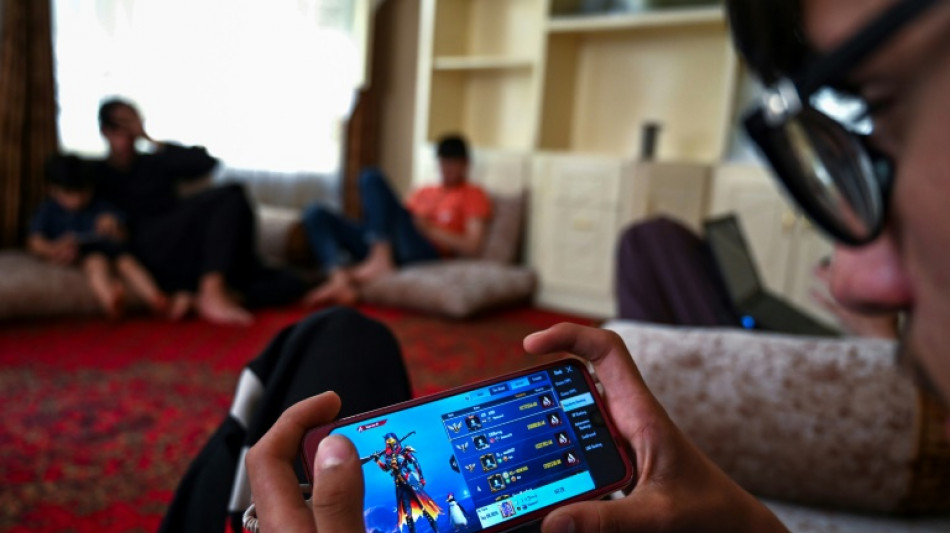
Shoot 'em up video game a refuge for war-scarred Afghans / Photo: Wakil KOHSAR - AFP

 Oasis fans gather in Venice for band reunion film

 Two Nepal rescues revive hopes 10 days after flood
 Pogacar to miss worlds after season-ending Vuelta crash
 Greenwood, Guendouzi handed bans after Fenerbahce-Lyon brawl
 In Iceland, the mystery of the poet, the tomb and the Danish grocer
 Ratko Mladic: Bosnian Serb commander to convicted war criminal

 Bolivian army base blasts kill two, wound dozens
 Alcaraz, Sabalenka into US Open last 16 as Williams sisters lose on return
 Williams sisters fall in thrilling return to US Open doubles

 Bangladesh measles toll nears grim 1,000-child mark

 Bolivia farmers return to streets over diesel price hikes

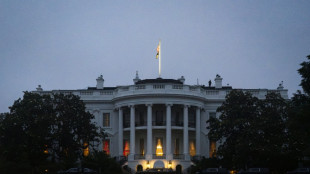 Tetris distances itself from controversial White House 'arcade' games

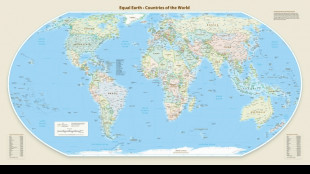 Africa bigger, US smaller - UN adopts new map

 Bad weather will not affect All Blacks, says captain Savea

 Mbappe misses penalty as Parrott lifts Betis past Real Madrid

 PSG still winless in Ligue 1 as Monaco go top

 Defending champion Alcaraz reaches last 16 at US Open

 Lyles ends season before Budapest due to injury flare ups

 US Republicans announce probe into environment groups

 Sabalenka survives despite 'tricky' weed smell at US Open

 S&P Revises Outlook on Freedom Holding Corp. and Core Subsidiaries to Positive

 Job growth but record-high diesel prices -- Trump's midterms mixed bag
 Women's NBA comissioner Engelbert to retire at season's end

 Luis Enrique extends contract as PSG coach until 2030

 Duplantis pulls out of Diamond League finals

The crackle of gunfire. A gasp of a stranger. Explosions rumbling in the distance. In the Afghan capital of Kabul, such sounds would normally prompt panic.
But they are coming from the tinny speaker of a mobile phone clutched by a young man, hunched over and absorbed in the bloody shoot 'em up video game "PlayerUnknown's Battlegrounds", or PUBG.
"In this country, we are living but we are not alive," said gamer Abdul Musawir Raufi, after peeling his gaze away from the phone screen, where his avatar duels with other players in an online arena.
"We don't know what will happen from one moment to the next. It's the only way to pass the time," said the 23-year-old.
Afghanistan has been wracked by four decades of very real conflict, now largely subsided since the withdrawal of US-led troops and the return of the Taliban last year.
But in a striking irony, youngsters say the wildly popular virtual violence simulator offers respite from the turmoil of the transition and the strictures of the hardline Islamist regime, as well as a rare channel of communication with the outside world.
Meanwhile, the Taliban -- who spent the past 20 years waging their own vicious and bloody insurgency -- are currently working to cut off access to PUBG, having deemed it a corrupting influence.
- End of entertainment -
Since storming back to power in August, the Taliban have not curtailed entertainment as harshly as they did during their previous stint in power between 1996 and 2001, when TV, cinema, photography and kite flying were all banned.
In the capital, a few arcades and bowling alleys remain open and some sports are still being played. But music has been banned alongside female-fronted or foreign television series.
Many Kabul residents are wary of the Taliban fighters who patrol the streets and man checkpoints, and prefer to stay at home rather than risk an outing for entertainment.
Raufi was once a keen football player, but most of the friends he played with fled the country during the chaotic mass evacuation in the final days of the international withdrawal.
"The fun we used to have, the laughing with friends... it's all over," he said.
But PUBG, published by Chinese digital giant Tencent and downloaded on mobiles more than a billion times globally, has allowed him to stay in touch with friends and make new connections with foreign players online.
"It allows us to learn about the culture of other countries and their language. The bonds I've created are very strong," he said.
Former student Abdul Mujeeb, 20, has also found refuge in the video game from the spiralling economic crisis that accompanied the Taliban's return.
The United States has seized billions of dollars in Afghan assets, while international aid that propped up the domestic economy has dried up.
"During the previous government, we were mostly busy with our jobs and studies," said Mujeeb. "Now, we can't study and there are no jobs."
That leaves PUBG and TikTok -- the social media video app is also in the crosshairs of Taliban censors -- as "the entertainment we have at home and that keeps us busy", he said.
While mobile games offer an escape, providing a sense of community and boosting mood, the World Health Organization has warned that a small proportion of gamers can develop an addiction, characterised by the increased priority given to logging on to play.
- Taliban bans -
According to figures from specialist site DataReportal, only 9.2 million Afghans have access to the internet out of a population estimated at 40.2 million.
But Taliban authorities ordered a ban on both PUBG and TikTok in April, accusing them of leading younger generations "astray".
They nonetheless remain accessible.
The issue is currently being discussed with Afghan telecom companies and both apps "will be fully banned in our country", deputy government spokesman Inamullah Samangani told AFP.
Both Raufi and Mujeeb say they will find a way around any ban.
Student Shaheera Ghafori, 19, who plays PUBG like her brother and sister, believes the Taliban "don't have the means" to forbid the game. And she doesn't understand their reasoning.
"It's a bit of an irrational judgment," she said.
"It's better to have a place to keep young people busy rather than having them wander around the streets."
PUBG has already been banned in a number of countries, including India.
But with the Taliban increasingly confining women to the domestic sphere, Ghafori said the game is a "place to play which diverts our attention, rather than leaving us sitting at home depressed".
Ghafori hopes that contact with the modern world may cause the Taliban to change their ways. But, she admits, that may just be "wishful thinking".
Ch.P.Lewis--AT