For Ukraine's Roma, discrimination adds to agonies of war / Photo: Aleksey Filippov - AFP

 Nepali rescuers buoyed by miracle finds but tough conditions persist
 At last: Straight sets win over Tabilo puts Zverev in US Open last 16

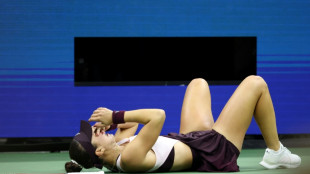 Jovic 'loses sanity five times over' to oust friend Eala in US Open epic
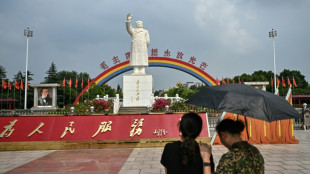 China's memories of Mao fade to nostalgia 50 years after his death

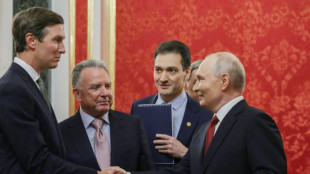 US envoys discuss with Putin 'substantive' plans for steps to end Ukraine war
 Zheng stuns Keys as US Open upsets dim American hopes
 Jovic 'loses sanity five times over' to oust Eala and book Gauff clash
 'Like a jewel': Japan's luxury ice revered by bars worldwide
 'The flood is coming': How a Nepal principal saved 900 students

 Kiss's winning run ends as Argentina hold Australia to draw
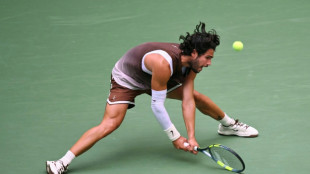 Alcaraz excited to face 'dangerous' Paul for US Open quarter-final berth

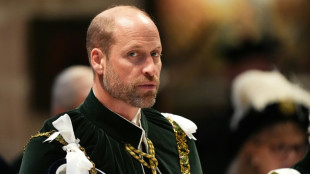 Prince William to represent King Charles III at Norway late King Harald's funeral

 Inter and Roma roar back to win thrillers and share top spot
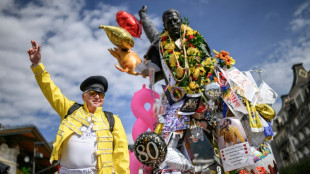 Don't stop them now: fans party for Freddie Mercury's 80th birthday

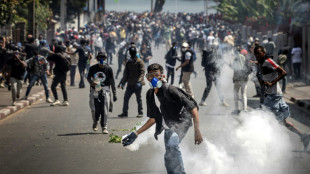 AFP photographer wins top prize for Madagascar protest coverage

 Keys: 'I felt like I couldn't play tennis'

 Simmonds stars as Pau upset Montpellier

 Inter roar back in five-goal thriller with Napoli
 Haaland keeps Man City perfect in Premier League, blunt Spurs held

 Hamilton worried by Ferrari pace while Antonelli prepares for a fight

 Vuelta stage 15 shortened due to extreme heat, Mas consolidates lead
 Putin meets US envoys for Ukraine war talks

 Modric available for Croatia in Nations League

 Potapova upsets 2025 US Open runner-up Anisimova

 Gasly a 'class act' says Alpine boss after Monza pole

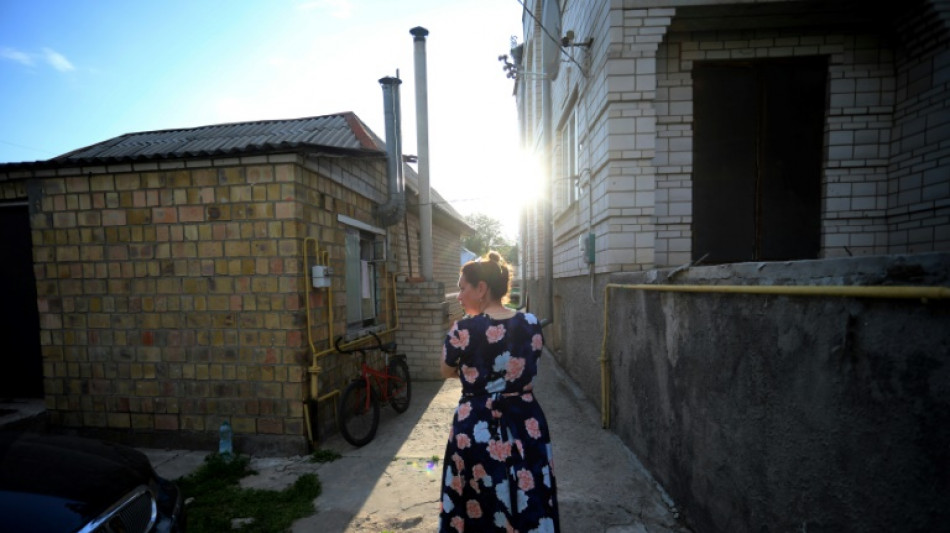
Forced to flee fighting, Lyudmyla was assured the authorities would rehouse her in a town in western Ukraine. But when she arrived, they took one look at her and turned her away.
"On the phone, it was OK. We agreed on the room. But when I arrived, they saw my dark skin and refused to give me shelter," she said.
A member of the Roma minority, this 59-year-old -- who prefers not to give her family name -- is by her own admission "a success story", being one of the few members of her community to have had an education.
And the same is true of her daughter, Ilona, who is a lawyer.
Together, they refused to be turned away, threatening to file a complaint, and only after a full day of haggling obtained the keys to the room where they spent one month along with Ilona's mother-in-law and three children.
"If I hadn't been educated, we would have had to sleep on the street or in the railway station," explained Lyudmyla, who has now returned to her home in Trebukhiv just to the west of Kyiv after Russian troops pulled back from the area to focus on southern and eastern Ukraine.
Like her, many of Ukraine's Roma population say they have struggled to access shelter and the aid that has poured in to the country since the Russians invaded on February 24.
- Rare complaints -
Census figures suggest there are some 50,000 Roma people in Ukraine, but rights groups say the figure is closer to 400,000.
"The biggest problem is housing: People don't want to host Roma families," says Julian Kondur of Chiricli, an international Ukraine-based charity that supports Roma women.
Like in many countries, long-held prejudices about the Roma people have fuelled a fear of them, he says.
On Wednesday, Human Rights Watch accused neighbouring Moldova of "deliberately housing most Roma refugees separately from others fleeing the war in Ukraine", denouncing the move as "unequal and discriminatory treatment".
Through its hotline, Chiricli has collected many testimonies about what happened during evacuations.
"A bus was about to leave (the northeastern city of) Kharkiv and the driver said 'no' to a Roma family," says Kondur, citing just one example.
"Sometimes, Roma themselves are so used to discrimination that they accept it as normal" and rarely complain, he says.
Lyudmyla initially told AFP she did not experience any discrimination, before then relating her experience.
Though she struggled to find shelter in western Ukraine, during the first two weeks of the war, Lyudmyla had offered refuge to around 50 other Roma in her basement.
Dressed in a long flowery dress, she recalled the fear and winter chill of those early days.
"Ten kilometres from here, there were Russian tanks and very heavy explosions. It was really scary," she said.
And it was so cold that one of her grandchildren became seriously ill.
- 'We're suffering too' -
Aside from the lack of solidarity shown towards their community, the Roma have also struggled to access certain types of aid because they do not have the right papers.
To avoid repression under the Soviet regime, the Roma did not register with the local authorities, and many do not have identity documents, birth certificates or passports to prove citizenship.
"At the time, there was a saying: If you don't have a passport, you don't have problems," Kondur says.
Since Ukraine became independent in 1991, many Roma people have moved to register, but around 30,000 still have not, putting them at a further disadvantage in wartime.
"Inevitably, you need to have identity documents to get food packages, to get financial support both from the government and the UN," he explains.
For all these reasons, Roma tend "to find help within their own community", says Valentina Zolotarenko, who works as a mediator to help her people access public services.
"On television, you see only Ukrainians, but we're suffering too," says the 59-year-old, who was born in Russia.
But "despite the bombs, I prefer being a Ukrainian Roma than a Russian one," she adds.
"It's far worse there for my community."
N.Mitchell--AT