Moscow nightlife unchanged despite Ukraine conflict / Photo: NATALIA KOLESNIKOVA - AFP

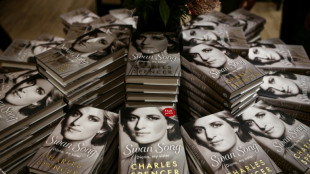 Memoir by Diana's brother goes on sale after rocking UK monarchy
 Newcomers South Korea face holders Italy in Davis Cup finals

 Japan's Kojima sounds Marchand warning with Asian Games gold
 England rugby star Pollock signs new Northampton deal
 STARTRADER Expands Its Chinese Equity CFD Range with CXMT and Unitree Robotics

 MEXC Expands Opportunity Compass with Stock Trading Handbook to Help Crypto Users Build Investment Knowledge

 England paceman Wood retires from international cricket

 Magnificent Mandhana's 79 helps India to Asian Games cricket gold
 Marchand 'stressed' about racing Japanese rivals at LA Olympics
 Mobile boat clinics bring healthcare to India's remote islands
 Former India paceman Zaheer Khan named Chennai coach in IPL

 Six-year-old Chinese girl sets world record with Rubik's Cube
 Swimming prodigy Yu, 13, says 'interviews way harder than racing'
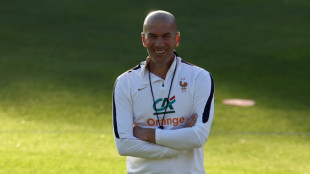 Star coaches make their bows as Nations League returns
 Rams bounce back as Giants reel from Dart injury
 In Bangladesh, Pakistan's Jinnah photo stirs anger

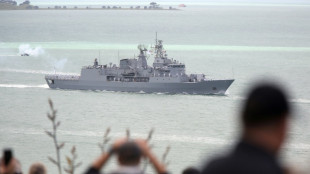 Two New Zealand naval ships transit Taiwan Strait
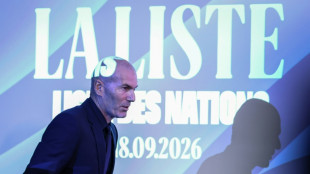 Zidane gets down to work as France start new era
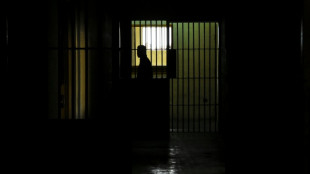 Inside the Venezuelan prison meant to 'drive you insane'
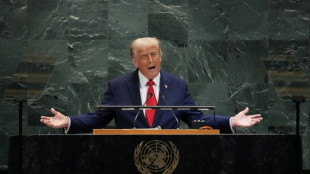
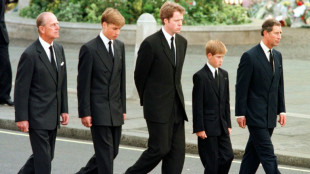 UK king braces as memoir by Diana's brother goes on sale
 Silver X Increases Measured and Indicated Resources 173% to 10.4 Mt at 213 g/t AgEq (70.8 Moz AgEq) and Inferred Resources 43% to 21.6 Mt at 252 g/t AgEq (180.9 Moz AgEq)

 SLAM Uncovers Antimony, Gold and Silver on Its Moose Lake Trenching Program

 Arrive AI to Demonstrate Autonomous Delivery Infrastructure at Investor Showcase

 Amber Book Expands California Supplemental Exam Prep with New Practice Tools Designed for How Architects Learn
 Jaguar Mining Commences New Underground Drilling Program Targeting Untested High-Grade Zones at Turmalina Mine, Brazil
At a trendy restaurant in central Moscow, Russian data analyst Alexandra awaited her dessert, determined to carry on as usual despite the conflict in neighbouring Ukraine.
Her friend returned with a glass of red wine and then they went bar hopping in the Russian capital, around 600 kilometres (370 miles) from fighting that has been raging for more than two years.
"Even during the Second World War, women continued to put on makeup and buy lipstick," said the 32-year-old, declining to give her surname.
"This shows that we should continue living... We go out and have a good time," she added, smiling.
Whether due to patriotism, caution or indifference, 10 Muscovites interviewed by AFP asserted their right to a "normal" life despite the conflict and escalating tensions between Moscow and the West.
They avoided directly addressing Russia's offensive on Ukraine, that Moscow calls a "special military operation".
Russia has criminalised criticism of the conflict and arrested and detained thousands since February 2022, when it ordered troops across the border.
Alexandra said the atmosphere in Moscow is "the same as before" the conflict began.
"People go for walks, get to know each other, enjoy themselves, live, work and go about their lives. In that respect, nothing has changed," she said.
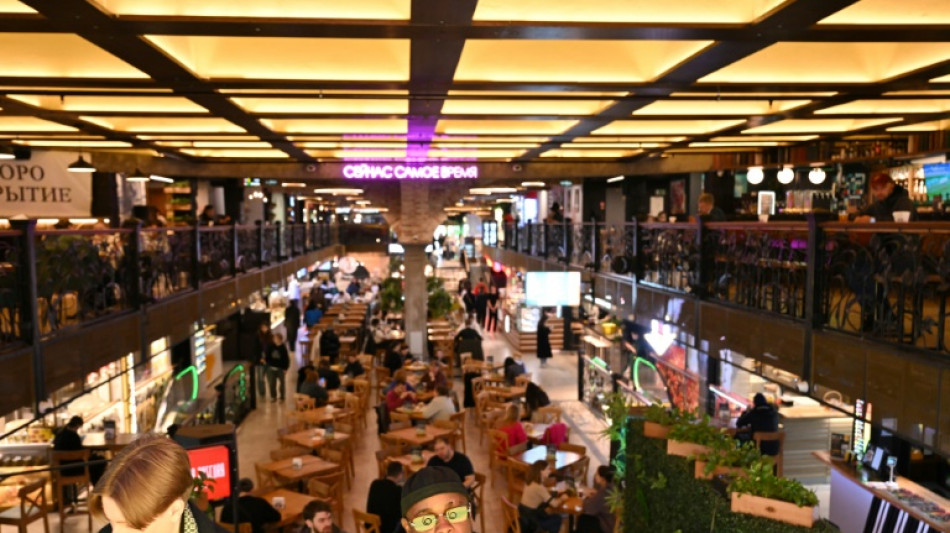
Behind her, a crowd of young people, glasses in hand, were chatting, drinking and eating at Moscow's "Central Market" -- a three-storey establishment full of chic bars and food stalls.
It is a different scene from Kyiv, some 750 kilometres away.
Although the Ukrainian capital has retained some form of nightlife, those frequenting bars and restaurants have been forced to grow accustomed to night curfews, air raid sirens, soldiers marshalling the streets, as well as missile and drone strikes.
- 'Why not treat yourself?' -
In the heart of the city, Moscow's famed Bolshoi Theatre was sold out for a performance of Verdi's opera La Traviata that evening.
"Why shouldn't we go there?" asked 49-year-old nanny Anna Savyolova.
She, too, drew a parallel with World War II, known in Russia as the Great Patriotic War.
"I know that artists came, performed, supported the soldiers... Life doesn't stop!" she said.
Pastry chef Diana Kitayeva, 28, had been dreaming of visiting the Bolshoi for years. "Why not treat yourself?" she said.
Accompanied by her mother, 14-year-old Alexandra Pomoshnikova said she saw art as an escape, in order to "not panic too much".
Despite tens of thousands of deaths on the Russian side -- the authorities do not provide an exact toll -- the Kremlin has been doing everything to ensure that hostilities have as little impact as possible on the daily lives of Muscovites.
Russia's forced mobilisation of more than 300,000 young men in 2022 also had little effect on the capital. The majority of recruits came from poorer regions, far away from big cities.
In Victory Day celebrations on May 9, a major public holiday that Russia uses to commemorate veterans and showcase its military prowess, no wounded soldiers were visible on Red Square.
Funerals of soldiers in the capital are low-key affairs, with little or no official fanfare for the fallen men Russian officials portray -- enthusiastically and often -- as "heroes".
Posters inviting Russians to enlist or praising the courage of soldiers are the most visible reminder of the fighting Moscow unleashed next-door in Ukraine.
The continued presence of Western brands, often under licencing agreements established before 2022, reinforces an appearance of normality -- a visual challenge to the notion of an irreparable cultural, political and economic rift between Russia and the West.
- 'Cocktails cost more' -
But the conflict in Ukraine has not been entirely painless for Moscow residents. Rising prices, a direct result of Western sanctions and the government's high spending on the offensive, is one of their primary concerns.
After soaring to nearly 20 percent in the spring of 2022, annual inflation remains at almost eight percent, according to official statistics.
The upscale clientele of Moscow's Central Market used to pay about six dollars for a cocktail.
"Now it costs 200 rubles ($2.20) more," said Bogdan Vorobyov, 24, who was out for beers with friends.
The conflict has also affected the lifestyle of Muscovites in other ways.
Trying to get around the city centre using Yandex Maps, the country's main navigation app, has become a headache. Following drone attacks on the Russian capital in May last year, satellite signals in Moscow's centre have been partially jammed, making GPS tracking spotty and unpredictable.
Alexandra summed up the general feel of the city with the help of a phrase that has become a go-to for Russians over the last 30 years.
"I've gotten used to living in times of crisis."
R.Chavez--AT