Russia restricts Instagram access over violent post policy

 Infantino struggling to survive, says former IOC marketing chief
 OPEC+ boosts September production by 188,000 barrels/day
 Rescuers recover climber Nirmal Purja's body after avalanche disaster
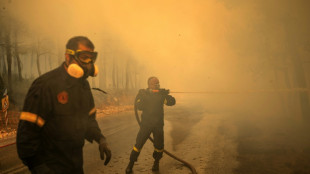 Fire toll mounts in Greece as blazes spread

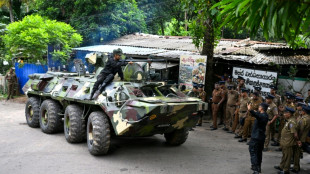 Sri Lanka deploys troops after prison riot
 Baltics transform from Soviet stagnation to startup hubs
 AI keeps consumer prices high in 'RAMaggedon' chip crunch
 Dressel, Walsh win 50m free titles at US Swimming Championships
 OPEC+ tipped to raise production again but new quotas loom
 De Zerbi unsure over Richarlison's future at Spurs
 Tottenham manager De Zerbi 'happy' with pre-season progress
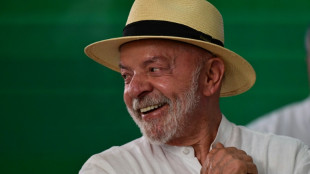
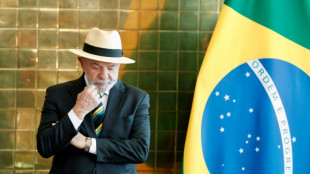 Brazil's Lula launches fourth term bid as Trump looms over campaign
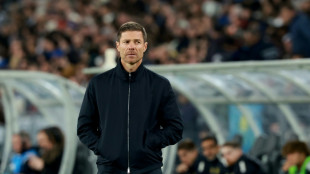 Alonso welcomes Mudryk's Chelsea return after doping ban
 'Damn hot': Last summer for Japan cosplay extravaganza
 Auger-Aliassime playing for hometown pride at Montreal Masters
 Commonwealth Games poster boy Kerr delivers mile gold in Glasgow
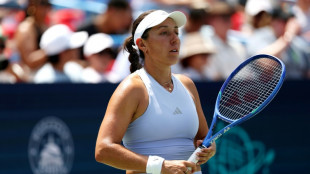 Pegula defeats Shnaider to reach Washington Open final
 Gaza officials say Israeli strikes kill seven day after deal

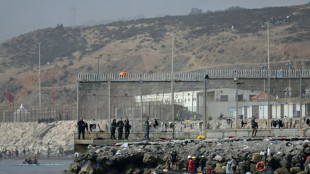 Hundreds of minors sleep rough in Ceuta migrant crisis
 Ex-British champion jockey Crowley takes 'hardest decision' to retire

 Brentford sign Mali midfielder Sangare in club record deal
 Chelsea sign Brighton striker Welbeck
 Mountaineer Nirmal Purja, team killed in Pakistan avalanche
Russia restricted access on Friday to Instagram and launched a criminal case against its owner Meta, as Moscow fired back at the tech giant for allowing posts calling for violence against Russian forces.
Moscow's internationally condemned invasion of its neighbor has provoked unprecedented sanctions from Western governments and businesses, but also a surge of online anger and debates over social media's role in the war.
A day after Meta said it had temporarily eased its rules to allow calls to violence like "death to the Russian invaders," Russia's media regulator said it was restricting access to hugely popular Instagram because it contains "calls to commit violent acts".
Russia's Investigative Committee, which probes major crimes, also said it was launching an investigation of Meta, and prosecutors pushed for the Silicon Valley giant to be branded "extremist".
Meta's statement on the eased policy followed a Reuters report that said the change applied to Armenia, Azerbaijan, Estonia, Georgia, Hungary, Latvia, Lithuania, Poland, Romania, Russia, Slovakia and Ukraine, citing the firm's emails to its content moderators.
The company has not replied to a request seeking confirmation of the policy's geographic boundaries, but noted it does not "allow credible calls for violence against Russian civilians".
Meta's relaxing of its rules met immediately with controversy and he UN voiced alarm, warning it could spark "hate speech" against Russians.
UN rights office spokeswoman Elizabeth Throssell said that the policy lacked clarity, which "could certainly contribute to hate speech directed at Russians in general".
Meta, which boasts billions of users globally across its apps, has previously struggled with what it would allow people to post in moments of upheaval.
In July 2021, the firm temporarily allowed posts calling for "death to Khamenei", referring to Iran's supreme leader Ayatollah Ali Khamenei, during protests that rocked the country.
- Opening Pandora's box? -
Tech platforms have had to navigate a slew of thorny issues related to the war in Ukraine, such as when US Senator Lindsey Graham called for the assassination of Russian President Vladimir Putin in a televised interview and on Twitter.
"The only way this ends is for somebody in Russia to take this guy out," says Graham's tweet from March 3, which Twitter has not taken down.
Meta's decision drew sharply contrasting views.
"The policy regards calls for violence against Russian soldiers," said Emerson Brooking, a disinformation expert at the Atlantic Council's Digital Forensic Research Lab.
"A call for violence here, by the way is also a call for resistance because Ukrainians resist a violent invasion," he added.
But some expressed deep concerns, like Lehigh University professor Jeremy Littau who tweeted: "'We don't allow hate speech except against certain people from a certain country' is one hell of a can of worms."
Facebook and other US tech giants have moved to penalize Russia for the attack on Ukraine and Moscow has also taken steps to block access to the leading social media network as well as Twitter.
Russia thus joined the very small club of countries barring the largest social network in the world, along with China and North Korea.
Since Moscow's invasion of Ukraine last month, Russian authorities have also stepped up pressure against independent media, though press freedoms in the country were already rapidly waning.
Moscow blocked Facebook and restricted Twitter the same day last week that it backed the imposition of jail terms on media publishing "false information" about the military.
In this context, Facebook had played a key information distribution role in Russia, even as it endures withering criticism in the West over matters ranging from political division to teenagers' mental health.
The war is running parallel with a period of unprecedented crackdown on the Russian opposition, which has included protest leaders being assassinated, jailed or forced out of the country.
Big US tech firms like Apple and Microsoft have announced they are halting the sale of their products in Russia, while other companies have made public their "pauses" of certain business activities or ties.
Y.Baker--AT