'The bottom line': Scuba divers help preserve historic Bangkok mansion

 OPEC+ boosts September production by 188,000 barrels/day

 Rescuers recover climber Nirmal Purja's body after avalanche disaster

 Fire toll mounts in Greece as blazes spread
 Sri Lanka deploys troops after prison riot

 Baltics transform from Soviet stagnation to startup hubs

 AI keeps consumer prices high in 'RAMaggedon' chip crunch

 Dressel, Walsh win 50m free titles at US Swimming Championships
 OPEC+ tipped to raise production again but new quotas loom

 De Zerbi unsure over Richarlison's future at Spurs

 Tottenham manager De Zerbi 'happy' with pre-season progress

 Brazil's Lula launches fourth term bid as Trump looms over campaign

 Alonso welcomes Mudryk's Chelsea return after doping ban
 'Damn hot': Last summer for Japan cosplay extravaganza
 Auger-Aliassime playing for hometown pride at Montreal Masters

 Commonwealth Games poster boy Kerr delivers mile gold in Glasgow
 Pegula defeats Shnaider to reach Washington Open final

 Gaza officials say Israeli strikes kill seven day after deal

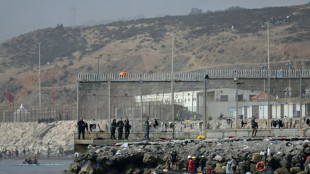 Hundreds of minors sleep rough in Ceuta migrant crisis

 Ex-British champion jockey Crowley takes 'hardest decision' to retire

 Brentford sign Mali midfielder Sangare in club record deal
 Chelsea sign Brighton striker Welbeck

 Mountaineer Nirmal Purja, team killed in Pakistan avalanche

 Pride march draws hundreds of thousands in Germany week after attack

 Maresca 'happy' after first Man City game despite Inter shootout defeat
 Firefighters in Greece 'pushed to the limit' as winds rage
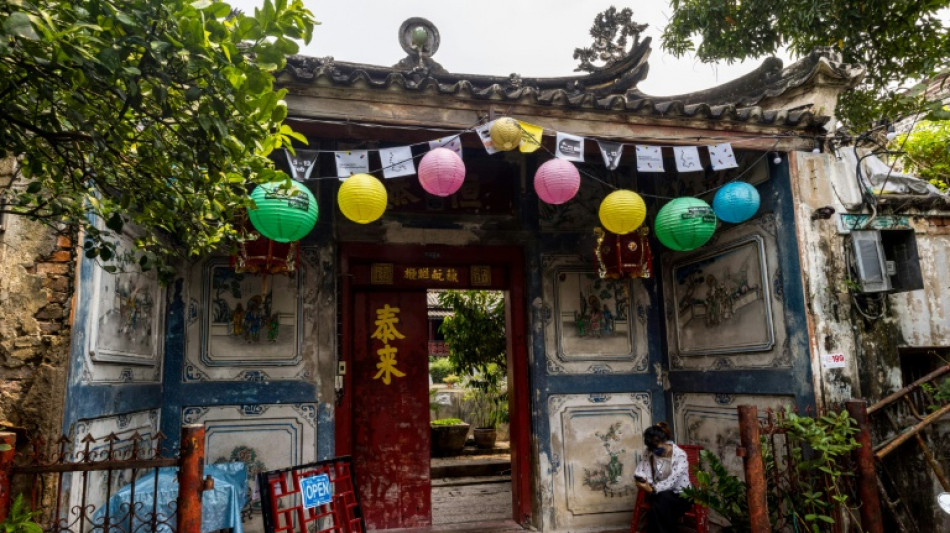
A 200-year-old Chinese mansion in Bangkok's heart isn't an obvious place for a scuba school, but in a city relentlessly demolishing its architectural heritage the business is helping preserve the historic home.
Dive instructor Poosak Posayachinda's family has owned the traditional teak-walled So Heng Tai for eight generations, but it lives on thanks largely to his decision to convert it into a scuba academy.
The survival of the building, originally built as a home and office for the family business trading birds' nests with China, is a rare success story in a city that harbours little sentiment -- or legal protections -- for historic architectural gems.
"It's because people want to make more money -- that's the bottom line," Bangkok-based American architect Bill Bensley told AFP.
The city's breakneck reinvention over recent years has seen gleaming malls and flashy condos fly up, and buildings like the art deco Scala movie theatre and 1920s British embassy come down.
Thai law only protects properties over 100 years old and there is limited political enthusiasm for safeguarding old architecture at the expense of profitable development.
For families with historic properties, the annual costs of maintenance can be a huge liability, according to historian and archaeologist Phacha Phanomvan.
"We don't have a lottery fund or trust body that comes in to save heritage," she said.
So in 2004 Poosak installed a four-metre-deep pool in the So Heng Tai courtyard, subsequently teaching more than 6,000 students.
The diving school has helped pay the bills on the property's upkeep, which Poosak estimates at up to $25,000 a year, but maintenance is a struggle.
"On a rainy day you find lots of water spots. Sooner or later we will have to do the whole roof again and that's a lot of money," Poosak told AFP.
- Historical theft -
While the culture ministry keeps a national heritage database, Phacha said many properties are not registered and fall through the cracks.
"For individual owners without state assistance... it's better for them to sell the property. Sell the individual building and then sell the (land)," she said.
Adding to the challenge is a growing collectors' market for teak from Thai wooden houses, she said -- some are even dismantled, relocated, and reassembled to become boutique hotels elsewhere.
"You want to keep these properties where they are... You're essentially robbing Bangkok of its (history)," she said.
Photographer Ben Davies spent five years documenting neighbourhoods for his book "Vanishing Bangkok", an experience that left him despondent.
"Something like (30-40 percent) of the buildings and communities I photographed had either disappeared or changed virtually beyond recognition," he told AFP.
And in the rush to develop, Davies says it is unclear how much of Bangkok's heritage will remain in a decade.
"I have a horrible feeling that one day Bangkok will be, outside of its temples and few palaces, (a) unrecognisable but (b) have lost so much of its identity and character so it will look like any other megacity around Asia," he said.
- A glimmer of hope? -
Elsewhere in the region offers Thailand possible solutions, notably Singapore which has won praise since the late 1980s for its heritage protection efforts.
Its strategy examines the entire city-island holistically with conservation going hand-in-hand with planning, says Yeo Kang Shua, an architectural history expert at the Singapore University of Technology and Design.
Underpinning the scheme is the "three R" principles: maximum retention of buildings, sensitive restoration and careful repair.
"In the 1980s a lot of owners deemed it a death sentence for their properties to be given conservation status, but today because of the rarity of such buildings in Singapore, the real estate prices are... enormous," he told AFP.
Despite the challenging environment, there are some signs of change in Bangkok.
In recent years a prominent Sino-Thai business family renovated dilapidated Chinese 1850s warehouses, turning them into the Lhong 1919 "riverside heritage destination".
It now houses a shrine and has become a space for exhibitions, concerts, pop-ups, cafes and food vans -- and there are plans for a wellness resort.
Back at So Heng Thai, Poosak takes his students through their paces.
Channelling the attitude of his ancestors -- who came to Thailand with "one pillow and one mattress" -- he's determined to save his family home.
"If someone comes to give me an offer, the answer is no, simple as that, no matter how much it is," he said.
O.Brown--AT