Cairo's newspaper vendors go silent as sales collapse

 OPEC+ boosts September production by 188,000 barrels/day

 Rescuers recover climber Nirmal Purja's body after avalanche disaster
 Fire toll mounts in Greece as blazes spread
 Sri Lanka deploys troops after prison riot

 Baltics transform from Soviet stagnation to startup hubs

 AI keeps consumer prices high in 'RAMaggedon' chip crunch

 Dressel, Walsh win 50m free titles at US Swimming Championships

 OPEC+ tipped to raise production again but new quotas loom

 De Zerbi unsure over Richarlison's future at Spurs

 Tottenham manager De Zerbi 'happy' with pre-season progress

 Brazil's Lula launches fourth term bid as Trump looms over campaign

 Alonso welcomes Mudryk's Chelsea return after doping ban
 'Damn hot': Last summer for Japan cosplay extravaganza

 Auger-Aliassime playing for hometown pride at Montreal Masters

 Commonwealth Games poster boy Kerr delivers mile gold in Glasgow
 Pegula defeats Shnaider to reach Washington Open final

 Gaza officials say Israeli strikes kill seven day after deal

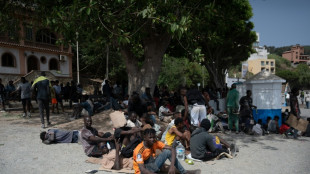
 Hundreds of minors sleep rough in Ceuta migrant crisis
 Ex-British champion jockey Crowley takes 'hardest decision' to retire

 Brentford sign Mali midfielder Sangare in club record deal
 Chelsea sign Brighton striker Welbeck

 Mountaineer Nirmal Purja, team killed in Pakistan avalanche
 Pride march draws hundreds of thousands in Germany week after attack

 Maresca 'happy' after first Man City game despite Inter shootout defeat

 Firefighters in Greece 'pushed to the limit' as winds rage
Newspaper sellers were once a dime a dozen on Cairo's bustling streets, but now the vendors hawking hot-off-the-press editions have fallen almost silent.
As elsewhere in the world, Egypt's print media has been in sharp decline as news has moved mostly online and readers tend to stay up-to-date via their smartphones.
In Egypt, a country of 103 million people, the trend has been especially stark since the government, which publishes most newspapers, has also raised their prices.
"No one buys newspapers anymore, especially since they got more expensive," said a vendor in her 50s known as Umm Mohammed, wearing a woollen shawl against the winter chill.
Critics also bemoan the homogeneity of the press in a country tightly ruled by army-marshall-turned-President Abdel Fattah al-Sisi, where censorship and self-censorship are common.
The stacks of newspapers and magazines before Umm Mohammed have hardly shrunk all morning, she said, sitting at her kiosk in Cairo's western Dokki district.
Between 6 am and 3 pm, she said she had earned just 15 Egyptian pounds, or about $1.
The government three years ago raised prices of dailies from two to three pounds, and of weeklies from three to four pounds, citing costlier raw materials and dwindling subscriptions.
This dampened print circulation in the Arab world's largest country, where the average family income is around 6,000 EGP, or $380, per month.
Sales collapsed further last July when the government scrapped evening newspaper print editions.
"People used to come by to get the evening paper and then pick up a couple of other issues on the way," said Umm Mohammed. "Now we don't even have that."
"It's mobile phones everywhere. People passing my kiosk often ask: 'Oh, people are still selling these, even with everything online?'
"That really upsets me. This is our livelihood. What are we supposed to do?"
- 'Need to innovate' -
Microbus driver Tareq Mahmud, 44, stopping near the kiosk, said he hadn't bought a newspaper in 11 years.
"I stopped when I realised that the journalists I was reading in the paper every morning were the same ones I had watched on television" the previous evening, he told AFP.
"And I think there are many like me who stopped around then."
According to official statistics, Mahmud is right: Egypt in 2019 published 67 titles -- public, private or linked to political parties -- down from 142 in 2010.
Circulation roughly halved from more than one million copies to 539,000 over the decade.
Ahmad al-Taheri, editor-in-chief of the Rose al-Youssef weekly, a staple of Egyptian journalism for almost a century, said media need to innovate, including in their distribution.
"We need to find new outlets," he told AFP, suggesting new pandemic-era sales points: "Why not pharmacies?"
- Media in 'sorry state' -
This is hardly a solution for Umm Mohamed, who after 18 years in the business is planning for her retirement.
In the absence of a trade union or other support system, she, like other vendors, recently signed up to a modest pension scheme with state-run publisher the Ahram Foundation.
But even this pension is not guaranteed.
Abdul Sadiq el-Shorbagy, head of the National Press Authority, told parliament in January that the state press is indebted, owing over $573 million in taxes and insurance payments.
Press outlets are bleeding cash as going online has yet to turn a profit for them, with most content offered for free and advertising revenue proving insufficient.
Imad Eddine Hussein, editor-in-chief of the private daily Al-Shorouk, bemoaned the "sorry state" of the press in Egypt.
All front pages tend to look almost identical, reporting on the same presidential speeches or ministerial announcements.
"It's all the same, across every newspaper, so readers are turning away from them," said Hussein. "If it continues like this, it's not just the state press that's going to disappear, private newspapers will too."
W.Nelson--AT