-
 Ton-up Phillips stars for New Zealand against England
-
Wahi denied Canadian visa for Ivory Coast World Cup clash with Germany

-
 Swiss central bank holds interest rates, with eye on currency risks
-
S.African sentenced in 'world's largest' rhino trafficking case
-
 Bank of England follows Fed in holding interest rate
-
Bittersweet World Cup for Gaza's football fans

-
 Trump defends Iran deal from critics he calls 'fools'
-
New heatwave disrupts trains, schools in France

-
 German chemical company to cut 3,200 jobs as crisis worsens
-
Starmer's Labour rival eyes win in UK poll key to PM's fate

-
 Oil falls further on Mideast deal, but Fed outlook knocks equities
-
Mexico, Korea eye World Cup knockout berths

-
 Range raises $8.3M Series A to unify treasury, risk and compliance across stablecoins and fiat
-
IAEA ready to help define 'concrete steps' to implement US-Iran deal

-
 Ibrahima Konate signs four-year deal with Real Madrid
-
Hegseth tells NATO US will review force presence in Europe

-
 Innovations on show at Paris Vivatech fest
-
Ukraine sets Moscow refinery ablaze in biggest attack in years
-
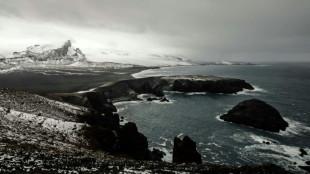 Bird flu kills 13,000 seal pups on remote Australian island
-
Oil prices sink further as Trump signs deal to reopen Hormuz

-
 South Korean lawmakers launch probe into ballot paper shortages
-
Starmer rival seeks win in UK poll pivotal to PM's fate

-
 Taiwan president says hopes for $14 bn US arms sale 'as soon as possible'
-
Why are Kenyan kids burning schools and killing their classmates?

-
 New wave of anti-LGBTQ laws sweeps Africa
-
Ukraine hopes renewables can Russia-proof power grid

-
 Jubilant New York on guard for Knicks parade
-
What we learned after the first round of World Cup games

-
 New Zealander Manu has 'no fear' of Toulouse before Top 14 semi
-
Drastic restrictions on public transport take effect in Cuba

-
 Pain-riddled South Korean man fights for right to die
-
Cuba approves economic reforms to boost private sector, investment: state TV

-
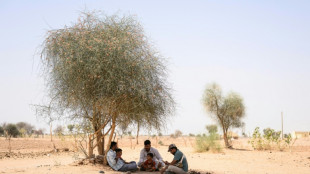 India learns to live with hotter summers
-
'Retired' Wallaby Slipper, 37, set for shock international comeback

-
 EU wrestles over how to tackle China export flood
-
Tartan Army takes over Boston as Scotland fans relish World Cup return

-
 Comedian Jordan Klepper wishes satire was harder in age of Trump
-
Robots pour cocktails and run marathons, but still can't multitask

-
 Birthright citizenship helps spark US World Cup run
-
Ghana beat Panama 1-0 in World Cup opener after injury-time winner

-
 Castro gives crucial backing to Cuba reforms
-
AI Financial Corporation Integrates USDU Stablecoin to Expand Regulated Digital Asset Settlement Capabilities in the UAE

-
 Tortoise Energy Infrastructure Corp. (TYG) Announces the Preliminary Results of its Rights Offering
-
ZTEST Electronics Inc. Announces Leadership Transition, Appoints New Director and Chair

-
 Spirit Blockchain Capital Announces Shares For Services Issuance
-
U.S. Polo Assn. Unveils Spring-Summer 2027 Collection at the 110th Edition of Pitti Immagine Uomo

-
 Formation Metals Extends A-Zone 200 Metres West of Historic Resource into Previously Undrilled Ground, Returning 1.05 g/t Au over 31 Metres at the Advanced N2 Gold Project
-
Frontier Specialty Chemicals Sees Increased Website Engagement Following Bioz Badge Addition

-
 Who Does the Best Fat Transfer to the Face in Florida?
-
Instawork Agents Increase Staffing Efficiency by 30% for 2026 FIFA World Cup

NYSE - LSE
A yak at the Oscars: first nomination for Bhutanese film
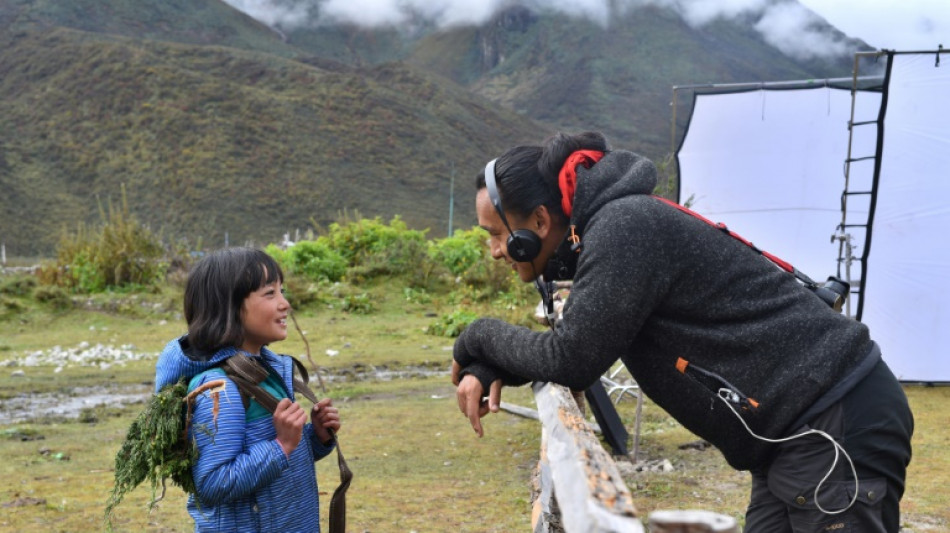
Filmed in one of the remotest corners in one of the world's most inaccessible countries, "Lunana: A Yak in the Classroom", is the first Bhutanese film ever nominated for an Academy Award.
At an altitude of 3,400 metres (11,150 feet), Lunana, where it was shot on location, is home to around 50 people and lies up to 10 days' trek from the nearest motorable road.
Winters are long and harsh, and solar power is the only electricity source, creating major logistical challenges.
Equipment and supplies for the film were carried in by 75 mules, while more than 70 helicopter trips transported the cast and crew.
The movie explores a society in transition through Ugyen, a discontent teacher with dreams of making it big as a singer in Australia, but who is transferred to Lunana, a village of yak herders and fungus collectors.
His initial reaction to Lunana is overwhelmingly negative, but the locals -- real-life villagers playing themselves -- slowly spark a change of heart.
The script is laced with Bhutanese mysticism and environmental messages, while the action takes place against a natural backdrop of vast vistas and snow-capped peaks.
"It is a story about yak songs, it is a story about the value of yak dung," said first-time director Pawo Choyning Dorji.
"It touches upon this universal human story, about seeking what you want, where you belong, seeking happiness.
"That is something that is really needed in our world," he told AFP.
"With the pandemic we have become a society where we want to separate, we want to build boundaries, we want to build walls, we want to highlight what makes us different, what makes us better or they worse than us.
"I wanted to show a simple story where all of us could find and celebrate this universal human quality."
In January the film was selected as one of five nominees for Best International Feature Film at the Oscars taking place next month.
- 'Happy country' -
Bhutan is known for its concept of Gross National Happiness, prioritising well-being as well as economic development, and Ugyen wears a T-shirt emblazoned with the phrase in the film's opening scenes.
But growth has brought greater desire, and thousands of Bhutanese have left their Himalayan homeland in recent years in search of better financial and educational opportunities.
Australia is their favourite destination, so much so that Bhutanese now refer to the "Australian Dream", and the country opened an embassy in Canberra in October.
Teachers are highly respected in Bhutan and along with doctors are the highest-paid government employees, at most ranks earning more than civil servants of equivalent grade, but hundreds of them are resigning every year.
"There are so many Bhutanese who seem to be leaving this so-called 'happy country' to look for happiness elsewhere," said Dorji.
"There's nothing wrong with that," he added. "That's just how life is."
Lunana epitomises the changes Bhutan is undergoing: 3G mobile technology was installed in the village just as the film crew were wrapping up production.
Dorji says the local school's star pupil Pem Zam -- who in the movie tells Ugyen that teachers "touch the future" -- "messages me on Facebook".
- Homemade butter -
"Lunana: A Yak in the Classroom" is only the second Bhutanese film ever to be submitted to the Oscars, after "The Cup" in 1999, made by Dorji's spiritual and cinematographic teacher, Khyentse Norbu. "The Cup" was critically acclaimed but did not make the shortlist for an award.
"Lunana" has already accumulated 18 prizes on the international film festival circuit, but the director said he had "no expectations" from Hollywood.
Many Bhutanese are hearing about the Oscars for the first time as a result of the movie.
One monk told Dorji that he offered a kilogram of homemade butter and 50 Bhutanese ngultrum ($0.60) at a temple to pray for Lunana's success.
"Other films have these big budgets pushing their campaign, we don't," said Dorji.
"But we are a campaign that is carried by the hopes, aspirations and prayers of a whole country."
L.Adams--AT