Lebanese turn to public libraries to check out of financial crunch

 OPEC+ boosts September production by 188,000 barrels/day
 Rescuers recover climber Nirmal Purja's body after avalanche disaster
 Fire toll mounts in Greece as blazes spread
 Sri Lanka deploys troops after prison riot
 Baltics transform from Soviet stagnation to startup hubs

 AI keeps consumer prices high in 'RAMaggedon' chip crunch
 Dressel, Walsh win 50m free titles at US Swimming Championships

 OPEC+ tipped to raise production again but new quotas loom

 De Zerbi unsure over Richarlison's future at Spurs

 Tottenham manager De Zerbi 'happy' with pre-season progress

 Brazil's Lula launches fourth term bid as Trump looms over campaign

 Alonso welcomes Mudryk's Chelsea return after doping ban
 'Damn hot': Last summer for Japan cosplay extravaganza

 Auger-Aliassime playing for hometown pride at Montreal Masters

 Commonwealth Games poster boy Kerr delivers mile gold in Glasgow
 Pegula defeats Shnaider to reach Washington Open final

 Gaza officials say Israeli strikes kill seven day after deal

 Hundreds of minors sleep rough in Ceuta migrant crisis
 Ex-British champion jockey Crowley takes 'hardest decision' to retire

 Brentford sign Mali midfielder Sangare in club record deal
 Chelsea sign Brighton striker Welbeck
 Mountaineer Nirmal Purja, team killed in Pakistan avalanche
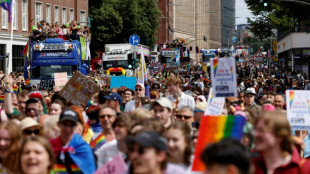 Pride march draws hundreds of thousands in Germany week after attack

 Maresca 'happy' after first Man City game despite Inter shootout defeat

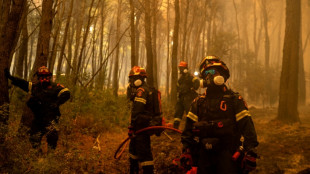 Firefighters in Greece 'pushed to the limit' as winds rage
In many countries, public libraries are considered a dying relic amid the shift to digital, but in Lebanon they are getting a new lease of life as its economy flatlines.
Every Friday afternoon, Munira Khalifa takes her son Elia to a public library in Beirut for a weekly storytelling event -- one of the last affordable pleasures as a crashing local currency has rendered books something of a luxury.
"We had reached a point where we couldn't find anywhere to take Elia because of the coronavirus pandemic and our difficult financial situation," Khalifa said.
She is just one of hundreds of parents who are hitting the shelves at three public libraries in Beirut in the heat of the unprecedented financial crisis.
The libraries are managed by the Assabil non-governmental group, which was founded in 1997 to promote free access to books and culture.
At one of them in the neighbourhood of Bachoura, the mother and son were the first to arrive ahead of a reading.
The library offered them some relief, Khalifa said, adding: "It is safe, comfortable and close to home."
"Financially, it helps us cut on costs for transportation and new books, which have become more expensive," she told AFP.
Throughout the reading, laughter abounded as a storyteller acted out a book using puppets.
Librarian Samar Choucair said the number of visitors at the facility had increased in the past year, largely since people cannot afford to buy new books.
This is especially the case for children's books, which are mostly produced abroad and tend to be more expensive, she said.
"We keep hearing from parents that this is the spot they choose to take their children... in light of the economic crisis."
- 'Need to read' -
Sluggish internet speeds and the absence of credit cards have also hindered the take-up of digital books in Lebanon, where banks have locked people out of their accounts.
Lebanon is facing a financial crisis that the World Bank says is of a scale usually associated with wars, with more than 80 percent of the population living in poverty.
The local currency has shed more than 90 percent of its value against the dollar on the black market, causing skyrocketing inflation.
As a result, the cost of printing and buying books has soared, while the monthly minimum wage remains unchanged at 675,000 pounds, the equivalent nowadays of just $32.
While this may have translated into more footfall at libraries, it has eaten into booksellers' profits.
Lana Halabi, who runs a family-owned bookshop in Beirut's Tariq al-Jadideh neighbourhood, said all new books were priced in dollars and therefore hit by the fluctuating exchange rate.
"Book purchases are not a priority" for many Lebanese, the 33-year-old told AFP.
"This has reflected negatively on us and other publishing houses," she added, pointing to a drop in orders at the Halabi bookshop.
But in a public library in Beirut's Geitawi neighbourhood, demand is on the rise, prompting management to add 300 new covers to their collection in the past two months, said librarian Josiane Badra.
"Books have become very expensive and people can't afford them... especially novels that are in great demand in the region, whether in French or in Arabic," she said.
For literature student Aline Daou, the Geitawi public library is an indispensible lifeline.
"As a literature student, I always need to read," the 21-year-old said.
"I prefer to borrow novels from here," she added, explaining that it helps her set aside money to buy books not carried by public libraries.
- 'Breathing room' -
Ali Sabbagh of the Assabil organisation said public libraries offered people "breathing room", but they were beset by challenges.
"We run these libraries in partnership with the Beirut municipality which used to front around 80 percent of operating costs in Lebanese pounds," he said.
The currency devaluation, according to Sabbagh, has meant the value of municipal funding has plummeted.
"We are trying as much as possible to reach out to donors that can provide us with the necessary support to continue," Sabbagh told AFP.
"Relying solely on public funds during this time has become very difficult."
International donors, meanwhile, tend to focus on humanitarian projects as opposed to cultural spaces, said Sabbagh.
At the Geitawi library, fine arts student Valentina Habis said funding should not overlook culture.
"In the midst of economic collapse, we need cultural spaces... places that develop thought and culture, because culture is the basis of society," she said.
A.O.Scott--AT