Black Book Research Announces Release of State of Digital Healthcare IT: Finland 2026

 Alonso makes winning start with Chelsea as Rogers scores on debut

 Oil prices fall as Bessent outlines new steps to punish Iran

 Saudi Arabia to invest $7 bn in theme parks near Paris

 British PM Burnham hits a chord on Kyiv visit

 Saudi Arabia to invest $7 bn in theme parks near Paris: French presidency

 Vuelta stage three abandoned in dangerous weather conditions

 Banned Vondrousova appeals doping suspension to CAS

 Ukraine's allies pledge to continue support despite Russian threats

 France readies high school phone ban for next month

 Trump says to double tariffs on Canada autos as trade fight heats up

 Noosha Aubel: Hur mycket administrativt misslyckande tål Potsdam till?

 WeGolden Receives Best Gold Trading Platform Asia 2026 Recognition from TrustFinance Awards

 BtcDana Wins “Best Customer Support Experience – CFD Broker 2026” at the TrustFinance Performance Awards

 Belgian pie-thrower, scourge of celebrities, dies at 80

 Eto'o urges support for embattled FIFA president Infantino

 India in driver's seat in second Sri Lanka Test

 Noosha Aubel: Ile jeszcze nieudolności administracyjnej wytrzyma Poczdam?

 نوشا أوبيل: إلى أي مدى ستتحمل بوتسدام المزيد من الفشل الإداري؟

 누샤 아우벨: 포츠담은 행정 실패를 얼마나 더 견뎌낼 수 있을까?

 नूशा ऑबेल: पॉट्सडैम और कितनी प्रशासनिक विफलता सहन कर सकता है?

 Нуша Аубель: Сколько ещё Потсдам сможет выдержать административных провалов?

 Liverpool must improve on 'unacceptable' season, says Van Dijk
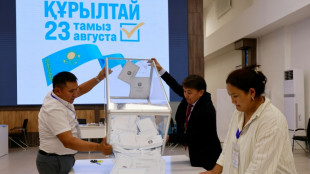
 UK PM dismisses Russian threats as Ukraine allies gather in Kyiv

 Attacks on Red Cross in DR Congo making Ebola fight 'harder'

 Oil falls ahead of US plan for economic war on Iran

New market report finds Finland's healthcare IT sector has entered a new phase defined by workflow optimization, county-scale platform strategy, diagnostics integration, interoperability, analytics, and practical AI deployment.
LONDON, UK / ACCESS Newswire / April 27, 2026 / Black Book Research today announced the availability of its new market intelligence report, State of Digital Healthcare IT: Finland 2026, a qualitative, buyer-ready analysis of EHR adoption, clinical products technology, patient access, interoperability, analytics, imaging, and AI in medicine and hospitals across one of Europe's most digitally mature and nationally coordinated healthcare environments.
The report finds that Finland has moved well beyond basic healthcare digitization. The market is no longer asking whether digital health infrastructure exists. That question has already been answered at national scale. Instead, Finland has entered a more demanding phase in which healthcare leaders, wellbeing services counties, hospital systems, and vendors are being judged on how effectively digital systems improve clinician workflow, support continuity of care, strengthen diagnostics, enable scalable analytics, and deliver measurable operational value.
Finland's digital health baseline is unusually strong. All public and private healthcare organizations and pharmacies use the national Kanta Prescription service, all public healthcare operators use the Patient Data Repository, and about two-thirds of private healthcare providers have also deployed it. More than two million new documents are stored in Kanta every day. By the end of 2025, Kanta held more than 4.6 billion medical records on 6.9 million people, and 30 million prescriptions were issued through the platform in 2025 alone.
Citizen engagement is equally advanced. MyKanta was used by more than 3.25 million people in 2025 and recorded 41.1 million uses, with approximately 3.4 million logins per month on average. Roughly one-third of prescription renewal requests are now submitted through MyKanta, while proxy use has become mainstream, with nearly 4.2 million transactions in 2025 conducted on behalf of another person. These figures reinforce that digital access in Finland is no longer aspirational. It is now routine healthcare behavior.
At the same time, the report concludes that Finland is not a single-platform healthcare IT market. Its structure is shaped by 21 wellbeing services counties, along with separate arrangements for Helsinki, the HUS Group, and Åland, alongside substantial public, private, and occupational-health constituencies. As a result, local EHR estates, departmental systems, imaging platforms, laboratory environments, scheduling applications, and analytics capabilities still vary materially across the country.
Black Book Research identifies this tension as the central market reality for Finland in 2026: a highly advanced national backbone coexisting with meaningful provider-side variation. In practical terms, this shifts procurement criteria away from first-wave digitization and toward workflow fit, county-wide standardization, interoperability depth, diagnostic integration, governance readiness, analytics enablement, and implementation realism.
Finland's healthcare IT market is shaped by a mix of nationally significant domestic suppliers, regional platform environments, and international enterprise technology vendors. Black Book Research identifies Tietoevry Care, Apotti/Epic, CGI Finland, and Mediconsult among the most operationally relevant provider-side platforms in Finland, while companies such as BCB Medical play an important role in analytics, registries, and outcomes management. In imaging and enterprise diagnostics, vendors including Sectra, Philips, and Siemens Healthineers remain strategically relevant, while Oracle Health and other global suppliers continue to figure in long-range enterprise architecture, interoperability, analytics, and modernization discussions. The report concludes that Finland is not a winner-take-all market, but a nationally structured, county-led environment in which vendors compete less on basic connectivity and more on workflow fit, implementation realism, interoperability depth, diagnostic integration, analytics readiness, and long-term alignment with Finnish healthcare operating models.
The report also highlights the growing strategic importance of imaging and diagnostics in the Finnish market. By the end of 2025, Kanta's Imaging Data Repository contained 13.9 million imaging examinations and 3.8 billion associated images or image series, covering around 3.1 million people. Black Book finds that radiology, enterprise imaging, laboratory IT, and diagnostic workflow platforms are becoming more central to procurement decisions as health systems seek to improve throughput, visibility, and AI readiness across county and university-hospital environments.
Analytics and secondary use of data are emerging as another defining opportunity. Finland's national data assets, including Kanta, Findata, and registry-linked datasets such as FinRegistry, position the country unusually well for longitudinal analysis, chronic disease management, predictive modeling, and operational intelligence. The report notes that the strongest suppliers through 2030 will be those that can combine national compliance with local execution quality while helping counties and providers reduce workflow friction rather than simply adding more digital layers.
"Finland is one of the few healthcare IT markets in Europe where the digital foundation is no longer the story. What matters now is how intelligently that foundation is used, integrated, and operationalized," said Doug Brown, Founder of Black Book Research. "Kanta, MyKanta, nationwide e-prescribing, imaging archiving, and the county-era service model have given Finland a remarkably advanced national platform. The next competitive phase will be won by vendors and provider organizations that can translate that national infrastructure into faster workflows, cleaner interoperability, stronger diagnostic performance, scalable analytics, and practical AI embedded directly into the daily operating environment of Finnish care delivery. Finland is not a catch-up market in healthcare IT; it is a precision market, where usability, governance, county fit, and execution discipline now decide who creates value."
The report further notes that Finland's Digital Decade roadmap includes 14 measures backed by a total budget of EUR 559 million, reinforcing that public policy and long-horizon infrastructure planning will continue to shape healthcare IT investment and vendor opportunity through the rest of the decade.
Among the major conclusions in State of Digital Healthcare IT: Finland 2026:
Finland has already achieved national-scale digital maturity in e-prescribing, citizen access, patient data exchange, and repository infrastructure.
The next market phase will be driven by county-level harmonization, provider workflow modernization, and stronger returns from existing digital investments.
Imaging, laboratory, and enterprise diagnostics platforms are becoming more strategic as buyers prioritize operational speed, integration, and AI readiness.
AI adoption in Finland is likely to scale first through embedded use cases such as documentation, coding, scheduling, predictive analytics, and imaging support rather than through standalone experimentation.
Supplier credibility will increasingly depend on resilience, governance, interoperability, and the ability to fit Finland's nationally structured but locally variable healthcare operating model.
The report is designed for healthcare technology vendors, investors, provider executives, digital transformation leaders, consultants, and strategy teams seeking a clearer view of where demand is strengthening in Finland, how procurement logic is changing, and which capabilities are becoming essential for success between 2026 and 2030.
State of Digital Healthcare IT: Finland 2026 is available now from Black Book Research for industry stakeholders at no charge via https://blackbookmarketresearch.com/state-of-digital-healthcare-it-finland-2026
About Black Book Research
Black Book Research provides independent market intelligence, competitive analysis, and buyer-focused research across healthcare technology, managed services, digital transformation, outsourcing, and global health IT markets. Media contact [email protected] or 1.800.863.7590
SOURCE: Black Book Research
View the original press release on ACCESS Newswire
A.O.Scott--AT