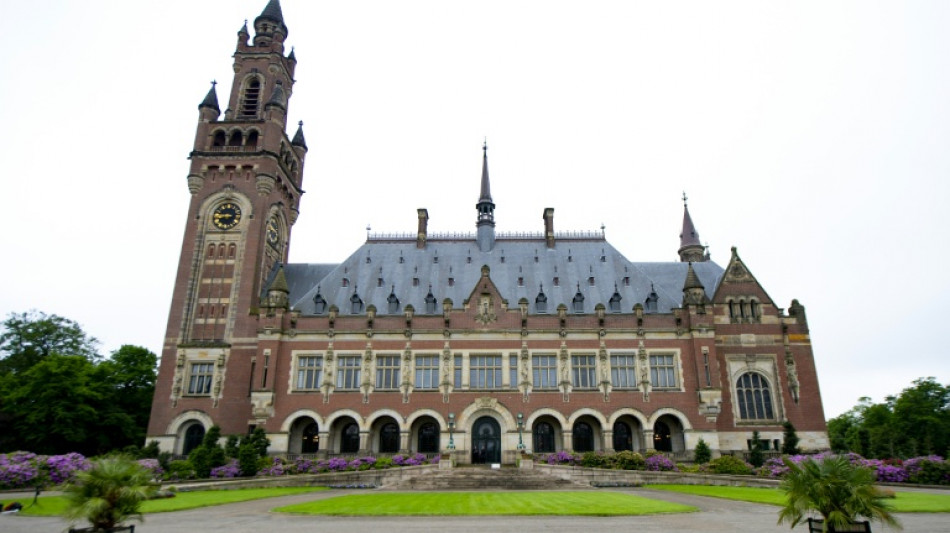
International law 'matters more than ever' in chaotic world: UN head / Photo: Nick Gammon - AFP

 Gauteng Health Department Warns of Rising Antibiotic Resistance Threat

 Bishop Museum Races to Save Rare Megamouth Shark Specimen

 Impauer Technologies Inc. Announces Third Quarter 2026 Financial Results and Equity Compensation Grants

 NiobiumX Mining Explains How it Will Hunt for Niobium at Shipshaw: Magnetic Lows, Thorium Highs, and Machine Learning Built for a District With One Producing Mine

 InterContinental Hotels Group PLC Announces Transaction in Own Shares - November 26

 Black Friday Discounts Cut Prices on Two Top-Rated Wiper Blades

 Luxembourg Pay Rise Delayed as Regional and World Headlines Develop

 Audience to Choose the Set List at Luxembourg's First FAMIL Jukebox Night

 Raheem Sterling Receives Suspended Sentence After Lamborghini Crash

 Luxembourg Housing Petition Passes Threshold for Parliamentary Consideration

International law is more important than ever at a time when even core countries in the global system are calling it into question, the United Nations secretary general said on Friday.
Marking the 80th anniversary of the International Court of Justice, the UN's top court, Antonio Guterres said: "Today, violations of international law are unfolding before our eyes."
"It is precisely because the international system is under such strain that adherence to international law matters more than ever -– especially in this era of changing power relations," he said.
"The force of law must always prevail over the law of force."
Guterres was speaking at a special sitting of the world court at the sumptuous Peace Palace in the Hague also attended by Dutch King Willem-Alexander.
He noted that as the court -- which settles disputes between states -- turned 80, it was busier than ever.
The ICJ has been in the headlines, notably for a case brought by South Africa against Israel, alleging that its campaign in Gaza is in breach of the UN Genocide Convention.
It also last year issued a landmark environment ruling, obliging states to tackle climate change and paving the way for reparations if they failed to do so.
But institutions such as the ICJ that uphold international law are increasingly "questioned and challenged," said the UN leader.
"And this erosion is not happening at the margins of the international system." he noted.
"It is happening at its core -- including by States entrusted with unique responsibilities for the maintenance of international peace and security."
The United States has criticised ICJ decisions and taken aim at the other major international court in The Hague, the International Criminal Court, which prosecutes individuals for the world's worst crimes.
Furious at arrest warrants issued for Israel Prime Minister Benjamin Netanyahu, the US has slapped sanctions on top ICC officials, hampering its work.
Guterres also recalled that the decisions of the ICJ are binding, even though it has no power to enforce them -- which critics say is a sign of weakness.
For example, the ICJ ordered Russia to halt its invasion of Ukraine just weeks after tanks rolled over the border -- to no avail.
"Respect for those decisions is not optional. It is a (UN) Charter obligation," said Guterres.
With the world in chaos, the UN secretary-general said humanity faced a stark choice: "A future governed by the rule of law, or a future driven by raw power."
ICJ president Yuji Iwasawa noted "troubling signs" of countries calling into question the value of multilateralism.
"In some cases, the role of law itself has been openly questioned," he said.
"These trends place great pressure on the system we serve and remind us that the international rule of law cannot be taken for granted."
W.Nelson--AT
