Turkey not 'hostile' to Christians, Constantinople patriarch says / Photo: Ed JONES - AFP/File

 IFFI Opening Film 'Fatherland' Addresses Global Divisions Through Post-War Lens

 Phoenix Dispensaries Offer Green Wednesday and Thanksgiving Cannabis Deals
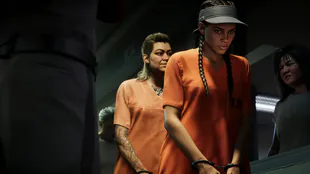 Police Departments Deploy AI-Generated 'Grand Theft Auto VI' Recruitment Ads
 How Families Budget for Youth Sports Travel Seasons
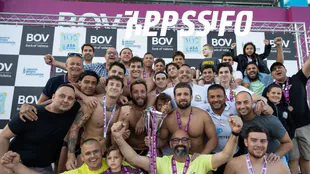 San Ġiljan Defeat Paredes 20-12 in Challenger Cup Opener
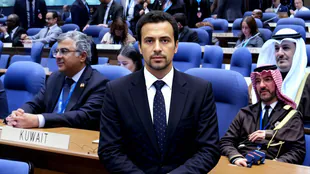 Kuwait DGCA Delegation Attends ICAO Assembly in Montreal
Muslim-majority Turkey, which is hosting Pope Leo XIV on his first overseas trip as pontiff, is not "a hostile environment" for Christians, the Ecumenical Patriarch of Constantinople told AFP in an interview.
"It is simplistic to see adversaries everywhere and to imagine the pope's visit as taking sides in a hostile environment," said Patriarch Bartholomew I, leader of the world's 260 million Orthodox Christians.
On Friday, Bartholomew joins Leo for celebrations in Iznik, around two hours from Istanbul, to mark 1,700 years since the First Council of Nicaea, a key early Church gathering that resulted in a statement of faith still central to Christianity.
After arriving in Ankara on Thursday and meeting President Recep Tayyip Erdogan, whom critics have accused of wanting to Islamise society, the pope described Turkey as a "crossroads of sensibilities" that was richer for its "internal diversity".
Turkey has a population of 86 million but only about 100,000 Christians.
Numbers were hit by the Armenian genocide -- a term denied by Ankara -- during the Ottoman Empire, and the population exchanges and pogroms that saw many Greek Orthodox leave in the early 20th century.
- 'Blessing in disguise' -
But Bartholomew said living in a Muslim country had its advantages.
"Living in a predominantly Muslim country is a blessing in disguise because it sustains and strengthens the essential feature of the Ecumenical Patriarchate... open and honest dialogue with all people in all places, irrespective of race and religion," he said.
The timing of Leo's visit, coming at a moment of conflict, was significant, he said.
"This year, when the world is troubled and divided by conflict and antagonism, our meeting with Pope Leo XIV is especially significant," he said.
"It reminds our faithful that we are more powerful and more credible when we are united in our witness and response to the challenges of the contemporary world."
The Eastern Orthodox Church sustained a major blow in 2018 when the Moscow Patriarchate broke ties with the Ecumenical Patriarchate after it recognised the Ukrainian Orthodox Church's independence from Russia.
But Bartholomew insisted "the door of dialogue is always open".
The patriarch, who in March 2022 said he had become "a target of Moscow", refuses to budge in his stance against the Ukraine war, urging the Moscow Patriarchate to break away from the Kremlin.
"The spiritual leaders in Russia cannot follow blindly the inhumane interests and barbarous policies of its political leaders. Nor can they indiscriminately condone and even bless the bloodshed in Ukraine," he said.
N.Mitchell--AT