-
 Black Friday offers include household essentials and low-cost donation toys
-
Shark reduces prices on top-rated stick and robot vacuums

-
 Black Friday gaming offers cut prices on headsets, consoles and games
-
Shark Depuffi stock dwindles as Black Friday skincare discounts begin

-
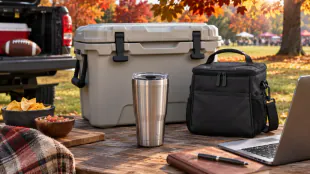 Black Friday discounts arrive on tested Yeti coolers and drinkware
-
Chevrolet Blazer EV SS tested against decades of Super Sport models

-
 UK survey records sharp rise in young adults reporting no sexual experience
-
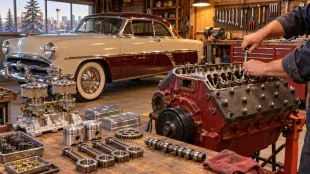
Calgary builder draws on decades of DIY work to increase Ford engine power
-
 Audi RS 3 long-term test leads debate over the ideal everyday performance car
-
Record-setting Hemi Plymouth Superbird heads to auction

-
 Ontario family seeks return of Chevrolet Bolt after charging cable shock
-
Calgary dancer describes stripping as a career built on independence and community

-
 Canada launches $6.5 billion strategy to transform forestry sector
-
Calgary Catholic schools report strong results and growing classroom complexity

-
 Calgary budget hearing delayed during debate over Tourette syndrome accommodation
-
Business phone systems gain AI tools, but human oversight remains essential

-
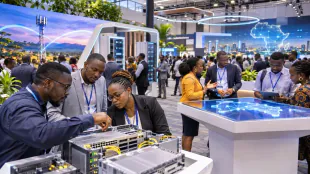 Huawei outlines 2030 network plans at Africa Tech Festival
-
Workday weighs South African public-sector demand while keeping data in EU

-
 Governments and courts tighten restrictions on camera-equipped smart glasses
-
iOCO acquires procurement software specialist Intellection

-
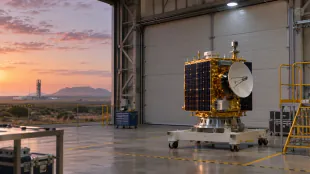 South Africa’s sovereign satellite plan remains stalled despite higher cost
-
EasyEquities faces pressure for clearer answers after security outage

-
 EasyEquities says small group of client accounts targeted in attack
-
US patent disputes involving Korean chipmakers reach record level

-
 Regulator examines E9Pay after hacking losses reach 2.5 billion won
-
SK hynix doubles daily share purchases after steep stock decline

-
 North Korea and Russia agree to expand joint economic projects
-
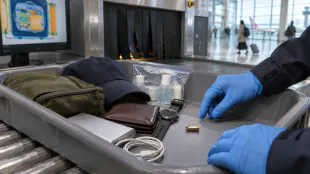
Former soldier stopped with blank round at Incheon Airport
-
 Seoul monitors reports of possible Kim Jong-un visit to China
-
NYC Mayor Zohran Mamdani Undergoes Successful Achilles Surgery

-
 Gabe Sanchez on Dallas Bars, Sherry, and the Reality of Opening a Venue
-
Korea Post breach exposes data of at least 113,855 customers

-
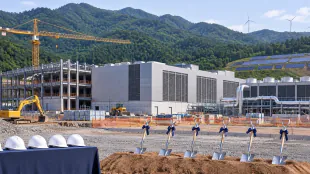 Lee joins launch of 2.4-gigawatt AI data centre project in Gangwon
-
Verso Books Releases Free Online Edition of The Encyclopedia of the American Left

-
 Nottinghamshire Councillor Urges Mayor to Spend £350m on Transport Projects
-
Alvechurch Sign Jenson Kilroy on Loan Following Redman Evans Departure

-
 Finalists Announced for 2026 Lott IMPACT Trophy
-
Bathroom and Kitchen Updates That Make a Difference

-
 US Aircraft Disable Iranian-Linked Vessel in Gulf of Oman; Tehran Vows to Defy Blockade
-
Six North Korean Fishermen Repatriated After Drifting Near Ulleungdo

-
 Apple Black Friday Deals 2026: AirPods Pro 3, MacBook Air, and More
Where China’s AI falls behind
China accounted for an estimated 18 per cent of the AI chips delivered worldwide between 2022 and June 2026. Those processors supplied just 10 per cent of the computing power. Chinese developers could make up some of the difference by renting faster machines abroad. On 19 November, new US licensing rules reached into the overseas data centres that offered them that option. For a Chinese laboratory preparing its next model, the immediate question is whether it can book enough machines and keep them for the duration of the job.
Measured against Nvidia’s H100, the United States received the equivalent of 19.8 million processors over that four-and-a-half-year period. China received 2.6 million, including chips made in its own factories. The H100 serves as a common unit because a count of physical chips gives the same weight to processors with very different capabilities. On that basis, the computing capacity delivered to the United States was more than seven times the Chinese total.
There is a limit to what those figures establish. They measure additions to capacity over a particular period. They also assign a processor to the country where it arrived, even if the company paying to use it is somewhere else. A server installed in Malaysia can spend weeks training a model for a customer in Beijing. It appears in Malaysia’s hardware figures throughout.
The Malaysian connection
Malaysia received about 700,000 H100 equivalents between 2022 and June 2026. American companies helped drive that expansion. Google broke ground there in 2024 on a $2 billion data centre and cloud project. Chinese developers were also seeking computing time overseas. An October estimate put the foreign capacity potentially available to Chinese companies by the end of 2026 at just over one million H100 equivalents across all markets. The figure was a projection. Private contracts were difficult to verify, and the US rules changed before the year was out.
The November measure sets a licensing threshold for covered equipment at overseas data centres serving companies headquartered in China or controlled by a parent based there. The threshold is roughly equivalent to 750 H100 processors and can apply across linked facilities. Operators already providing covered services when the rule took effect have 90 days to obtain a licence if they wish to continue. A cluster can therefore remain in the same building, under the same ownership, while its availability to a longstanding customer changes.
What a training run costs
DeepSeek’s V3 model offers a rare glimpse of the arithmetic. Its training consumed 2.788 million hours on Nvidia H800 processors. At an assumed rental rate of two dollars per processor-hour, the specified training stages came to roughly $5.6 million. That figure excluded the earlier experiments through which the engineers chose the design. By the time the run that produced V3 began, the team had already spent computing time finding out which ideas were worth pursuing.
This is where the size of a laboratory’s hardware reserve starts to matter. With two clusters available, engineers can test competing designs in parallel. If both experiments need the same machines, one has to wait. A failed experiment then costs the team twice, first in processor-hours and again in the delay to the work queued behind it. Neither cost is visible to someone comparing the answers given by two finished chatbots.
Huawei has tackled part of the problem by linking up to 384 Ascend processors in its Atlas 900 A3 SuperPoD. Training a large model requires processors to exchange intermediate results, often many times during a single calculation. A faster link can shorten the time expensive chips spend waiting for one another. For a laboratory considering domestic hardware, the figure that matters is how long its own model takes to train once the processors, memory and connections are working together.
The distance between releases
Chinese developers remain competitive by measures their customers can see. In March 2026, the leading American and Chinese models scored 1,503 and 1,464 respectively on Arena, where users judge answers side by side. On 23 November, four days after the new US rule took effect, the Chinese developer Z.ai released GLM-5.4. The model passes information through the same group of processing layers twice, allowing it to perform additional computation while reusing parameters it has already learned.
The November restrictions will take longer to register in those comparisons. Models reaching users today reflect engineering decisions and computing time secured months ago. The first signs of a widening gap may come in the interval between releases, especially after a training run produces disappointing results. At that point, the most consequential difference between two otherwise competitive laboratories may be as simple as the date on which each can start again.

Russia's Drone ploy in Poland

How Swiss Stocks tamed Prices

Cuba's hunger Crisis deepens

Poland trusts only hard Power

Tanks in Gaza - Hopes dim?

Rare Earth Standoff

Why Russia can’t end war

Israel: Economy on the edge

Gaza on the cusp of civil war

The Fall of South Korea?

A new vision for Japan