
US Aircraft Disable Iranian-Linked Vessel in Gulf of Oman; Tehran Vows to Defy Blockade

 Six North Korean Fishermen Repatriated After Drifting Near Ulleungdo

 Jennifer Lopez Reunites with Twins Max and Oskar for First College Thanksgiving

 Black Friday E-Reader Deals: Kindle Paperwhite, Scribe, and Kobo Discounts

 Fundraiser launched for Daniel Buttigieg after boat accident

 Motorcyclist injured in single-vehicle crash in Pietà

 Italian Village event in Malta raises funds for Puttinu Cares

 Malta launches second national AI strategy with 86 measures

 Tata Trusts challenge Chandrasekaran reappointment in Bombay High Court

 Project Angel Food serves 22 millionth meal as Los Angeles campus expands

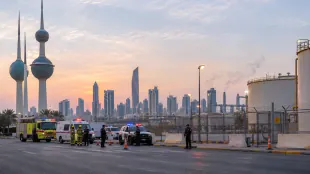 Four injured after Iranian drone attack targets site in Kuwait

 North Sitra sewage expansion lifts capacity to 30,000 cubic metres daily

 Bahraini law allows crypto assets to pass to heirs

 Milky Way and Brazilian lagoon form eye-like image in NASA feature

 Review analysis ranks South Africa’s best and worst-rated malls

 Global Tensions Highlight the Need for Greater Plastic Recycling; the Age of Parity Has Made It Possible

 Sekur Private Data Deploys New User Interface for SekurMessenger, Incorporating SekurVoice

 NuRAN Wireless Wins Investment Committee Approval for up to €10 Million of Long-Term Project Financing to Power Its MTN Côte d’Ivoire Rollout

 ZTEST Electronics Inc. Announces First Quarter Fiscal 2027 Results With 34.9% Revenue Growth and 39.2% Increase in Net Income

 EON Resources Inc. Reports Theft to New Mexico Oilfield Theft Task Force Resulting in Quick Action

 Great Western Mining Corporation PLC Announces New 50m Adit in Scheelite Bearing Skarn Discovered at Defender Tungsten Project

 The Fresh Factory Reports Q3 2026 Billed Revenue of $15.0 Million, Up 28%, and EBITDA Growth of 58% Year Over Year

 Ryan Botner Shares Written-Goal Accountability Approach for Entrepreneurs Planning the New Year
 How to Find a Free Hearing Test Near You

 D. Boral Capital Served as Capital Markets Advisor for Black Hawk Acquisition Corporation Which Has Completed its Business Combination with Vesicor Therapeutics

 Serial Entrepreneur Ty Morse Sets His Sights on Disrupting the Trading Card Grading Industry with AI-Powered White Whale Grading
Tensions between the United States and Iran escalated sharply after U.S. Central Command confirmed that American aircraft disabled a commercial ship attempting to breach a naval blockade in the Gulf of Oman. In response, Iranian officials have vowed to defy any blockade imposed on the strategic Strait of Hormuz.
Tensions between the United States and Iran have escalated significantly following a military engagement in the Gulf of Oman, where U.S. forces disabled a commercial vessel attempting to breach an established naval blockade. The incident marks a sharp intensification of hostilities in the region, with Tehran immediately vowing to resist any attempts to restrict maritime traffic through the strategic Strait of Hormuz.
U.S. Central Command confirmed that American aircraft struck the stern of the Palau-flagged M/V Pacific Archer using precision munitions. The strike successfully disabled the vessel’s propulsion system, preventing it from continuing its approach toward the blockade line. According to military reports, the civilian crew aboard the ship was unharmed during the operation.
The engagement occurred as U.S. naval forces maintained a strict blockade in the Gulf of Oman, aimed at curbing Iranian influence and preventing the transit of materials that could support hostile activities. The disabling of the M/V Pacific Archer represents one of the most direct kinetic actions taken by U.S. forces against a vessel linked to Iranian interests in recent months.
In response to the strike, Iranian officials have issued strong rhetoric condemning the action and promising to challenge any blockade imposed on the Strait of Hormuz. The strait is a critical global chokepoint through which a significant portion of the world’s oil supply passes. Any disruption to shipping in this area has profound implications for international energy markets and geopolitical stability.
The incident underscores the fragile security situation in the Persian Gulf, where naval confrontations have become more frequent as diplomatic channels remain strained. The U.S. military’s decision to use precision munitions against a commercial vessel signals a willingness to enforce maritime restrictions with lethal force if necessary, raising concerns about further escalation.
While the immediate outcome of the strike was the neutralization of the M/V Pacific Archer without loss of life, the broader geopolitical consequences remain uncertain. Iran’s vow to defy the blockade suggests that maritime tensions in the region are likely to persist, potentially leading to additional confrontations between U.S. and Iranian forces or their proxies.
The event has drawn attention from global markets, as any disruption to shipping in the Gulf of Oman could impact oil prices and supply chains. Analysts warn that continued military posturing in the region could lead to further instability, affecting not only regional security but also global economic conditions.
L.Adams--AT