Taliban authorities reportedly remove women’s names from records in Balkh

 Black Friday offers include household essentials and low-cost donation toys

 Black Friday gaming offers cut prices on headsets, consoles and games

 Black Friday discounts arrive on tested Yeti coolers and drinkware

 UK survey records sharp rise in young adults reporting no sexual experience

 Audi RS 3 long-term test leads debate over the ideal everyday performance car

 Ontario family seeks return of Chevrolet Bolt after charging cable shock

 Canada launches $6.5 billion strategy to transform forestry sector

 Calgary budget hearing delayed during debate over Tourette syndrome accommodation

 Huawei outlines 2030 network plans at Africa Tech Festival

 Governments and courts tighten restrictions on camera-equipped smart glasses

 South Africa’s sovereign satellite plan remains stalled despite higher cost

 EasyEquities says small group of client accounts targeted in attack

 Regulator examines E9Pay after hacking losses reach 2.5 billion won

 North Korea and Russia agree to expand joint economic projects
 Seoul monitors reports of possible Kim Jong-un visit to China

 Gabe Sanchez on Dallas Bars, Sherry, and the Reality of Opening a Venue

 Lee joins launch of 2.4-gigawatt AI data centre project in Gangwon

 Nottinghamshire Councillor Urges Mayor to Spend £350m on Transport Projects

 Finalists Announced for 2026 Lott IMPACT Trophy

 US Aircraft Disable Iranian-Linked Vessel in Gulf of Oman; Tehran Vows to Defy Blockade

 Apple Black Friday Deals 2026: AirPods Pro 3, MacBook Air, and More
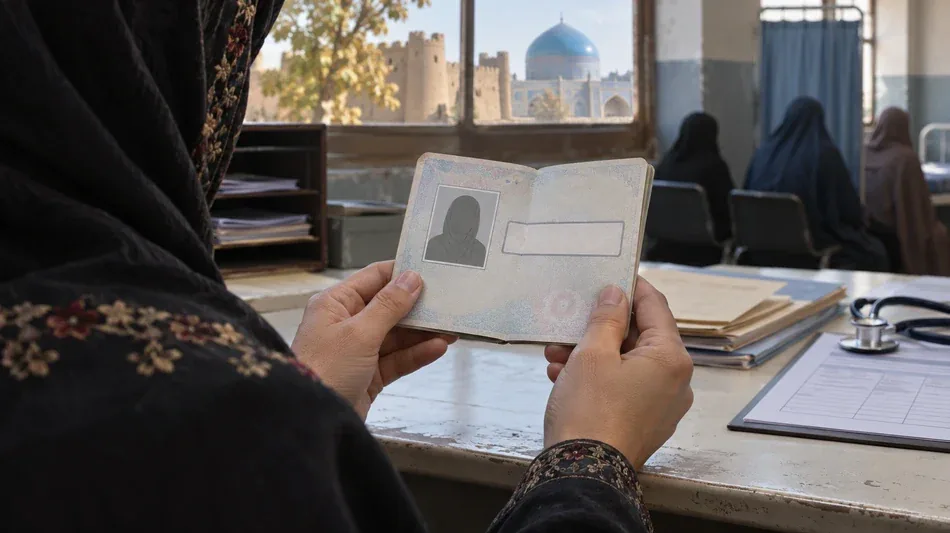
Taliban authorities have reportedly barred the use of women’s names on official and medical records in Afghanistan’s Balkh province, prompting concern that the restriction could spread.
The Taliban have reportedly banned the use of women’s names in official documents in a northern Afghan province, with some women being referred to by degrading animal names, according to a report by Spanish newspaper El País.
The latest assault on women’s rights under Taliban rule reportedly extends to medical records and prescriptions in Afghanistan’s Balkh province, raising fears that the restrictions could spread nationwide.
Healthcare workers and other public employees have been instructed to address women as “Bibi,” meaning grandmother or old woman, according to reporting by Afghan news outlet Zan Times and The Guardian cited by El País.
Afghan women’s rights activist Lalah Osmany, who is based in Germany, told El País that testimony from women, doctors and civil rights activists indicates some women are also being referred to in degrading terms such as “goat” or “cow.”
“This is a systematic process of dehumanization,” Osmany told the newspaper.
An Afghan activist speaking under a pseudonym confirmed the reported order to El País, although she stated it had so far been ignored.
Zubaida Akbar, who directs the Afghanistan program at women’s rights organization Femena, warned that the Taliban could eventually impose the ban nationwide, citing previous instances in which local restrictions were expanded across the country.
Femena has counted more than 144 decrees restricting Afghan women’s rights, as reported by El País.
Girls have been barred from studying beyond age 12, while women have been shut out of most professions and subjected to restrictions on speaking in public, the newspaper reported.
Some Afghan women have resorted to running underground businesses and secret schools in defiance of Taliban restrictions, according to Associated Press reporting published Nov. 17.
One Kabul beauty salon owner, whose identity was concealed for her safety, reopened her business after authorities raided her previous salon and confiscated her equipment.
“But now, they won’t even allow that; for women in Afghanistan, working has become a crime,” she told the AP.
An assistant teacher at a secret school in Kabul described living in constant fear of arrest.
“We are absolutely terrified of that possibility,” she told the AP.
Mohammad Aslam, a spokesman for the Taliban’s Ministry for the Promotion of Virtue and Prevention of Vice, defended the broader restrictions in comments to the AP, saying women could conduct business and social affairs provided they adhered to Islamic Sharia law and existing laws.
Osmany also warned that the reported naming ban could endanger female patients by increasing the risk of medical errors if prescriptions and medical records are filed under identical names.
Afghan women already face severe barriers to medical care under Taliban rule, including restrictions on male doctors treating female patients and bans on women pursuing medical training, as reported by El País.
In 2017, Osmany launched a campaign to have Afghan women’s names included on official documents, including their children’s birth certificates.
Despite receiving death threats from extremists, her campaign helped secure a change in 2020 allowing mothers’ names to be voluntarily included on such documents. That progress was short-lived.
The Taliban swept back into power in August 2021 as the U. S.-backed Afghan government collapsed amid then-President Joe Biden’s chaotic military withdrawal, leaving the country once again under the control of Islamist extremists.
The withdrawal drew widespread condemnation after 13 American service members, mostly Marines, were killed in an ISIS-K terrorist attack during the evacuation from Kabul.
Biden faced further backlash from Gold Star families after checking his watch during the dignified transfer of fallen American troops at Dover Air Force Base in Delaware.
Five years later, Afghan women and girls have seen hard-won freedoms stripped away under Taliban rule. Now, activists warn, even their very identities are under threat.
“Calling a woman by her real name in Afghanistan is an act of resistance,” Osmany told El País.
A.Anderson--AT