-
 PSG president Nasser al-Khelaifi under investigation in France for conflict of interest
-
Iran 'put hearts on the court' to win Asian Games basketball bronze

-
 China swim sensation, 13, sets Games record after Japan win early
-
School girl Yu helps China dominate in Asian Games swimming openers

-
 Drones hit Moscow as Russians go to the polls
-
Myanmar win first Asian Games teqball gold as Spain great Puyol watches

-
 New England boss Fleming says 'wrong' to ask Stokes to end retirement
-
China's 13-year-old Yu scorches to first major gold at Asian Games

-
 Germans vote in elections threatening fresh blow to Merz
-
Russians vote on last day of parliamentary elections

-
 US fears rapid escalation in Mideast after Houthis attack Riyadh
-
Hong Kong pays final respects to former city leader Tung

-
 Japan triathlete Hojo wins first gold of Asian Games
-
Typhoon put people off Asian Games opening ceremony, official says

-
 IOC president impressed by 'beautiful' Asian Games wooden huts
-
China's 13-year-old Yu cruises as Asian Games swimming begins

-
 First Asian Games gold goes to Japan as China's 13-year-old Yu lights up pool
-
AI 'warning shots' focus Beijing on national security risks

-
 Data centre command hub keeps AI up and running
-
Philippine tribe in limbo over US-led tech hub

-
 Pope Leo in France: the issues on the table
-
Leo XIV, first US pope transcends his restrained style

-
 Packing for a pope: behind the scenes on foreign trips
-
Singer Ed Sheeran says Gaza situation 'unjustifiable' following controversy

-
 Republicans find transgender issues a powerful political weapon in midterm campaigning
-
In 'Tenzing', a Sherpa mountaineer gets his due

-
 German state elections threaten new shock waves for Merz
-
Ed Sheeran set to return to stage after Palestinian controversy

-
 Chile's Bachelet quits race to be next UN chief
-
Toulouse edge Vannes, Lyon beat Pau to take Top 14 summit

-
 Raphinha treble fires perfect Barca to win at Sevilla
-
Germans arrested for Louvre stunt in Mona Lisa hall

-
 Thiam makes winning heptathlon return at Decastar meet
-
Saudi-led coalition says Houthis fired ballistic missile at Riyadh

-
 Czechs beat USA to qualify for Davis Cup finals
-
France's debt climbs to highest since 1978: ministry

-
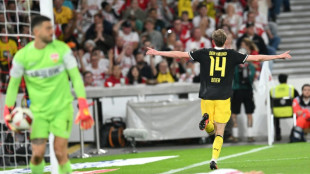 Dortmund sink Stuttgart to climb to Bundesliga summit
-
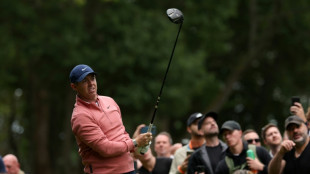
McIlroy two shots off the lead at Wentworth after eagle on 18
-
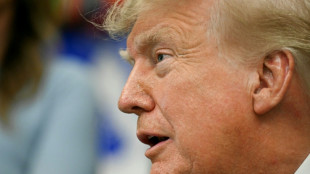 Trump says will not tolerate attempts to slow AI growth
-
Martinez brace saves Inter in Serie A top-two clash with Roma

-
 'It has to stop': runners protest women's murders in S.Africa district
-
Rosenior abused but guides Paris FC past old club Strasbourg

-
 Fire erupts near Riyadh airport as Houthis claim strikes
-
Seven-try Lyon beat Pau, climb to Top 14 summit

-
 Cuba works to restore power after another blackout
-
Brighton defeat a 'big lesson' against complacency for Arsenal, says Arteta

-
 England thrash Sri Lanka again to return to top of T20 rankings
-
Thousands protest inaction over climate crisis in Switzerland

-
 Arsenal thrashed by Brighton, sorry Spurs lose again
-
Carapaz out of cycling world championships

The Fall of South Korea?
On 3 December 2024 the unthinkable happened in Seoul. President Yoon Suk Yeol, stung by allegations of corruption and facing sliding approval ratings, issued a midnight proclamation of martial law. He deployed special forces around the National Assembly and attempted to suspend the constitution. Video footage of parliamentarians climbing over fences, riot police blocking the legislature and helicopters circling above shocked the nation. Within hours, however, the attempted emergency rule collapsed. Lawmakers across party lines defied the order, reconvened under heavy security and voted unanimously to annul the decree. Enormous street protests erupted, demanding the restoration of democracy and Yoon’s resignation. By early morning the president rescinded his decree and insisted he had simply wanted to protect the state.
The crisis did not end there. The opposition-led parliament impeached Yoon nine days later and refused to allow him back into office. In April 2025 the Constitutional Court unanimously upheld the impeachment, citing an unlawful attempt to paralyse the constitution. South Korea’s institutions thus repelled the first attempted coup in its modern democratic era. A snap presidential election took place on 3 June 2025. Lee Jae‑myung, a social democratic opposition leader, won with nearly half of the vote and turnout approaching 80 %. He pledged to heal the rifts caused by the upheaval, strengthen the rule of law and place the country back on a steady course. In his inauguration speech he called the failed coup a “watershed moment” that proved citizens’ commitment to democracy.
Trade friction, not collapse
The political upheaval came against a backdrop of intense trade negotiations between Seoul and Washington. Former U.S. president Donald Trump returned to the White House in January 2025 and revived his campaign promise to rebalance trade with allies. In a phone call with president‑elect Lee in June 2025 he insisted on higher tariffs on South Korean vehicle exports and demanded that Seoul finance most of a proposed $350 billion investment fund for critical minerals. South Korea argued that such sums were unaffordable and offered phased funding instead. Negotiations stalled over Washington’s insistence on control over the fund.
Contrary to claims of a trade breakdown, exports recovered. By October 2025 South Korea’s shipments were growing again, buoyed by strong demand for semiconductors and ships. A compromise deal reached on 29 October limited U.S. tariffs on South Korean vehicles to 15 % and split investment flows to protect Korea’s currency. This partially defused tensions, though negotiations on the investment fund continued. South Korean companies accelerated diversification of markets to ASEAN countries and Europe, while domestic stimulus cushioned households from higher import prices.
Alliance strains and abandonment fears
Episodes outside the trade talks fuelled fears that Washington was abandoning Seoul. In February 2025 U.S. immigration officers raided a battery factory jointly owned by Hyundai and LG in Georgia and detained over 300 South Korean technicians for alleged visa violations. The images of handcuffed engineers sparked outrage at home and calls for Seoul to invest more in its own nuclear deterrent. The fiasco came after Trump had publicly complained that South Korea was “unstable” and should pay more for stationing U.S. troops. Policymakers in Seoul worried that ambiguous statements about troop reductions could invite provocations from North Korea and China.
Analysts caution that such fears often stem from misunderstandings rather than policy shifts. U.S. defence officials reiterated America’s security commitment and quietly increased joint exercises in the spring of 2025. Think‑tank studies noted that changes in the U.S. force posture should be accompanied by other deployments to reassure allies. President Lee has doubled down on the alliance and sought to deepen security cooperation with Japan and NATO. While domestic voices call for strategic autonomy, there is no evidence that the United States is planning a withdrawal.
Resilience instead of collapse
The narrative of South Korea’s “fall” exaggerates and conflates real challenges. The attempted coup was thwarted within hours by constitutional institutions and mass mobilisation. The political crisis led to a lawful impeachment and free election, demonstrating democratic resilience. Trade friction with the United States has been bruising, but it has not upended South Korea’s export‑driven economy or its role in supply chains. Even at the height of negotiations, U.S. troops remained on the peninsula and the two governments reaffirmed their mutual defence treaty.
South Korea faces serious questions about inequality, an ageing population, and dependence on exports. Yet rather than collapsing, it has adapted through political renewal and pragmatic economic policy. Early signs suggest that president Lee’s government is stabilising domestic politics, diversifying trade and working to rebuild trust with Washington. The “fall” narrative obscures a more nuanced reality: a vibrant democracy navigating turmoil, emerging chastened but intact.

This Summer experiences Romania first heatwave

Mike Pence: U.S. will continue to support Ukraine

Activists organise "flotilla" with aid for Gaza

Holy souls on display at 2024 Venice Biennale

Brussels, my Love? EU-Market "sexy" for voters?

The great Cause: Biden-Harris 2024
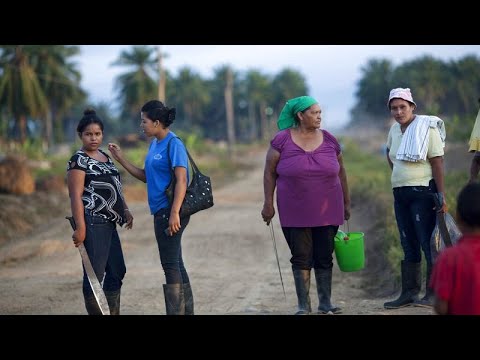
UN: Tackling gender inequality crucial to climate crisis

Scientists: "Mini organs" from human stem cells
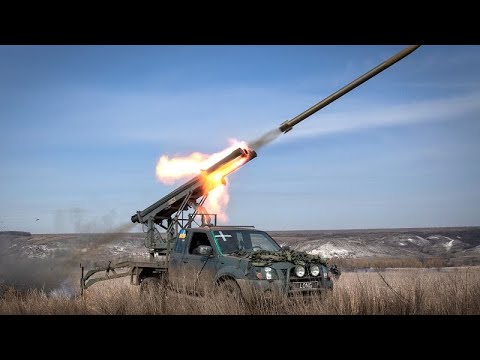
ICC demands arrest of Russian officers
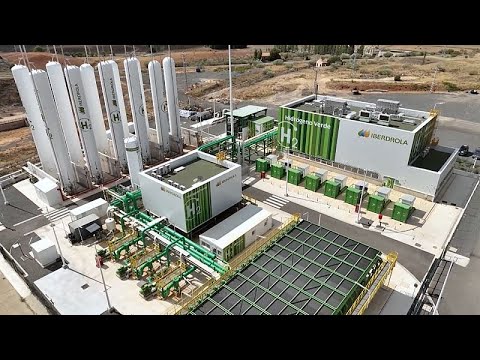
Europe and its "big" goals for clean hydrogen

Putin and the murder of Alexei Navalny (47†)