-
 Hunger and malnutrition stalk Gazans, a year on from ceasefire
-
Taiwan's leader says increasing defence spending to 'deter war'
-
 Fernandez trumps MotoGP championship duo to grab Indonesia pole
-
Major quake hits Panama, no deaths reported

-
 October 7 scars push Israel's first-time voters to right
-
Hurricane Isaias makes landfall in Florida

-
 India deploys police, restricts transport ahead of major protest
-
Brazil prosecutors sue Shell for $108 mn over deadly 2024 floods
-
 Three Mexicans convicted in murders of Australian, US surfers
-
Major earthquake destroys buildings, roads in Panama

-
 Powerful waves lash California coast as storm threatens more damage
-
Anthropic AI model sent fake murder tip to Philadelphia police

-
 Trump hails Russia deal to release diesel as midterms loom
-
7.7-magnitude quake rocks Panama, triggers tsunami warning

-
 Lyon blow chance to go top after loss at Lens
-
Prince Harry booed at English rugby match
-
 Stocks rise as Trump says Russia to release diesel to world markets
-
Kiplimo and Feysa seek repeat Chicago Marathon wins

-
 Wildfire smoke shuts schools in Amazon's biggest city
-
Fuellkrug halts Dortmund after late goal flurry

-
 Turkey jails 2 journalists pending trial for fund crisis 'misinformation'
-
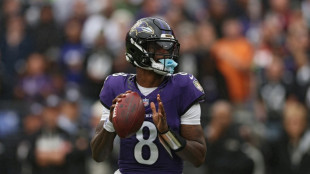
Injured Ravens quarterback Jackson ruled out of Falcons clash
-
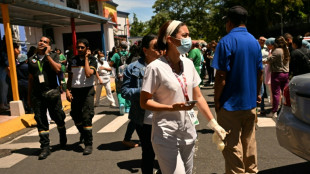 Major earthquake rocks Panama, triggers tsunami warning
-
Brewers aim to take down two-time defending champion Dodgers in NLCS rematch

-
 Indian jailed in France for leading sadist Nazi cult that tortured girls
-
Tsunami alert after major earthquake rocks Panama
-
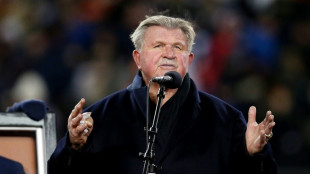 'Iron Mike' Ditka hailed as 'gold standard' NFL legend
-
Outer bands of Hurricane Isaias lash US Gulf Coast

-
 Flydubai co-pilot planned suicide attack on Tel Aviv airport: UAE prosecutor
-
Hope, Rutherford fire West Indies to record T20 chase of 250

-
 Mike Ditka: Chicago Bears icon as player and coach
-
Farhan leads Pakistan to T20 win over Sri Lanka

-
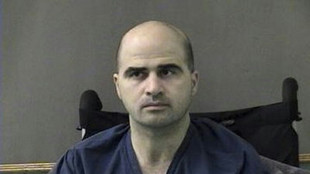 Outrage over plan to livestream US military firing squad execution
-
Turkey sack coach Montella after Nations League woe

-
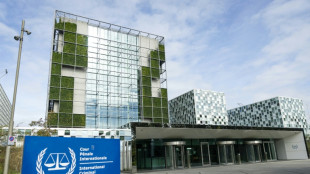 US sanctions: a 'test of resilience' for ICC
-
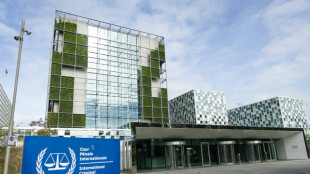
US announces sanctions on ICC, hours after Nobel award to former judge
-
 NFL legend Mike Ditka dead at 86
-
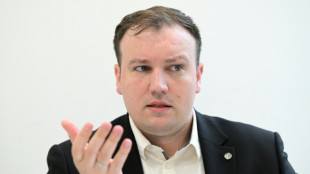
Montenegro expels popular Russian war blogger wanted by US
-
 Hurricane Isaias set to strike Gulf Coast late Friday
-
Rubio calls on all Venezuela opposition figures to join talks with govt
-
 Trump forms panel to probe US Fed governor Lisa Cook
-
Australia struggle against South Africa quicks in first Test

-
 Clashes in Durban as fresh anti-migrant riots erupt in South Africa
-
Stocks advance as Trump rules out pre-vote Iran attack

-
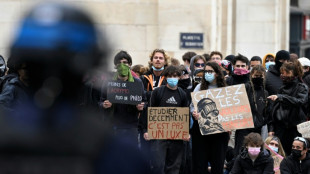 France students plan more protests, UN 'concerned' over violence
-
Australia struggle against South Africa's fast bowlers

-
 De Zerbi calls on struggling Spurs to react in Man Utd clash
-
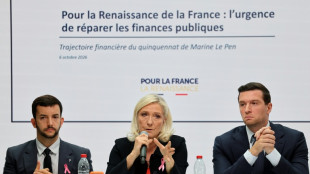
Massive debt puts France in a bind as investor doubts deepen
-
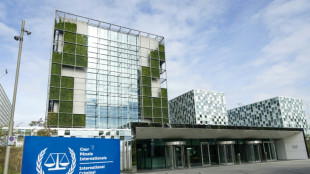 US sanctions on ICC: a 'test of resilience'
-
Arteta urges 'respect' for process after Man City financial verdict

AI's 18-month Job disruption
In February 2026, Microsoft’s newly appointed chief executive of artificial intelligence, Mustafa Suleyman, told the Financial Times that AI systems could soon perform “human‑level performance on most, if not all professional tasks”. He argued that the rapid growth of computational power would enable machines to automate any task performed by someone sitting at a computer — a lawyer drafting a contract, an accountant balancing a ledger or a marketing manager running a campaign. According to Suleyman, many such tasks would be fully automated within 12 to 18 months. The Microsoft executive cited the ability of large language models to write code better than most human coders and said that creating bespoke AI models would soon be as easy as starting a podcast or writing a blog.
His pronouncement was one of the most dramatic in a wave of tech‑executive warnings. Anthropic co‑founder Dario Amodei said last year that AI could eliminate half of all entry‑level white‑collar jobs within five years, while Ford chief executive Jim Farley suggested that the technology could drastically shrink white‑collar employment. AI researcher Matt Shumer compared the current moment to early 2020, when the pandemic’s economic shock had not yet fully registered. Critics, meanwhile, noted that similar predictions have been made repeatedly; some viewers of Suleyman’s interview remarked that they had heard the same 18‑month warning before, and others argued that if AI is truly so disruptive it should replace top executives first.
Evidence versus alarmism
Despite Suleyman’s dire timeline, research suggests only limited disruption so far. A 2025 Thomson Reuters report on professional services found that lawyers, accountants and auditors mainly use AI for targeted tasks such as document review and routine analysis, yielding only marginal productivity improvements. Some studies even report a negative impact: a Model Evaluation and Threat Research (METR) experiment on experienced software developers found that using a popular AI coding assistant increased task completion time by 19 %, because programmers spent additional time correcting the model’s suggestions. Other research has demonstrated speed‑ups in specific contexts, but the METR authors caution that these gains do not generalize to all code‑bases. In the broader economy, profits remain concentrated. Data from Apollo Global Management showed that Big Tech profit margins rose more than 20 % in late 2025, while the wider Bloomberg 500 index saw little change. Wall Street analysts thus doubt that AI will deliver higher earnings outside the tech sector.
Hiring data also temper the narrative. Employment consultancy Challenger, Gray & Christmas recorded about 55,000 job cuts attributed to AI in 2025. Microsoft itself eliminated 15,000 jobs last year, though it did not directly link those reductions to automation. Some industry observers believe executives are using AI hype to justify traditional cost‑cutting; user comments on social media argued that businesses often announce AI‑driven layoffs to distract from poor financial performance, and several commenters questioned who would purchase goods and services if most people were unemployed.
Economic and political reactions
Suleyman’s remarks provoked a fast response from policy‑makers. U.S. senator Bernie Sanders called the prediction an “economic earthquake” and urged a moratorium on new AI data centers so that the technology benefits workers rather than a handful of billionaires. Lawmakers in several states have already campaigned against the energy demands of AI facilities, and the issue has become politicised during the U.S. presidential race. Even Microsoft’s overall chief executive Satya Nadella has warned that the industry must earn the “social permission” to consume vast amounts of electricity. In an interview, Nadella said that AI companies need to show they are “doing good in the world” or risk a public backlash over energy use. He added that AI’s benefits must be widely shared and not confined to a few companies or regions.
Financial markets have reacted nervously. Concerns about automation drove a recent sell‑off in software stocks, dubbed the “SaaSpocalypse,” after Anthropic and OpenAI unveiled agentic AI systems capable of performing many software‑as‑a‑service functions. Analysts observed that the sell‑off reflected fear rather than current impact; AI products such as Microsoft’s Copilot are still in the early stages of adoption, and there are significant hurdles to full automation. Experts note that successful deployment requires training, redesigned workflows and reliable AI agents, and many organisations are far from achieving those prerequisites. Paul Roetzer, founder of the Marketing AI Institute, argued that displacement will be constrained by the difficulty of integrating AI into existing systems.
Social response and ethical questions
Public reaction to the 18‑month forecast has been mixed. Some see AI as a new industrial revolution that could free people from drudgery, while others fear widespread unemployment and social upheaval. Online comments on the interview reveal a deep scepticism: viewers joked that by the time AI automates marketing, it will also be cleaning toilets, and some called for a universal basic income to offset job losses. Others warned that if AI renders people jobless, the economy will collapse due to lack of consumers. A number of comments also highlighted that AI predictions often overlook who controls the technology; one observer noted that executive positions are rarely listed among the jobs that could be automated.
Ethical considerations extend beyond employment. AI’s energy appetite and the environmental costs of data centers have prompted demands for responsible innovation. Nadella’s plea for social licence underscores the need for transparent governance, equitable distribution of benefits and safeguards against monopolistic control. Advocates argue that if AI systems do not deliver tangible improvements in healthcare, education or climate resilience, the public may refuse to tolerate their resource consumption.
Looking forward
The gap between breathless forecasts and current reality suggests that the future of work will be more nuanced than a simple countdown to obsolescence. AI systems are undeniably accelerating, and many routine tasks will likely be automated. However, evidence points to augmentation rather than wholesale replacement. White‑collar roles that blend critical thinking, emotional intelligence and domain expertise are proving harder to replicate than anticipated. Meanwhile, new opportunities are emerging for workers who can supervise AI, curate data and integrate automated outputs into complex processes. Rather than fearing an AI takeover, experts advocate investment in education, reskilling and social safety nets so that labour markets can adapt.
The next 18 months will reveal whether Suleyman’s prediction was prescient or hyperbole. What is clear is that artificial intelligence has entered a phase of rapid experimentation. The challenge now is to ensure that the technology develops in a way that enhances human welfare, spreads prosperity and respects the planet’s finite resources.

Russland, der Terror-Staat / Russia, the terrorist state!
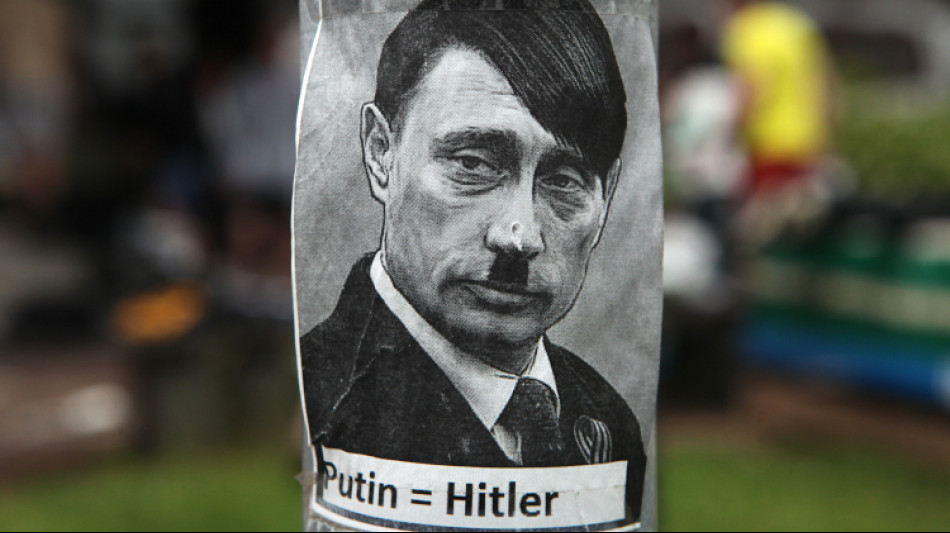
Ukraine in the fight against the russian terror State
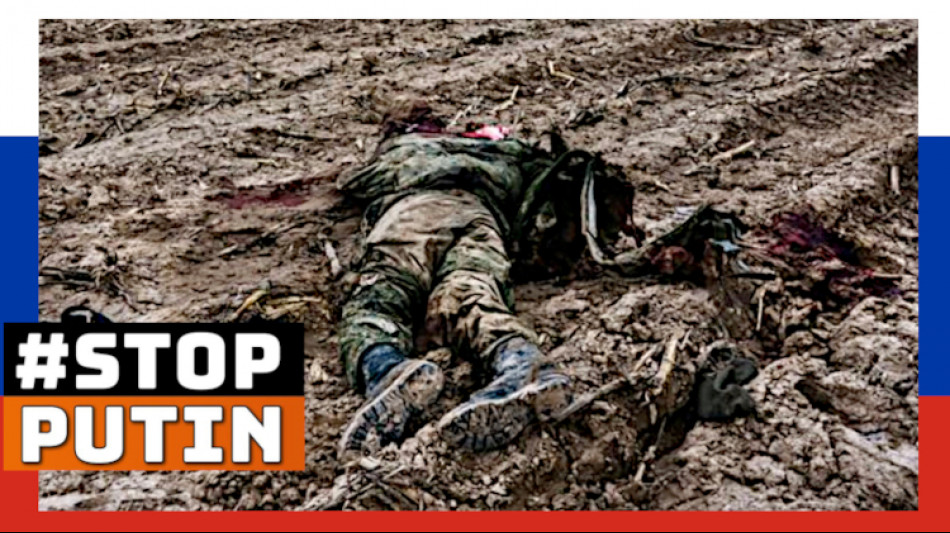
The Russian criminals will never own Ukraine!

ATTENTION, ATENCIÓN, УВАГА, ВНИМАНИЕ, 注意事项, DİKKAT, 주의, ATENÇÃO
UNESCO accepts the US back into the fold after a five-year absence

This is how the Russian scum in Ukraine ends!

Video, ビデオ, 视频, Відео, 비디오, Wideo, 動画, Βίντεο, Видео!!

Ukraine's struggle: Surviving after the flood

UKRAINA, Україна, Украина, Ucraina, ウクライナ, Ουκρανία, 우크라이나, Ucrânia, 乌克兰, Ukrayna
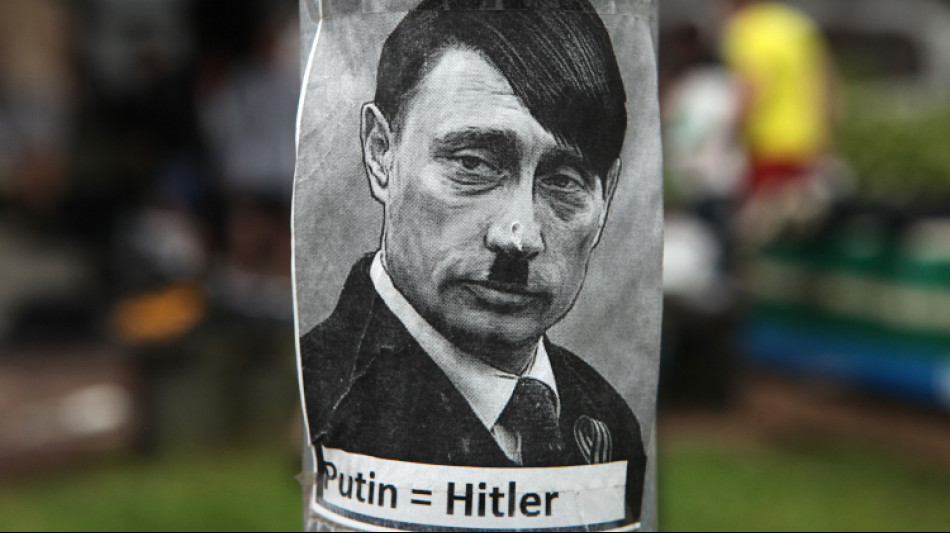
Ukraine: War terror of the russian army!
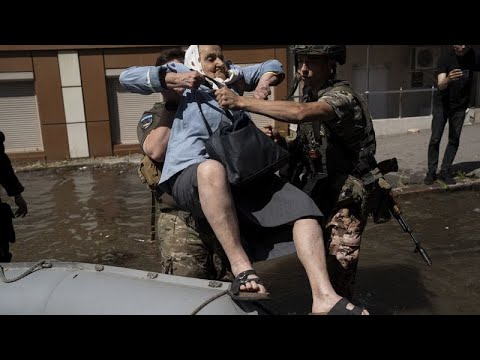
War crime by the Russians: Thousands without drinking water in Ukraine