World Cup could make football 'mainstream' in co-host Canada / Photo: Cole BURSTON - AFP

 Djokovic feels the heat in Cincinnati defeat, Zverev wins all-nighter
 Pallister stuns Ledecky in Pan Pacs 800m free as two world records carry Douglass to gold

 Rampant Bangladesh make history with first-ever Test win in Australia

 UK's media-savvy PM Burnham shifts messaging to TikTok, podcasts
 Gay badminton star Gilmour urges progress on LGBTQ rights in Asia
 Pallister takes down Ledecky in Pan Pacs 800m freestyle

 Douglass breaks 50m free world record again to claim Pan Pacs gold
 As Opel turns to Chinese partners, its hometown frets about the future

 Mehidy takes three as Bangladesh close on historic win in Australia
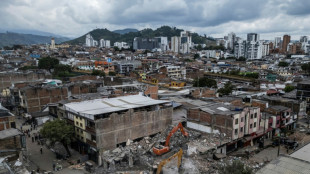 Hope fades for finding surivivors of Colombia quake as rescued woman dies

 Hurricane Lala dumps heavy rain on Hawaii

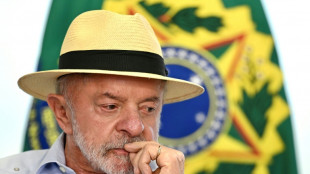 Jaded voters, same old choices: Brazil kicks off election campaign

 'Everyone lives in fear': Yemenis worry about return to all-out war

 Cardinals' Baez bashes record three homers in MLB debut

 Djokovic feels the heat in Cincinnati opening defeat

 Hunt bags third Euro gold, Diaz shines in triple jump

 Depleted Djokovic falls in Cincinnati Masters opener
 Lala, now a hurricane, dumps heavy rain on Hawaii
 American Kate Douglass reclaims 50m freestyle world record
 Kit confusion disrupts Newcastle friendly against Leverkusen

 Marchand wins first Euros gold as Liebmann breaks 1500m free world record

 Zambia's vote marred by intimidation, counting pause: observers

 Marchand wins 200m butterfly for first Euros gold
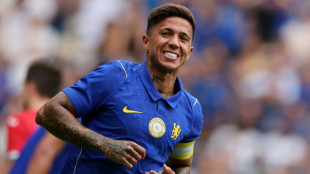 Fernandez booed by Chelsea fans in friendly win over Sociedad
 Fans line Welsh streets as Bonnie Tyler body's returns for funeral

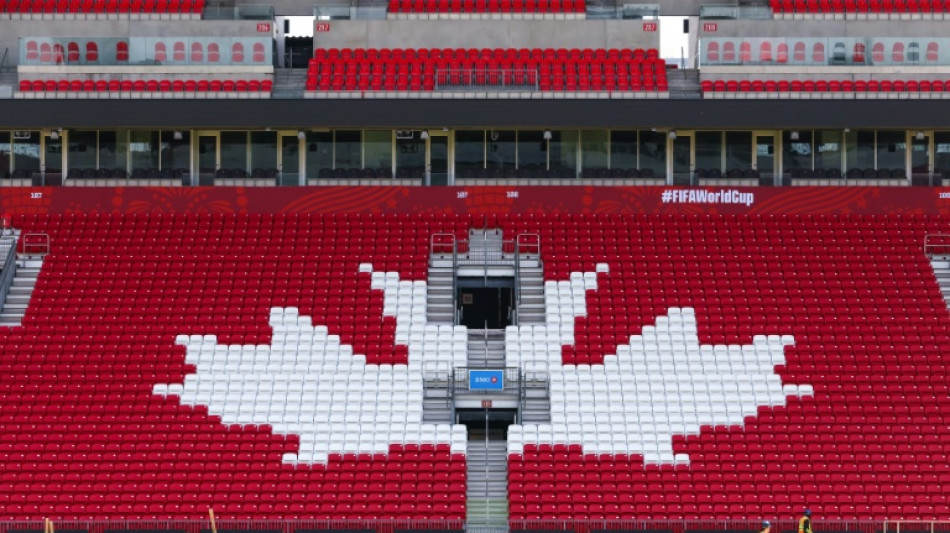
Three weeks before kickoff in the first ever World Cup match in Canada, football leaders in the country voiced hope the tournament will finally give the sport the cultural prominence it deserves.
Football, which most Canadians call soccer, is the country's most popular participatory sport, but by many measures the nation is still primarily captivated by ice hockey.
The 13 World Cup matches set for Toronto and Vancouver could help tip the scales, said James Johnson, CEO of Canadian Soccer Media & Entertainment, which works to promote the sport.
"There is a huge opportunity for a cultural shift in the sport in Canada," he told AFP.
More than a million of Canada's 41 million people are registered to play amateur football, but broadening support for the professional level is a priority.
Canada has three teams in MLS, North America's top professional league.
Toronto FC has won an MLS Cup and is considered the most stable Canadian club. The Montreal Impact have faced financial challenges and there are widespread reports the Vancouver Whitecaps may relocate, partly over profitability concerns.
- Growing potential -
A strong Canadian showing at the 2026 World Cup would undeniably help.
The men's side is ranked 30th but automatically qualified as a co-hosting nation.
In two previous World Cup appearances -- the 1986 finals in Mexico and the 2022 tournament in Qatar -- Canada played six and lost six.
But there is reason for optimism this year, with the roster set to include several players thriving in Europe, including Juventus striker Jonathan David. Injury concerns surround Bayern Munich fullback Alphonso Davies.
Jean-Francois Teotonio, a sports reporter at the prominent Quebec daily La Presse, wants to see the men's team "ignite the passion" for football and says they may have the players to do it.
"The potential of Team Canada is growing, money has been invested, a new pool of talent has emerged," he told AFP.
The enthusiasm that followed the women's national team winning Olympic gold in 2021 in Tokyo also showed how international success can captivate the Canadian public.
Costa Smyrniotis, executive vice president of the Canadian Premier League, Canada's top division, told AFP that all CPL clubs will be cheering on the national team and "raising the flag."
Canada is a nation of immigrants and, for decades, when the men's side was typically absent from the World Cup, fans would rally behind the country where they had family ties.
For Rocco Placentino, a former professional player and co-founder of the Montreal club FC Supra, that meant supporting Italy, which again failed to qualify after a stunning loss to Bosnia-Herzegovina, who open the tournament against Canada in Toronto on June 12.
Placentino told AFP that many of the different immigrant communities who call Canada home have "soccer in their blood, with a lot of passion and energy."
"Why not, for this World Cup, support multiple teams? The team for your country of origin and Team Canada?"
- 'Transformative effect' -
The Canadian government is pumping more money into football, including CAN$9.8 million ($7.1 million) towards a National Training Center to help foster emerging elite male and female talent.
Kevin Blue, Canada Soccer's CEO, applauded those investments and said "the World Cup needs to have a transformative effect" on the sport.
Johnson told AFP that all "the ingredients" were in place for football to vault into another level in Canada, but underlined that increased broadcast exposure was crucial, so it becomes "mainstream, like hockey."
P.Hernandez--AT