-
 Hunger and malnutrition stalk Gazans, a year on from ceasefire
-
Taiwan's leader says increasing defence spending to 'deter war'

-
 Fernandez trumps MotoGP championship duo to grab Indonesia pole
-
Major quake hits Panama, no deaths reported

-
 October 7 scars push Israel's first-time voters to right
-
Hurricane Isaias makes landfall in Florida

-
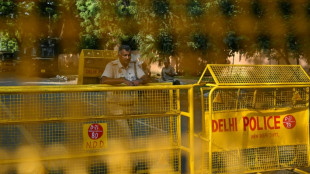 India deploys police, restricts transport ahead of major protest
-
Brazil prosecutors sue Shell for $108 mn over deadly 2024 floods

-
 Three Mexicans convicted in murders of Australian, US surfers
-
Major earthquake destroys buildings, roads in Panama

-
 Powerful waves lash California coast as storm threatens more damage
-
Anthropic AI model sent fake murder tip to Philadelphia police

-
 Trump hails Russia deal to release diesel as midterms loom
-
7.7-magnitude quake rocks Panama, triggers tsunami warning

-
 Lyon blow chance to go top after loss at Lens
-
Prince Harry booed at English rugby match

-
 Stocks rise as Trump says Russia to release diesel to world markets
-
Kiplimo and Feysa seek repeat Chicago Marathon wins

-
 Wildfire smoke shuts schools in Amazon's biggest city
-
Fuellkrug halts Dortmund after late goal flurry

-
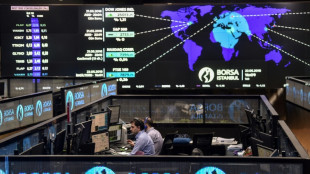 Turkey jails 2 journalists pending trial for fund crisis 'misinformation'
-
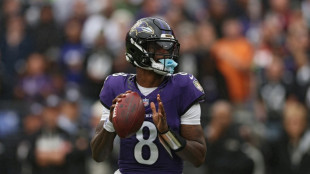
Injured Ravens quarterback Jackson ruled out of Falcons clash
-
 Major earthquake rocks Panama, triggers tsunami warning
-
Brewers aim to take down two-time defending champion Dodgers in NLCS rematch

-
 Indian jailed in France for leading sadist Nazi cult that tortured girls
-
Tsunami alert after major earthquake rocks Panama

-
 'Iron Mike' Ditka hailed as 'gold standard' NFL legend
-
Outer bands of Hurricane Isaias lash US Gulf Coast

-
 Flydubai co-pilot planned suicide attack on Tel Aviv airport: UAE prosecutor
-
Hope, Rutherford fire West Indies to record T20 chase of 250

-
 Mike Ditka: Chicago Bears icon as player and coach
-
Farhan leads Pakistan to T20 win over Sri Lanka

-
 Outrage over plan to livestream US military firing squad execution
-
Turkey sack coach Montella after Nations League woe

-
 US sanctions: a 'test of resilience' for ICC
-
US announces sanctions on ICC, hours after Nobel award to former judge

-
 NFL legend Mike Ditka dead at 86
-
Montenegro expels popular Russian war blogger wanted by US

-
 Hurricane Isaias set to strike Gulf Coast late Friday
-
Rubio calls on all Venezuela opposition figures to join talks with govt

-
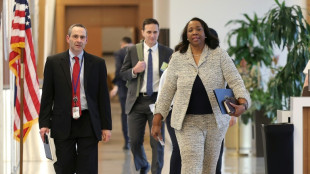 Trump forms panel to probe US Fed governor Lisa Cook
-
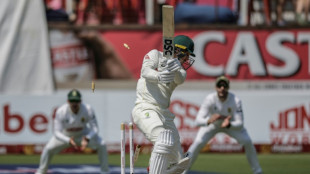
Australia struggle against South Africa quicks in first Test
-
 Clashes in Durban as fresh anti-migrant riots erupt in South Africa
-
Stocks advance as Trump rules out pre-vote Iran attack

-
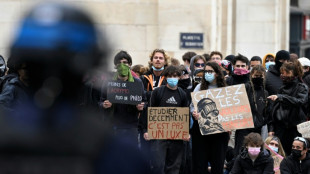 France students plan more protests, UN 'concerned' over violence
-
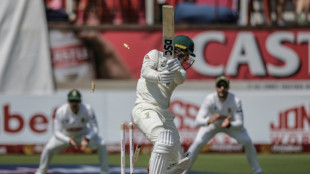
Australia struggle against South Africa's fast bowlers
-
 De Zerbi calls on struggling Spurs to react in Man Utd clash
-
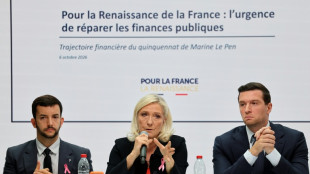
Massive debt puts France in a bind as investor doubts deepen
-
 US sanctions on ICC: a 'test of resilience'
-
Arteta urges 'respect' for process after Man City financial verdict

Bitcoin slump stirs doubt
The cryptocurrency that promised to replace central banks has just recorded the biggest single‐day drop in its history. In early February 2026, Bitcoin plummeted from around $72,000 to about $63,000 within hours, its sharpest one‑day fall since the November 2022 rout. According to exchange data, more than $1 billion in leveraged positions were liquidated during the plunge and roughly $2 trillion in crypto market value evaporated in the month leading up to the crash.
This freefall followed a record liquidation event in October 2025, when more than $19 billion worth of cryptocurrency bets were wiped out after U.S. trade tensions triggered panic selling. That 24‑hour wipeout was nine times larger than the February 2025 crash and dwarfed the FTX collapse. Bitcoin briefly dropped below $105,000 during the October chaos, and despite a partial recovery the seeds of doubt were sown.
Several factors converged to turn a routine correction into a historic rout:
Hawkish policy fears: Markets were rattled by expectations that U.S. monetary policy could tighten under a new Federal Reserve chair. Investors interpreted political appointments and hawkish rhetoric as a sign that money supply growth could slow, removing a key source of liquidity for speculative assets.
Leverage and liquidations: On‑chain data show a rapid unwinding of leverage. Futures open interest dropped from $61 billion to $49 billion within a week, a decline of more than 20 %. Analysts estimate that roughly $3–4 billion in positions were forcibly closed during the selloff.
Vanishing buyers: Unlike previous crashes triggered by a single news event, the 2026 decline was driven by a lack of demand. Market depth had fallen more than 30 % below its October peak, on par with the liquidity vacuum after the FTX collapse. Spot exchange‑traded funds bled billions of dollars as mainstream investors fled, and institutional treasuries eased purchases. A prolonged outflow of nearly $4 billion in the first five weeks of the year reversed the inflows that had fuelled the 2024 rally.
Changing narratives: Bitcoin’s reputation as “digital gold” took a hit. Despite geopolitical stress, currency weakness and violent swings in gold and silver, crypto prices failed to rally. As capital rotated into artificial‑intelligence stocks and precious metals, Bitcoin appeared to be yesterday’s story.
Policy shocks and tariffs: In October 2025 the U.S. administration imposed 100 % tariffs on Chinese imports. This sparked an exodus from risk assets, including cryptocurrencies, and set the stage for the later collapse. Analysts say the October crash cleaned out excessive leverage but left the market vulnerable.
Investor sentiment turns sour
Across forums and trading desks, the mood has shifted from bravado to resignation. Some investors derided Bitcoin as a “bubble” or compared it to imaginary game currency. Others likened the latest crash to gambling and warned that speculators would eventually be flushed out. Environmental concerns resurfaced; critics argued that mining costs now exceed the coin’s intrinsic value. The absence of dip‑buyers was notable: a culture that once rallied around “buy the dip” memes was strangely quiet.
Yet not everyone has given up. A cohort of long‑term believers view the drop as a chance to accumulate. They point to Bitcoin’s programmed scarcity and halving cycles and argue that regular dollar‑cost‑averaging has historically been rewarded. Indeed, after every bear‑market year since 2013, Bitcoin has staged a strong rebound: it rallied 35 % in 2015, 95 % in 2019 and 156 % in 2023. April tends to be a good month, with an average gain of 13 %, although there are no imminent halving‑driven catalysts until 2028. Some small investors are increasing their regular purchases during the downturn, betting that patience will pay off.
A crisis of confidence
The crash has amplified a broader crisis of confidence. Analysts note that Bitcoin is currently trading nearly three standard deviations below its 200‑day moving average, a level unseen in more than a decade. On 5 February the coin registered a −6.05σ move on a rate‑of‑change index, placing the drop among the fastest on record. Historical comparisons show that previous declines of this magnitude typically mark late‑stage stress, but they do not always signal a bottom.
Market depth remains thin, and liquidity contraction suggests that further downside is possible. Analysts warn that if prices continue to fall, miners could be forced to liquidate holdings to fund operations, potentially creating a vicious cycle. There is also renewed debate about the resilience of Bitcoin’s underlying technology: concerns about quantum‑computing threats and the energy cost of mining have resurfaced.
Looking ahead
Despite the gloom, some observers urge perspective. Bitcoin has survived multiple boom–bust cycles over its 17‑year existence, and each has ultimately attracted a broader base of users and infrastructure. The recent crash was driven by deleveraging rather than structural failure; 90‑day realised volatility remains well below levels seen in the 2022 bear market. Institutional adoption continues in areas such as stablecoins and tokenised assets, and on‑chain flows suggest that capital is rotating from smaller altcoins back into the flagship cryptocurrency.
Even so, recovery may be slow. Analysts at Kaiko estimate that crypto markets are only a quarter of the way through the current downcycle and expect it could take six to nine months before volumes and prices stabilise. Others caution that a new all‑time high may not arrive for several years. Until then, investors are left to decide whether Bitcoin’s historic crash is a buying opportunity or the beginning of a long slide into irrelevance.
| Metric | Value | Context |
|---|---|---|
| Lowest price during Feb 2026 crash | ≈$63,300 | Weakest level since Oct 2024 |
| One‑day price drop | ~12.6 % | Largest single‑day fall since Nov 2022 |
| Positions liquidated | >$1 billion | Forced liquidation in 24 hours |
| Market value lost | $2 trillion | Crypto market loss since Oct 2025 peak |
| Futures open interest decline | −20 % | From $61 B to $49 B in a week |
| January 2026 decline | −11 % | Fourth straight monthly loss, longest streak since 2018 |
| ETFs net outflows (early 2026) | ≈$4 billion | Reversal of 2024 inflows |
| Historic liquidations (Oct 2025) | >$19 billion | Largest crypto liquidation in history |
| Altcoin drawdowns during Oct 2025 crash | HYPE −54 %, DOGE −62 %, AVAX −70 % | Altcoins were hit harder than Bitcoin |

Five elections in 2024 that will shape Europe!

Norway: Russians sceptical about Russia's terror against Ukraine

Nepal: Crowd demands reinstatement of the monarchy

Europe: Is Bulgaria "hostage" to a Schengen debate?

EU: Netherlands causes headaches in Brussels

Israel in the fight against the terror scum of Hamas

Italy: Storm Ciarán brings disastrous record rainfall

What remains of the EU leader's visit to Kiev?

Gaza: Hamas terrorists responsible for expulsion

Vice-Chancellor Habeck: Empty words without action?

Israel: More bodies, weeks after Hamas terror attack